 CLOUD
CLOUD
CLOUD
CLOUD








CLOUD

As organizations scale cloud operations, they’re discovering that managing spend isn’t just about cost control — it’s about maximizing value, driving efficiency and aligning cloud usage with business goals.
That’s where FinOps comes in. The practice is gaining traction as companies seek stronger governance in complex multicloud environments.
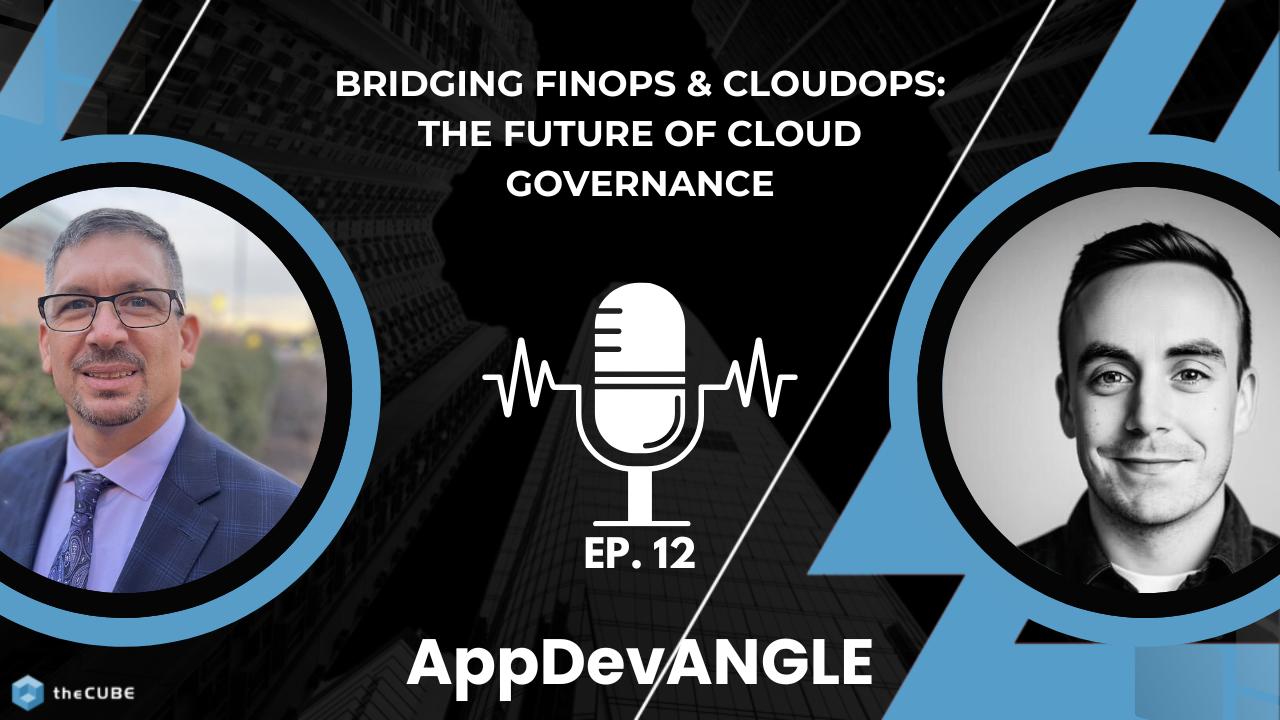
The convergence of FinOps and CloudOps is becoming increasingly essential as companies adopt multicloud strategies, accelerate modernization efforts and seek to eliminate waste in sprawling environments. In the latest episode of theCUBE Research’s AppDevANGLE podcast, Tatum Tummins (pictured, right), senior product manager at Kion, explores how automation, early collaboration and governance frameworks are reshaping the way organizations manage cloud costs and complexity.
“Ultimately, that’s what FinOps is … trying to maximize business value,” Tummins said. “And as organizations have scaled, the complexity gets more complex … to manage all of that effectively requires new processes.”
As cloud maturity increases, the industry is shifting away from manual, reactive cost optimizations toward proactive, automated governance frameworks that prevent waste from occurring in the first place. This transformation is especially critical for modern DevOps and CloudOps teams tasked with enabling fast, secure development environments without exceeding budget constraints.
“We almost accepted that waste is going to exist … and that’s where I see the mindset shift coming,” Tummins said. “Folks [are] taking that same hour they used to invest in reactive optimization and investing that upfront in proactive optimization.”
The goal is to embed cost awareness into the development lifecycle. For example, pre-setting policies for sandbox environments — such as disabling compute on nights and weekends — can drastically reduce unused resource spend. Automation ensures those policies are applied consistently, regardless of who provisions the environment.
“Putting that in at the beginning of the lifecycle of that account versus coming back and realizing three months, six months later, ‘Oh, we’ve got waste in this account’ … that’s going to be the future of FinOps in my mind,” Tummins explained.
This model also improves developer agility. Automating provisioning pipelines — including access, permissions and compliance baselines — can reduce onboarding time from weeks to minutes, helping teams accelerate application development while staying compliant.
“The more efficient your processes are, the quicker the time to value,” Tummins added. “Being faster to market than your competitors … makes a huge long-term return-on-investment benefit.”
As artificial intelligence development gains momentum, proactive governance becomes even more crucial. Organizations can use FinOps policies to limit graphics processing unit usage during experimentation and trigger alerts at threshold levels to avoid costly overruns.
“We’re going to see more and more companies invest in that heavy proactive automation to govern that spend in order to transform their business safely,” Tummins said.
Here’s the complete conversation with theCUBE Research’s Paul Nashawaty (pictured, left) and Tatum Tummins, part of theCUBE Research’s AppDevANGLE podcast series:
Support our mission to keep content open and free by engaging with theCUBE community. Join theCUBE’s Alumni Trust Network, where technology leaders connect, share intelligence and create opportunities.
Founded by tech visionaries John Furrier and Dave Vellante, SiliconANGLE Media has built a dynamic ecosystem of industry-leading digital media brands that reach 15+ million elite tech professionals. Our new proprietary theCUBE AI Video Cloud is breaking ground in audience interaction, leveraging theCUBEai.com neural network to help technology companies make data-driven decisions and stay at the forefront of industry conversations.