 AI
AI
AI
AI



AI

Enterprise AI isn’t just changing how tech works — it’s rewriting the rules of business, cloud growth and global power.
That momentum is visible across every layer of the enterprise landscape, with enterprise AI reshaping cloud infrastructure, software economics and global tech policy. Once considered a niche productivity booster, AI is now central to how businesses build, operate and secure digital systems.
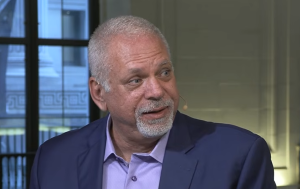
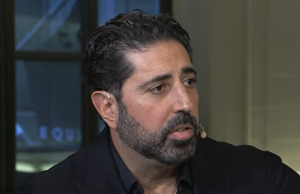
AI was a key thread in the 100th episode of theCUBE Pod, where Chief Analyst Dave Vellante (pictured, right) and Executive Analyst John Furrier (left) explored AI’s accelerating impact. While the recent RSAC 2025 Conference provided a timely backdrop for discussions about cybersecurity and infrastructure resilience, theCUBE analysts went broader, connecting the dots between AI-fueled growth in the cloud, the intensifying race for semiconductor control and platform players such as Salesforce Inc. redefining their roles.
“There are pockets of value creation, and I think the coding assistance are absolutely a part of it,” Furrier said. “If you look at things like Cursor, Replit, what Amazon Q developers [are] doing … that is expanding value. The value proposition on revenue generation — unlike the .com bubble — is happening much faster.”
One of the clearest signs of AI’s growing influence is its impact on cloud growth. Microsoft Azure’s latest earnings were shocking with a 35% jump in revenue, an indicator that enterprise AI services are rapidly scaling. Microsoft Corp.’s early push to embed large language models into its stack is resonating with customers and investors alike. Meanwhile, Amazon Web Services Inc. also reported strong gains but saw a cooler reaction from the market, according to Vellante.
“It was interesting to see the Amazon reaction, because Amazon had a great quarter, in my opinion,” Vellante said. “But their guidance was tepid. They lowered the low-end range of the guide, which I thought was really smart. Because what a lot of companies are doing is they’re saying, ‘OK, well if recession and inflation, this is the guide, and if things are normal, then this is the guide.’ Best case, worst case … keep it simple. I thought that was actually clever.”
Enterprise AI is not only creating new products, it’s reshaping financial narratives. Microsoft now attributes around 16% of Azure revenue to AI, up dramatically from just 1–2% a year ago. But not all growth is as straightforward as it appears. They noted that strategic presentation of earnings, such as adjusting baseline revenue reporting, can amplify perceived AI momentum, and Wall Street is eager to reward the trend.
“What Microsoft did last year is they took those old legacy segments out of Azure. They said we’re taking this out of Azure and we’re replacing it with AI,” Vellante said. “Essentially, what does that do? That lowers the overall revenue even though they never reported it. Now it’s up to 16%. The effect was they lowered the absolute revenue that they never reported, and it jacked up their growth rates. Now Wall Street’s all excited about it.”
The rise of enterprise AI has also renewed focus on the hardware powering it, especially amid growing geopolitical uncertainty. At the core of these concerns is Taiwan, home to Taiwan Semiconductor Manufacturing Co. Ltd. and the world’s most advanced chip fabrication capabilities. As AI models become more compute-intensive and critical to national infrastructure, control over semiconductor supply chains has become a flashpoint.
“I believe that the U.S. should have a headquartered-based firm. What happens when … China takes over Taiwan? Then it owns the IP in TSMC. TSMC will have facilities in the U.S., but unless that IP comes over to the U.S. that’s going to be locked inside of Taiwan, China’s going to control that,” Vellante explained. “What will happen in that instance is China will say no chips for you. [The] U.S. will say, ‘OK, we’ve got to ramp up our U.S. manufacturing,’ and then you’re going to create zones. And China will be in the lead for some period of time. [The] U.S. will constrict their sales of software like they have always. Then you’ll have a bifurcated market and not a global supply chain like we have today.”
Intel Corp. became a case study during the discussion. The company has long struggled to keep up with emerging waves, missing out on partnerships with Apple Inc., falling behind ARM Ltd. and underestimating the AI transition. Yet recent signs of focus and a simplified roadmap suggest a possible rebound, even if the company still faces structural challenges, according to Vellante.
“What’s interesting is [Intel CEO] Lip-Bu Tan held an Intel roadmap, innovation day,” he said. “No mention of ARM, no mention of Apple, no mention of Nvidia, but actually I’m getting more positive on Intel finally. I think it’s a bittersweet positive. What I mean by that is they’re not going to do a spin-out, apparently, and create a joint venture. Rather, what Lip-Bu Tan is going to do is dial down cost, which is very prudent.”
Their discussion also explores how software platforms are adapting to the rise of agentic AI. Salesforce, in particular, has quietly positioning itself as a fourth hyperscaler, distinct from cloud infrastructure giants by focusing on data orchestration and workflow intelligence, according to Vellante.
“Imagine Salesforce being the fourth hyperscaler, but one that’s software only, where they are federating all these data sources and they are the ones doing the harmonization,” he said.
Unlike traditional cloud providers, Salesforce holds deep access to metadata, process logic and customer interaction models. That gives it an edge in managing autonomous AI agents and integrating them directly into business operations. As platforms such as Google face friction over user experience and internal alignment, such as with Gemini, Salesforce’s vertically integrated approach could prove more effective.
“They have the business logic, the process data. Salesforce is leveraging that ahead of most,” Vellante said. “They’ve got the metadata. They’ve got access to all that stuff. It’s locked inside their platform.”
Elon Musk, chief executive officer of Tesla
Dr. Amit Elazari, CEO and co-founder of OpenPolicy
Scott Hebner, principal analyst of AI at theCUBE Research
Andy Jassy, president and CEO at Amazon.com
Lip-Bu Tan, chief executive officer of Intel
Morris Chang, Taiwanese-American businessman
Steve Jobs (1955–2011), co-founder and former CEO and chairman of Apple
Jensen Huang, president, co-founder and CEO of Nvidia
Sanjay Poonen, president and CEO of Cohesity
John Chambers, CEO of JC2 Ventures
Pat Gelsinger, former CEO of Intel
Ken Olsen (1926–2011), co-founder of Digital Equipment
George Gilbert, principal analyst at theCUBE Research
George Kurtz, CEO of CrowdStrike
Jackie McGuire, principal analyst at theCUBE Research
Stephen Schmidt, SVP and chief security officer of Amazon
Teresa Carlson, president of General Catalyst
Mark Zuckerberg, CEO at Meta Platforms
Jay Chaudhry, founder and CEO of Zscaler
Hock Tan, president and CEO of Broadcom
Marc Benioff, chair and CEO of Salesforce
Larry Ellison, chairman of the board and CTO of Oracle
Matt Garman, CEO of AWS
Pete Sonsini, co-founder and general partner at New Enterprise Associates
John Roese, CTO and chief AI officer of Dell Technologies
Brian J. Baumann, founder of NYSE Wired and director of capital markets, technology, at NYSE
Kevin Butterfield, managing director and CFO, cybersecurity, at Accenture
Prakash Venkata, principal of cyber, risk and regulatory at PwC
Brian Vecci, field CTO of Varonis Systems
Juan Loaiza, EVP at Oracle
Here’s the full episode of this week’s theCUBE Pod:
Don’t miss out on the latest episodes of “theCUBE Pod.” Join us by subscribing to our RSS feed. You can also listen to us on Apple Podcasts or on Spotify. And for those who prefer to watch, check out our YouTube playlist. Tune in now, and be part of the ongoing conversation.
Support our mission to keep content open and free by engaging with theCUBE community. Join theCUBE’s Alumni Trust Network, where technology leaders connect, share intelligence and create opportunities.
Founded by tech visionaries John Furrier and Dave Vellante, SiliconANGLE Media has built a dynamic ecosystem of industry-leading digital media brands that reach 15+ million elite tech professionals. Our new proprietary theCUBE AI Video Cloud is breaking ground in audience interaction, leveraging theCUBEai.com neural network to help technology companies make data-driven decisions and stay at the forefront of industry conversations.