 AI
AI
AI
AI


AI

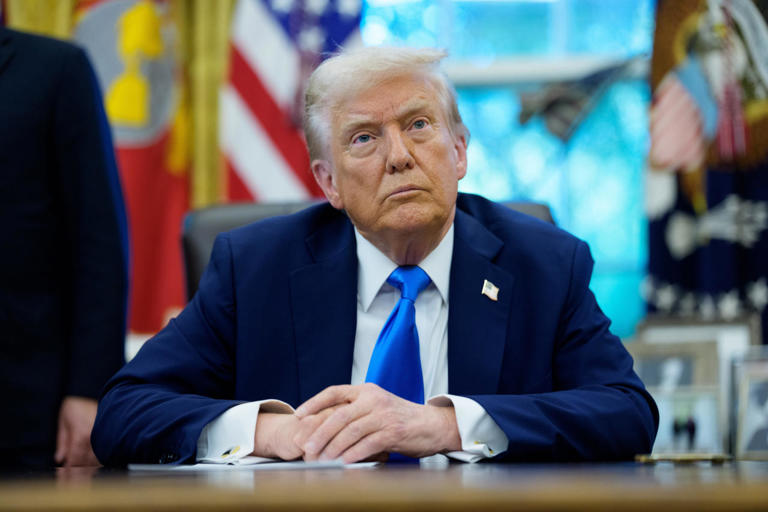
President Donald Trump today signed an executive order designed to broaden the use of artificial intelligence in federal cybersecurity initiatives.
Trump planned to hold the signing ceremony last month, but called off the event at the last minute. The decision reportedly came after several prominent tech executives pushed back against the order. Trump told reporters the day the signing ceremony was set to take place that “I didn’t like certain aspects of it. I postponed it.”
The directive is narrower in scope than the version that was set to be signed last month. According to Politico, the original draft called on AI developers to make “covered frontier models” available to the federal government up to 90 days before their release. The order signed today significantly shortens that time frame.
A covered frontier model is an AI system with particularly advanced cybersecurity capabilities. In April, Anthropic PBC previewed a large language model called Claude Mythos Preview that can detect highly complicated software vulnerabilities. It can also develop exploitation workflows, which significantly reduces the amount of time hackers need to launch cyberattacks. Anthropic says the model has found thousands of vulnerabilities to date.
The executive order calls on the government to develop a classified benchmarking process for determining which AI systems qualify as covered frontier models. Officials will have 60 days to implement the workflow. Additionally, the White House will create a voluntary framework through which AI developers can submit their algorithms for review.
If an LLM qualifies as a covered frontier model, its developer will be asked to give the government early access for up to 30 days. Such agreements will be “subject to appropriate confidentiality, cybersecurity, insider-risk, and intellectual-property protection, use, and nondisclosure requirements.” During the early access period, officials will use covered frontier models to find ways of making critical infrastructure more secure.
The executive order also calls for the creation of several other AI initiatives. It will establish programs focused on making AI-powered cybersecurity tools more accessible to federal agencies, states, local authorities and critical infrastructure operators. Additionally, the Office of Personnel Management will be instructed to expand its cybersecurity recruiting efforts.
Separately, top officials from several departments will establish an AI cybersecurity clearinghouse. The initiative, which will include the voluntary participation of model developers, seeks to identify, prioritize and fix software exploits using AI. As part of the effort, the government will look for federal grant programs that can be used to finance AI vulnerability detection projects.
Support our mission to keep content open and free by engaging with theCUBE community. Join theCUBE’s Alumni Trust Network, where technology leaders connect, share intelligence and create opportunities.
Founded by tech visionaries John Furrier and Dave Vellante, SiliconANGLE Media has built a dynamic ecosystem of industry-leading digital media brands that reach 15+ million elite tech professionals. Our new proprietary theCUBE AI Video Cloud is breaking ground in audience interaction, leveraging theCUBEai.com neural network to help technology companies make data-driven decisions and stay at the forefront of industry conversations.