









 INFRA
INFRA
INFRA
INFRA
INFRA

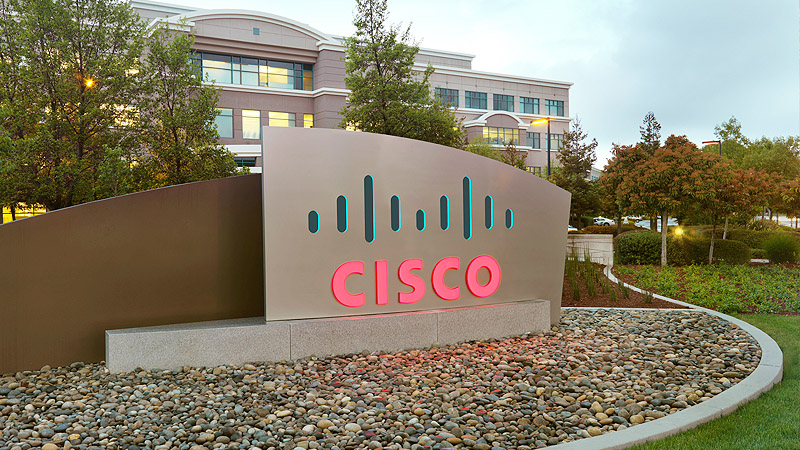
Asserting that bandwidth limitations are throttling artificial intelligence’s potential, Cisco Systems Inc. is using its Cisco Live event today to introduce new products and updates designed to help enterprises and service providers adapt their infrastructure to the growing demands of AI-driven workloads.
The updates span data center networking, AI workload optimization, security and operational management. The goal is to simplify network operations, increase visibility into AI workloads, and support both traditional and satellite-based networking environments.
The announcements mark a broad push by the networking giant to position itself as a central player in the emerging AI infrastructure stack. Rather than launching entirely new platforms, most of Cisco’s moves focus on stitching together existing capabilities — from networking to security to observability — under a more unified, AI-assisted operational model.
Cisco said its strategy centers on helping organizations adapt existing infrastructure to accommodate AI workloads better without adding complexity. The company is introducing what it calls a “Unified Fabric Experience” built on its Nexus network switching portfolio. It brings together the previously separate Application Centric Infrastructure and NX-OS VXLAN EVPN fabrics into a unified control and management layer.
ACI is a software-defined networking architecture that enables organizations to build their network infrastructure around the needs of their applications rather than hardware. It uses centralized policy to automate and simplify network configuration, deployment and management. NX-OS VXLAN EVPN fabrics create a virtual overlay network that allows Layer 2 traffic to be transported over a routed network.
The converged networks are managed through the updated Nexus Dashboard, which now consolidates services for LAN, storage-area networking, IP fabric management and AI fabric monitoring. The updates are expected to be released in July.
Cisco also announced Intelligent Packet Flow, a telemetry-based tool that dynamically routes traffic across AI networks based on real-time congestion. It provides visibility across the stack from network layers to graphic processing units and distributed AI jobs to improve diagnostics and minimize disruptions.
On the hardware side, Cisco is expanding its AI PODs, which are pre-validated, optimized infrastructure packages aimed at simplifying and speeding the deployment of AI workloads, in partnership with Nvidia Corp. Cisco will offer servers equipped with the Nvidia RTX 6000 Pro GPU in its UCS C845A M8 AI servers and as part of the companies’ jointly validated “Secure AI Factory” solution set.
For customers planning to transition to higher-bandwidth networks, Cisco introduced 400G bidirectional optics. These new modules are designed to support legacy multi-mode fiber infrastructure while enabling an upgrade to 400G speeds. Cisco expects them to be available in the second half of 2025.
In campus networks, the CG350 and CG610 smart switches use Cisco’s Silicon One chips to deliver throughput of up to 51.2 terabytes per second with sub-five-microsecond latency and quantum-resistant networking features.
For branches, the new 8100 through 8500 series secure routers combine software-defined wide-area networking and secure access service edge functions with integrated firewalls and support for post-quantum encryption. Cisco said they provide up to three times the throughput of earlier models.
Cisco is also expanding its wireless offerings. The Wireless 9179F access points support Wi-Fi 7 and are aimed at large venues like stadiums, while the new Campus Gateway supports roaming across large deployments. On the industrial side, Cisco is releasing ruggedized switches for AI use cases such as autonomous mobile robots and visual inspections. A new access point integrates wireless backhaul with Wi-Fi for wireless operations demanding high availability.
Cisco is unveiling several updates meant to improve collaboration, workplace connectivity and operational efficiency as AI systems increasingly interact autonomously with their environments.
Cisco AI Canvas is a real-time collaboration tool that connects network and security teams through a shared generative user interface. Cisco AI Assistant spans multiple Cisco products with conversational controls and a domain-specific large language model trained on Cisco documentation and training materials. The Assistant helps information technology teams troubleshoot, identify root causes, and automate tasks using natural language commands. It will integrate into the Nexus Dashboard and ship later this year.
“This is one of the most advanced networking [large language models],” said DJ Sampath, senior vice president for AI software and platform at Cisco. “It’s trained and fine-tuned on over 40 years of expertise. It is going to be very precise and is continuously going to learn based on a ton of telemetry that we constantly provide.”
Jeetu Patel, Cisco’s president and chief product officer, noted that Canvas uses agents to manage infrastructure. “The [user interface] of this product is text-first, so it’s built not just for humans but can be very easily interpreted by agents,” he said.
Cloud Control, a unified management interface now in preview, spans Cisco’s networking, security and observability tools. Built with native support for Cisco AI tools, Cloud Control is designed to let IT teams manage infrastructure, automate workflows and anticipate issues before they occur.
The Room Vision PTZ Camera is an AI-enhanced camera designed to improve video conferencing. Scaling from huddle spaces to large boardrooms, the camera fluidly tracks presenters, frames speakers and or adapts to changing room setups, Cisco said. Its “one click to distance zero” approach consolidates power, video and camera controls into a single Ethernet cable and dramatically reduces setup complexity, Cisco said.
New features for the Webex video conferencing system include integrations with Atlassian Corp.’s Jira project tracking software and Salesforce Inc.’s Agentforce as well as a Webex AI Agent for industry-specific self-service workflows.
Cisco is also announcing security upgrades targeting enterprise needs in a distributed and AI-driven environment. They include two new firewalls — the 6100 and 200 series – and expanded Hybrid Mesh Firewall and zero-trust network access offerings. The new tools are aimed at addressing the growing risks associated with agentic AI models and distributed workforces.
A new Mesh Policy Engine lets administrators define policies once and apply them across both Cisco and non-Cisco firewalls, reducing the need to rewrite rules as infrastructure changes.
The Universal ZTNA offering introduces passwordless authentication through Duo IAM, which now acts as an identity broker. It includes proximity-based verification without hardware tokens. All Cisco SD-WAN options, including Meraki, now integrate with Cisco Secure Access for consistent policy enforcement across branches.
“Duo Identity & Access Management provides the authorization, Secure Access does semantic inspection so that end users do not have to be prompted repeatedly for access permission, AI Defense is invoked to evaluate that agent actions align with its purpose and Cisco Identity Intelligence monitors the actions and provides visibility,” Raj Chopra, chief product officer of Cisco security, wrote in a blog post.
Live Protect is a new tool that applies kernel-level protections to switches and routers without requiring system reboots. For securing data in transit, Cisco added post-quantum-ready MACsec and IPsec capabilities and made its new C9000 smart switches compatible with its security architecture to enable faster segmentation.
For endpoint and application security, Cisco is combining its Identity Services Engine for network access control, Cyber Vision security posture management and Talos threat intelligence software with its Secure Access SSE platform. These components allow organizations to classify devices automatically, apply consistent policy and extend protections across the network.
Cisco is also enhancing its digital observability offerings through deeper integration between its products and those from its Splunk subsidiary. New bidirectional integrations among Splunk Observability Cloud, Cisco ThousandEyes and Cisco’s enterprise networks improve network performance tracking and help organizations detect and resolve issues more quickly, the company said.
New visibility features extend ThousandEyes assurance to mobile devices and industrial endpoints, with tighter integration between ThousandEyes and Splunk for end-to-end network and application monitoring.
Cisco is also addressing the service provider segment, which faces increasing demands for traffic flexibility as AI workloads introduce new performance requirements.
Cisco’s Agile Services Networking architecture is meant to support new forms of traffic and service monetization. It includes new converged access and edge routers powered by Cisco’s Silicon One chips, which are now part of the expanded Cisco 8000 series.
A key component of the architecture is a new AI-driven multi-agentic framework for automation integrated with Cisco’s Crosswork Network Automation platform. The framework system allows both Cisco- and customer-developed agents to collaborate in managing network operations with the ultimate goal being to enable more autonomous network functionality.
The company also showcased capabilities to integrate satellite and terrestrial networks, opening the door to more resilient and flexible services in remote or underserved areas such as maritime, aviation, or emergency response.
Support our mission to keep content open and free by engaging with theCUBE community. Join theCUBE’s Alumni Trust Network, where technology leaders connect, share intelligence and create opportunities.
Founded by tech visionaries John Furrier and Dave Vellante, SiliconANGLE Media has built a dynamic ecosystem of industry-leading digital media brands that reach 15+ million elite tech professionals. Our new proprietary theCUBE AI Video Cloud is breaking ground in audience interaction, leveraging theCUBEai.com neural network to help technology companies make data-driven decisions and stay at the forefront of industry conversations.