






 AI
AI
AI
AI

AI

The next wave of artificial intelligence infrastructure is taking shape through reference architecture, connecting innovation from silicon to the data center floor in ways that promise scale, trust and operational simplicity.
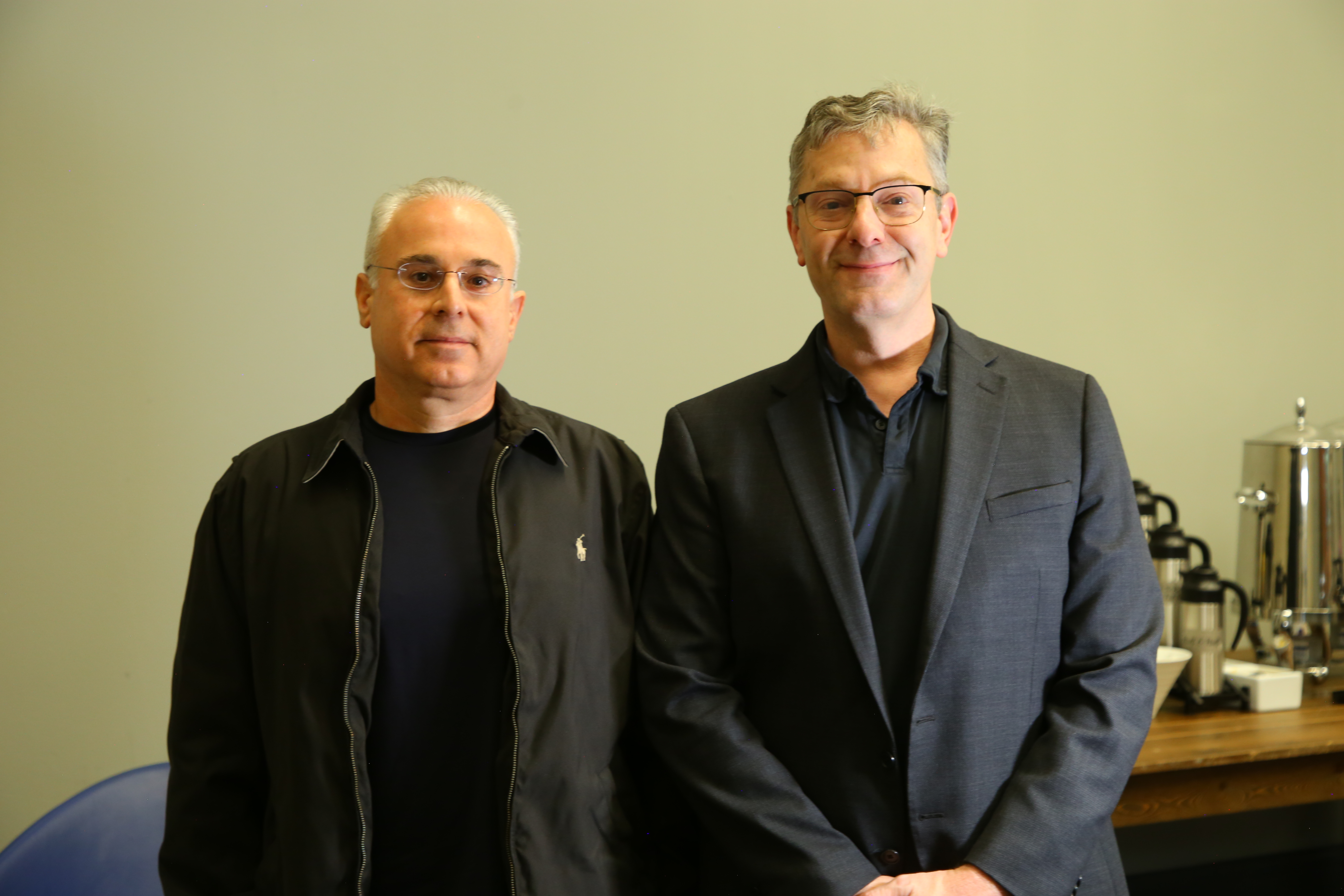
Enterprise computing is shifting from hardware-centric design to systems built around integrated architectures that unify networking, compute and management. The collaboration between Cisco and Nvidia highlights how reference models can accelerate AI adoption without forcing organizations to rebuild everything from scratch. This approach makes it easier for enterprises to extend proven environments while meeting new demands for performance and interoperability, according to Will Eatherton (pictured, right), senior vice president of data center, internet and cloud infrastructure engineering at Cisco Systems Inc.
Nvidia’s Gilad Shainer and Cisco’s Will Eatherton talk about how Cisco and Nvidia’s collaboration is transforming AI data centers.
“I’ll just hit the three key things we’re announcing this week,” Eatherton said. “The first one is cloud reference architecture, which is based on currently shipping technology. The second announcement is a new Nexus 9100 … and the third one is the orderability and soon-to-be GA of hyper-fabric AI.”
Eatherton and Gilad Shainer (left), SVP of marketing at Nvidia Corp., spoke with theCUBE’s John Furrier at the Nvidia GTC Washington, D.C. event, during an exclusive broadcast on theCUBE, SiliconANGLE Media’s livestreaming studio. They discussed how Cisco and Nvidia’s collaboration on reference architecture is transforming AI data center design by unifying networking, compute and management. (* Disclosure below.)
Nvidia’s strategy centers on transforming data centers into AI supercomputers that can evolve at the same pace as modern workloads. That requires a shared architectural language between compute and networking — one that can be replicated, validated and trusted. Cisco’s collaboration provides that bridge, extending Nvidia’s AI stack into the enterprise with familiar operational tools, according to Shainer.
“Inside Nvidia, we’re essentially focusing on building AI data centers,” he said. “We want that AI technology to be accessible by everyone. Therefore, working with the ecosystem is an important thing for Nvidia to make sure that AI is accessible for everyone.”
The goal is to make AI infrastructure easier to consume without the traditional complexity of supercomputer management. By combining Nvidia’s Spectrum-X Ethernet technology with Cisco’s Nexus software, customers can use the same interfaces and systems they already trust — only now optimized for AI performance, Shainer explained.
“The collaboration with Cisco actually helps us to drive the AI technology that we develop into the enterprise class,” he said. “They would like to continue using the same things because this is how their IT infrastructure is built. Our collaboration enables us to bring those AI supercomputers into the enterprise.”
That sense of continuity is critical as organizations weigh large-scale investments in AI clusters. Cisco’s reference architecture ensures that customers can deploy thousands of GPUs while maintaining consistent management, security and performance, according to Eatherton.
“For us, being able to bring in Nexus, Nexus Dashboard, the new hyper-fabric AI — these are ways that our customers with small teams and expertise that they already have can add that,” he said. “They shouldn’t have to be experts on RoCE and RDMA and all those aspects of troubleshooting. That’s something that the tooling and management software should do that for them. They can trust us to put that together and validate.”
Here’s the complete video interview, part of SiliconANGLE’s and theCUBE’s coverage of the Nvidia GTC Washington, D.C. event:
(* Disclosure: TheCUBE is a paid media partner for the Nvidia GTC Washington, D.C. event. The sponsors of theCUBE’s event coverage do not have editorial control over content on theCUBE or SiliconANGLE.)
Support our mission to keep content open and free by engaging with theCUBE community. Join theCUBE’s Alumni Trust Network, where technology leaders connect, share intelligence and create opportunities.
Founded by tech visionaries John Furrier and Dave Vellante, SiliconANGLE Media has built a dynamic ecosystem of industry-leading digital media brands that reach 15+ million elite tech professionals. Our new proprietary theCUBE AI Video Cloud is breaking ground in audience interaction, leveraging theCUBEai.com neural network to help technology companies make data-driven decisions and stay at the forefront of industry conversations.