 AI
AI
AI
AI

AI

Dell Technologies Inc. is bringing its data-driven “AI factories” vision to life with the expanded AI Data Platform — an open and composable stack built for scalable operational returns.
Built on a four-pillar foundation of PowerScale, ObjectScale, Elastic and Starburst, the platform unites high-performance storage with federated query and vector search capabilities. PowerScale and ObjectScale anchor the storage backbone for both structured and unstructured data, while Elastic and Starburst accelerate data discovery and access across silos.
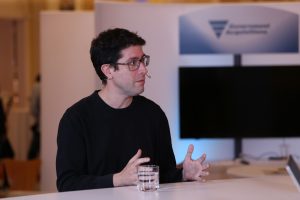
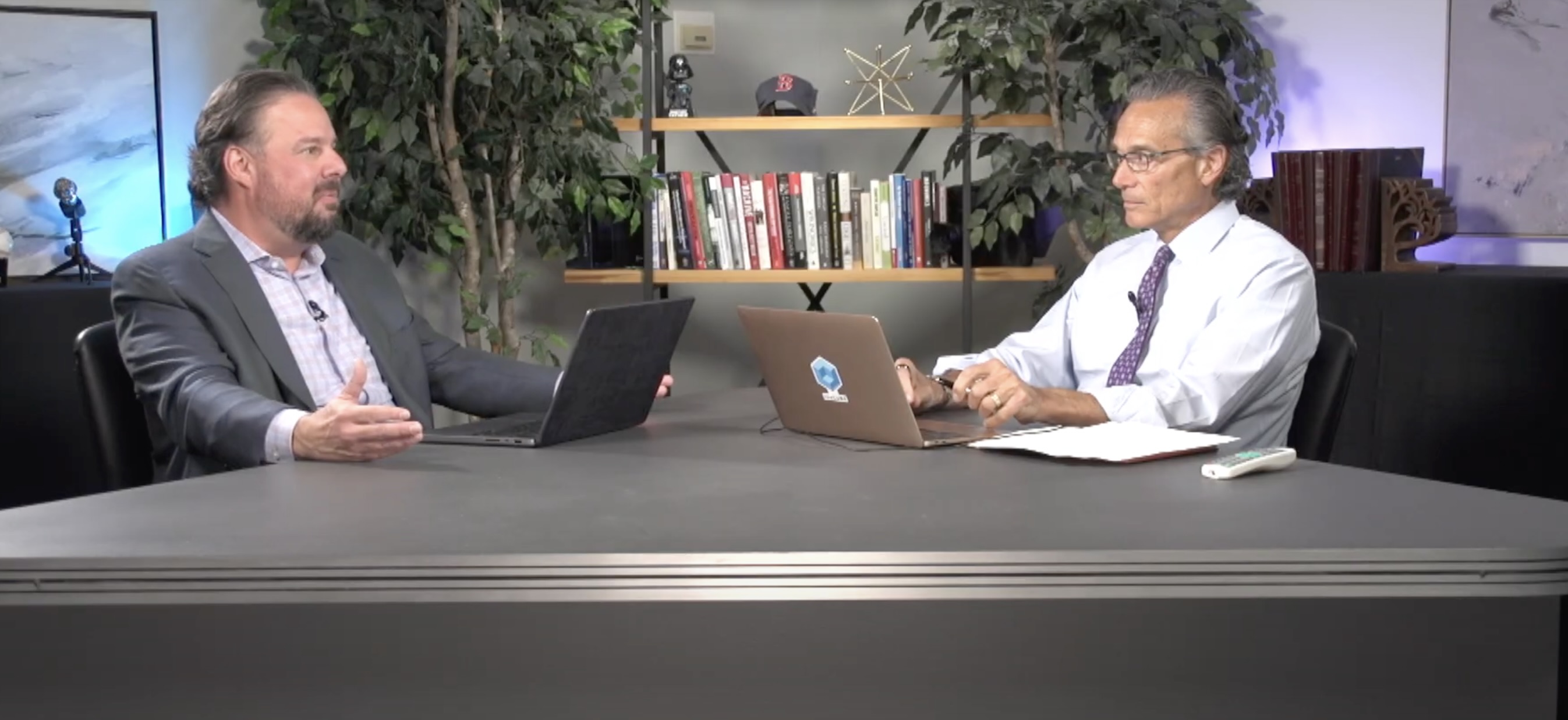
“They look at it from Elastic and a Starburst perspective as contributing to that data engine as well, and they’re adding open source with Spark,” said Rob Strechay (pictured, left), principal analyst at theCUBE Research. “Then they look at another leg of that stool in cyber resiliency, which they’ve built in with their native tools. Then they look at bringing data management services on top of that, bringing that all together to have a ready platform for deploying agentic workloads.”
Strechay spoke with Chief Analyst Dave Vellante (right) in an analyst segment at the Dell AI Data Platform Event: Break Through AI With Data event, during an exclusive broadcast on theCUBE, SiliconANGLE Media’s livestreaming studio. They discussed Dell’s broader strategy for AI factories, integrating best-of-breed components to simplify how enterprises harness data across cloud, core and edge environments. (* Disclosure below.)
Unlike monolithic, cloud-only data stacks, Dell’s platform embraces a composable model. Organizations can plug in or swap out preferred technologies without vendor lock-in. This approach reflects lessons from Dell’s VxRail success — tight integration and fast time-to-value — but with greater flexibility. Customers choose between opinionated solutions or point-and-click customization, depending on their maturity and skill sets, according to Strechay.
“What they’ve done within this ecosystem, within the Dell AI Data Platform, is they brought that knowledge of how to make a composable system really tightly integrated between these pieces, but having optionality,” he said. “They’re letting the optionality be easy where you can plug in different pieces or unplug different pieces based on your needs so that it can evolve.”
A recurring challenge in enterprise AI adoption is scaling beyond proof-of-concept. As MIT research highlights, 95% of AI pilots fail within six months of production, according to Vellante. Dell’s response centers on breaking data fragmentation and improving data accessibility across hybrid infrastructures. By combining PowerScale’s GPU-optimized file storage with partner integrations such as Elastic and Starburst, Dell enables organizations to unify their data pipelines and operationalize AI faster.
That impact is already visible in customer outcomes, where targeted use cases are proving the model’s effectiveness.
“How do you understand the different telemetry and data from these big ships?” Strechay asked. “Well, [shipping operator CSL was] able to get a 3% lift in efficiencies and cost savings on those ships and the shipping operations by putting in this thing. I think that goes to that MIT study of getting from POC to production. It’s all about being very selective in the use case. It’s engaging, and sometimes when you look at it, partners who’ve seen this for different industries, they look at it from an engineering and a manufacturing perspective.”
In a landscape increasingly wary of lock-in, Dell champions openness through support for Apache Iceberg, OpenAPIs and open table formats. This interoperability allows Dell’s stack to coexist with other data ecosystems, AI factories and governance tools — vital for long-term scalability and compliance, both analysts noted.
In addition to storage, data engine and management services, Dell has significantly deepened its collaboration with Nvidia Corp. to turbocharge its AI factory vision. The “Dell AI Factory with Nvidia” initiative integrates Dell’s infrastructure and storage foundation with Nvidia’s GPU, networking and AI-software stack, enabling enterprises to deploy agentic, multimodal AI workflows at scale. Dell’s infrastructure is now certified for Nvidia’s enterprise-AI reference architectures, and several of the retrieval-augmented-generation and model training pipelines leverage Nvidia’s NeMo Retriever and reasoning models alongside Dell’s PowerScale and ObjectScale storage.
“They’ve gone out and become storage certified with a number of the different Nvidia deployment models for the AI factories, and they bring together stuff like the retrievers, the NeMo and NIMs retrievers, and a number of things that can be deployed as part of this package … where the AI Data Platform is really the foundation,” Strechay said. “Then they’re bringing together that stack up on top of it as well with the Nvidia stack.”
Nvidia’s recent moves in telecom and 5G reflect how “AI factories are essentially the data center of the future,” according to Vellante. He pointed to the growing synergy between Dell’s hybrid approach and Nvidia’s edge-to-cloud strategy, noting that “you saw some of the announcements that Nvidia made this week in telco, and so that whole thing with 5G and 6G is starting to emerge.”
In effect, the Dell AI Data Platform is not just about storage and data engine choice — it now includes a validated GPU-accelerated compute layer from Nvidia that lets organizations tackle agentic workloads with both scale and agility. This bolstering helps Dell deliver on its promise of moving from POC to production, especially for enterprises demanding on-prem, hybrid and edge deployments, theCUBE analysts explained.
Here’s the complete video interview, part of SiliconANGLE’s and theCUBE’s coverage of the Dell AI Data Platform Event: Break Through AI With Data event:
And you can watch the full event here:
(* Disclosure: TheCUBE is a paid media partner for the Dell AI Data Platform Event. Neither Dell, the sponsor of theCUBE’s event coverage, nor other sponsors have editorial control over content on theCUBE or SiliconANGLE.)
Support our mission to keep content open and free by engaging with theCUBE community. Join theCUBE’s Alumni Trust Network, where technology leaders connect, share intelligence and create opportunities.
Founded by tech visionaries John Furrier and Dave Vellante, SiliconANGLE Media has built a dynamic ecosystem of industry-leading digital media brands that reach 15+ million elite tech professionals. Our new proprietary theCUBE AI Video Cloud is breaking ground in audience interaction, leveraging theCUBEai.com neural network to help technology companies make data-driven decisions and stay at the forefront of industry conversations.