
 AI
AI
AI
AI
AI

TurinTech AI Inc., a startup providing an artificial intelligence software engineering platform, today announced the launch of its new product, Artemis, in developer preview.
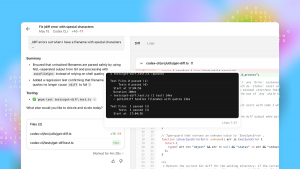
Artemis uses AI to improve existing code, find issues, fix bugs, refactor disorganized or outdated code and modernize legacy systems, including untangling messy AI-generated outputs. The platform works alongside existing AI tools to structure outputs and validate changes before they reach a code repository.
Unlike common “vibe coding” tools and approaches, Artemis works to clarify intent up front, guide decisions and structure work before committing changes to a sandboxed environment that can be validated against best practices and coding rules.
According to TurinTech, the current stable of AI coding tools may be extremely powerful, but they bring with them a level of additional technical debt. Veteran developers with little AI experience often find themselves bogged down by AI tools due to the back-and-forth required to get AI to produce reliable outputs, followed by the need to analyze generated code to tackle bugs and errors.
A recent evaluation conducted by Model Evaluation and Threat Research, a non-profit organization that studies AI capabilities, covering 16 experienced open-source developers, showed that using AI tools — such as Cursor Pro with Claude 3.5 — could take 19% longer than those who didn’t use intelligent coding tools for similar tasks.
“AI is powerful, but it struggles in the messy middle where most real software lives. That’s why developers can feel like they’re playing a high-stakes game of prompt roulette,” said Michael Parker, vice president of engineering at TurinTech.
To overcome the challenge of getting up to speed and avoid the guesswork present in using most modern coding tools, Artemis begins with discovery and planning. It uses AI and human collaboration to clarify intent via a series of questions. This allows the system to identify risks and blind spots early, while generating an overall structured plan before work starts.
From there, Artemis converts the plan into sequenced tasks with clear boundaries that can be verified after each step. The final steps can be assigned to either humans or AI coding models from a single dashboard, maintaining transparency of ownership. Engineering teams can then refine, reprioritize or reassign work between AI and people while maintaining traceability.
All builds execute within Artemis’s sandboxed environment, allowing teams to test and validate work without affecting the primary repository before validation.
“Artemis gives developers a reliable and intelligent way to apply AI,” said Dr. Leslie Kanthan, co-founder and chief executive of TurinTech. “It guides choices up front, executes work safely, and validates results so teams can trust what they ship.”
While the developer preview introduces core workflows, the complete Artemis enterprise platform goes further. The Enterprise edition adds optimization, multi-objective scoring, deeper code analysis and team-level controls. The tool is available on-premise and on the web, designed to support organizations of any size.
TurinTech is facing competition from evolving AI coding tools on the market that are already incorporating plan-first development cycles.
Verdent AI Inc. launched an agentic AI coding tool that can plan, self-verify and iterate on complex software using multiple agents in parallel in September. A month later, Amazon Web Services Inc. released Kiro into general availability, the company’s development environment integrated with AI agents that operate by producing “specs,” or specifications. These are structured plans guided by user prompts to generate clear requirements and validation schema before getting to work.
A report from the industry analysis firm Grand View Research estimated that the global AI coding tool market was valued at $6.1 billion in 2024 and is anticipated to reach $26 billion by 2030. Market expansion has been driven by the increasing complexity of software applications and the growth in AI application adoption by large enterprises and small businesses alike.
Artemis Developer Preview is available today for free on the web, with planning capabilities also available via VS Code. Access to the preview will roll out as the company scales the program and will open to an initial group of developers from a waitlist that will expand over time.
Support our mission to keep content open and free by engaging with theCUBE community. Join theCUBE’s Alumni Trust Network, where technology leaders connect, share intelligence and create opportunities.
Founded by tech visionaries John Furrier and Dave Vellante, SiliconANGLE Media has built a dynamic ecosystem of industry-leading digital media brands that reach 15+ million elite tech professionals. Our new proprietary theCUBE AI Video Cloud is breaking ground in audience interaction, leveraging theCUBEai.com neural network to help technology companies make data-driven decisions and stay at the forefront of industry conversations.