


 AI
AI
AI
AI

AI

The next stage of cloud-native infrastructure is employing Kubernetes as an orchestration platform for AI workloads, with an emphasis on supporting autonomous agents.
Vast Data Inc. is positioning itself within that ecosystem, as a cloud-native AI infrastructure platform. Its four-layer architecture — containing DataStore, DataSpace, DataBase and DataEngine — facilitates real-time data analysis, manages distributed workloads and enables data sovereignty, all critical components of an agentic AI system.
Vast is seeing considerable momentum, with a positive cash flow over 12 consecutive quarters and a gross margin of nearly 90%, as well as lucrative partnerships with Nvidia Corp., Microsoft Corp. and cloud service providers.
“Vast Data is really carving out a unique spot in the cloud-native world,” said Paul Nashawaty, principal analyst at theCUBE Research. “They’re not just another storage vendor; they’re going after the role of a cloud-native AI infrastructure platform. According to [Vast’s] research, Vast crossed $2 billion in cumulative software bookings in under six years, the fastest any data-infrastructure company has ever done. Their disaggregated, shared-everything (DASE) architecture is at the heart of what they call the AI Operating System.”
Vast recently made an appearance at the KubeCon + CloudNativeCon NA event, during an exclusive broadcast on theCUBE, SiliconANGLE Media’s livestreaming studio. Experts, analysts and company representatives gathered to discuss the evolution of cloud-native infrastructure, Kubernetes and the growth of agentic AI.
This feature examines cloud-native infrastructure and AI-driven architectures, including analysis on how the themes emerging from KubeCon + CloudNativeCon NA reflect — and accelerate — Vast’s position in the ecosystem. (* Disclosure below.)
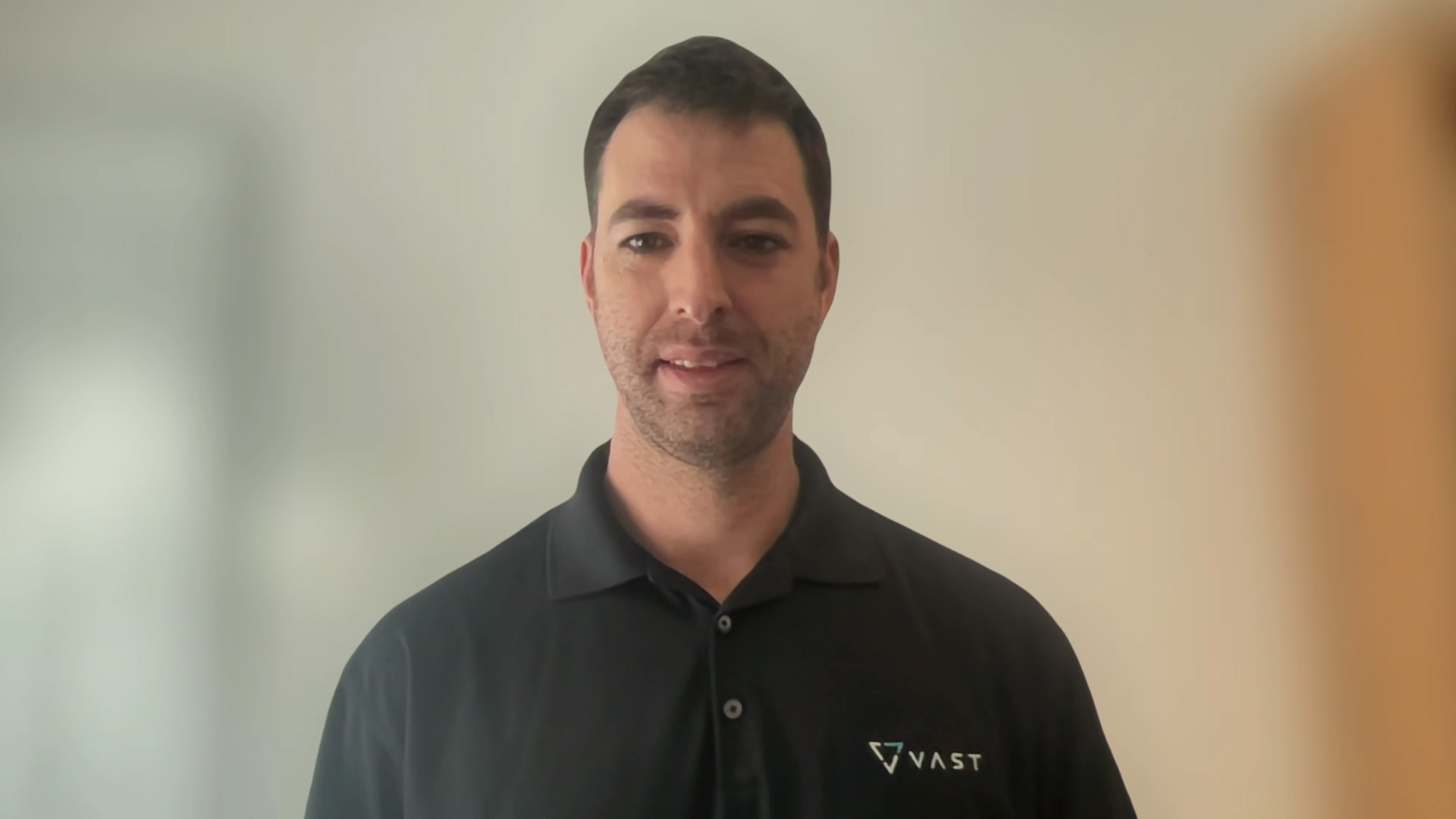
AI has changed how the enterprise approaches cloud-native infrastructure, with customers requiring more hardware for high-volume data analytics and large language models. Now the focus for Kubernetes is on distributed workloads and moving data processing closer to where information is generated. Vast facilitates that process by separating compute logic from the system state, enabling clusters to scale up the platform’s data capacity independent of the CPUs. Its DASE architecture presents an alternative, or complement, to Snowflake Inc. and Databricks, Inc.’s data lake and data lakehouse architectures, according to Alon Horev (pictured), co-founder and chief technology officer of Vast.
“When people say cloud-native, it’s really the ability for infrastructure providers to build consistency across different venues and locations where processing takes place,” Horev said in an exclusive interview with theCUBE at Kubecon. “What we’ve done over the last few years is to bring compute capabilities into that data. What [AI] models bring to the table is the ability to understand what’s buried in data, especially with embedding models for video, for audio, and Kubernetes has been something that has been an enabler for customers … to build platforms across clouds [and] on-prem environments.”
The goal for AI-Kubernetes integration is to support processing at the edge. Because Vast’s platform combines unified storage with the ability to stream data into the platform at any level of scale, it is ideal for handling distributed AI workloads. Vast also welcomes open-source innovation as a way to drive integration between cloud-native infrastructure and AI.
“Processing needs to get closer to the edge,” Horev added. “When you have an AI model that can reason and understand what’s happening live connected to a video camera, you can’t necessarily move that data all the way to the other side of the country or to another continent in order to run inference. Being able to deploy both in the cloud and at the edge is really a liberating component for infrastructure teams, and we’ve been supporting Kubernetes day one.”
Autonomous agents are the next evolution of AI in enterprise. Vast’s partners already see the potential for the Vast AI OS to support that new ecosystem, with Microsoft adopting Vast’s InsightEngine, created in partnership with Nvidia. The InsightEngine enables agentic AI to make autonomous decisions based on real-time data. Vast’s collaboration with Microsoft will provide Azure customers with high-performance AI infrastructure in the cloud, including InsightEngine and AgentEngine, which runs and coordinates AI agents on top of Vast’s unified data platform, enabling continuous reasoning and governed workflows across hybrid environments.
“The objective is to basically bring all of the goodness of what we call the Vast AI Operating System to Microsoft customers,” said Jeff Denworth, co-founder of Vast Data, who spoke with theCUBE at SC25. “We’ve been collaborating with them for, I’d say, the better part of two years now. The objective is to basically open up data access to all of the customer’s data sets for all the different compute platforms that Microsoft offers.”
At SC25, Vast highlighted SyncEngine, which streamlines data migration, indexing and integration of external sources via advanced pipeline. The tool is a part of Vast’s security strategy, which also includes stronger data encryption, with a design that adds more precise access controls, secure deletion and better key management.
“We developed another software product that allows customers to not only migrate data from place to place, but also to index everything where it is so they can build a holistic picture of all of their data,” said Andy Pernsteiner, field chief technology officer of Vast, during an interview at SC25. “It’s called SyncEngine, and it has the ability to index and migrate data both from POSIX-related file systems as well as object stores.”
Vast’s recent announcements are part of its play to be the next-generation AI data platform. Partnerships with industry giants such as Microsoft suggest Vast’s unusual strategy is paying off.
“When it comes to agentic AI, Vast is taking a different approach than most,” Nashawaty said. “Instead of making customers piece together object stores, vector databases, stream processors and orchestration, VAST combines unified storage, vector indexing, a distributed file/datastore and a built-in AgentEngine for deploying AI agents and event-driven workflows.”
Vast’s presence at KubeCon makes clear its intention to continue harnessing Kubernetes and cloud-native infrastructure. The event highlighted the importance of having flexibility and control across cloud and edge environments, as well as a rising interest in self-service infrastructure and cost control.
Vast used KubeCon to build on themes introduced at its Cosmos event held the previous year, where the company outlined its plan to operationalize the full AI pipeline and unlock unstructured data. Most AI engines can’t currently access all of an organization’s information or preserve existing security policies around that data, according to Denworth — gaps Vast aims to solve through its platform.
“I was with a Fortune 10 customer the other day,” Denworth said. “They said, ‘We probably have about 100 petabytes of unique data.’ GPT-3, just to give you a comparison, was trained on like 45 terabytes. So, there’s just more data sitting within an organization than what can be cost-effectively trained within a model.”
With so much momentum behind Vast, the question is whether or not the company will go public. The answer seems to be, not quite yet.
“Going public is a long journey and not an exit, but a public funding event, and Vast is building the platform for the long run,” said Rob Strechay of theCUBE Research. “We see Vast competing in more than just go-fast-storage, as they build an ‘AI OS’-based platform that can simplify and reduce the time to value for AI. This is especially true, as platform engineering teams face many competing demands when delivering on the requirements of Agentic AI and HPC environments at scale. Vast looks to be the underpinning for enterprise AI infrastructure to allow platform engineering to deliver services faster to developers, such as vectorization.”
Vast is carving out a distinct space for itself in the agentic AI era, with a flexible, cost-effective platform that addresses some of the biggest pain points of AI workflows — real-time data integration and processing on the edge. It simplifies what Nashawaty terms “AI plumbing” by reducing latency and operational friction while boosting developer productivity and GPU utilization.
“We have everything in place to go and be a public company in terms of all the teams in place and things like that,” Denworth said at SC25. “Are we reporting on a quarterly basis internally to the board? We are to the company … I think we’re probably still a few quarters away from being really ready.”
(* Disclosure: TheCUBE is a paid media partner. Neither Vast nor other sponsors have editorial control over content on theCUBE or SiliconANGLE.)
Support our mission to keep content open and free by engaging with theCUBE community. Join theCUBE’s Alumni Trust Network, where technology leaders connect, share intelligence and create opportunities.
Founded by tech visionaries John Furrier and Dave Vellante, SiliconANGLE Media has built a dynamic ecosystem of industry-leading digital media brands that reach 15+ million elite tech professionals. Our new proprietary theCUBE AI Video Cloud is breaking ground in audience interaction, leveraging theCUBEai.com neural network to help technology companies make data-driven decisions and stay at the forefront of industry conversations.