

 AI
AI
AI
AI

AI

Artificial intelligence has moved well past early-cycle fog. As enterprises chase faster inference, more agents and better edge use cases, the new through-line is AI factory growth — not as a slogan, but as a demand signal tied directly to tokens.
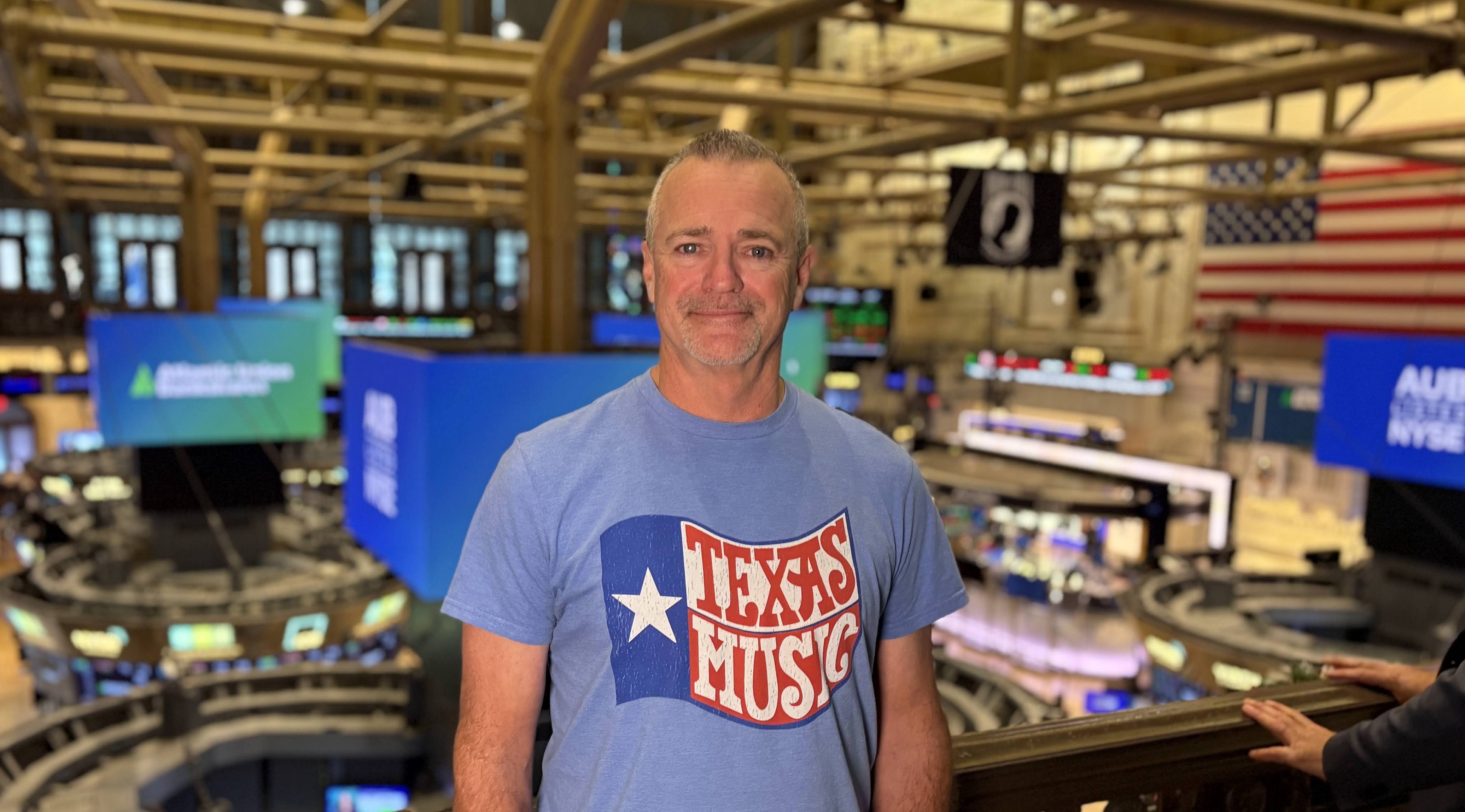
Dell Technologies Inc. believes that it’s still early in that curve. Coming out of its latest quarter, the company says AI factory growth is expanding across customer types and pulling the entire infrastructure stack into the same gravity well, according to Jeff Clarke (pictured), vice chairman and chief operating officer of Dell. That confidence is tied to Dell’s guided $25 billion in AI systems shipments for FY26.
“Year one [we shipped] a billion and a half dollars, year two, $10 billion, and we just updated our guidance for this year to $25 billion,” Clarke told theCUBE. “I think that’s indicative of the demand environment. Our five-quarter pipeline continues to grow; it’s growing across all types of customers from neoclouds to sovereigns to enterprises.”
Clarke spoke with theCUBE’s John Furrier and Dave Vellante for theCUBE + NYSE Wired: AI Factories – Data Centers of the Future interview series. They discussed what’s powering AI factory growth, what could slow it down and why Dell expects the architecture of enterprise computing to split into distinct lanes as AI adoption scales.
The current market acceleration is driven by a simple currency: tokens. The more organizations operationalize AI — especially through agents — the more token demand compounds and the more infrastructure has to follow, Clarke explained. That feedback loop is why Dell sees AI factory growth as durable, even while acknowledging input costs and supply constraints remain moving targets.
“Token growth continues to explode — you got to have token processors,” Clarke said. “Token processing machines are [graphics processing units] and the computational assets that go with that. It’s hard to imagine it slows down, but it’s something we’re certainly going to watch.”
That caution matters because the AI buildout isn’t happening inside a stable cost environment. Memory is one uncertainty that could reshape purchasing behavior, refresh timing and how quickly customers can stand up new capacity, Clarke noted. But the bigger signal is that token processing isn’t staying confined to hyperscale training clusters — it’s spreading into enterprise inference and out to the edge, reinforcing AI factory growth beyond the cloud and informing how enterprises design infrastructure.
“I think the first step is along the lines that AI is driving … a fundamental infrastructure change in enterprises,” Clarke said. “The way we view this is a partitioning of the architecture, and within the architecture and the accelerated computing you’re going to see a continuum of cloud-based tools to [on-premises] based tools. In other words: hybrid.”
That continuum is where Dell wants to live: cloud for massive scale, on-prem for sensitive data and real-time latency and edge for task-specific models that move intelligence closer to users. It’s also where the next phase of AI factory growth might emerge; not as a single monolithic GPU pile, but as a distributed buildout mapped to workloads, according to Clarke.
“They’re just computers, and the need to compute is growing,” he said. “As the token — again, tokens growth is nuts — continues that way, and it extends all the way to the edge to the PC.”
Here’s the complete video interview, part of SiliconANGLE’s and theCUBE’s coverage of theCUBE + NYSE Wired: AI Factories – Data Centers of the Future interview series:
Support our mission to keep content open and free by engaging with theCUBE community. Join theCUBE’s Alumni Trust Network, where technology leaders connect, share intelligence and create opportunities.
Founded by tech visionaries John Furrier and Dave Vellante, SiliconANGLE Media has built a dynamic ecosystem of industry-leading digital media brands that reach 15+ million elite tech professionals. Our new proprietary theCUBE AI Video Cloud is breaking ground in audience interaction, leveraging theCUBEai.com neural network to help technology companies make data-driven decisions and stay at the forefront of industry conversations.