

 AI
AI
AI
AI
AI

So-called generative engine optimization startup geoSurge Ltd. is launching today to help brands ensure they can remain visible to generative artificial intelligence chatbots like ChatGPT.
The company said it’s pioneering an entirely new discipline it has christened “corpus engineering,” which aims to help companies understand and actively improve how they are positioned inside the memories of large language models.
There’s an urgent need for this, geoSurge says, because AI chatbots are rapidly replacing traditional search engines as people’s go-to source for digital discovery. Google Search dominated the internet for years, growing to the point where it essentially had a monopoly on how people found information, but that’s no longer the case. The era of traditional search is rapidly coming to an end, some people contend, as behaviors change and people shun the long lists of links to websites in favor of conversational experiences.
GeoSurge has tons of data to back up this claim. It says ChatGPT processes close to 2 billion queries per day, while Google LLC’s AI Overviews appear in 18% of global searches. It estimates there are between 115 million and 180 million daily active users of generative AI chatbots, and that number is growing rapidly.
Chatbots are changing how people search. In the first half of the year, the number of shopping-related queries on ChatGPT more than doubled. OpenAI Group PBC’s chatbot is fast becoming one of the most influential recommendation engines in the world, and that means consumers trust its responses. If consumers trust something, they very often buy, and that means LLMs visibility is essential to any business that relies on its strong online presence.
The challenge is that very few companies understand how they’re supposed to make themselves visible to chatbots, and that’s where geoSurge comes in with its focus on corpus engineering, which aims to understand how LLMs learn, store and surface information.
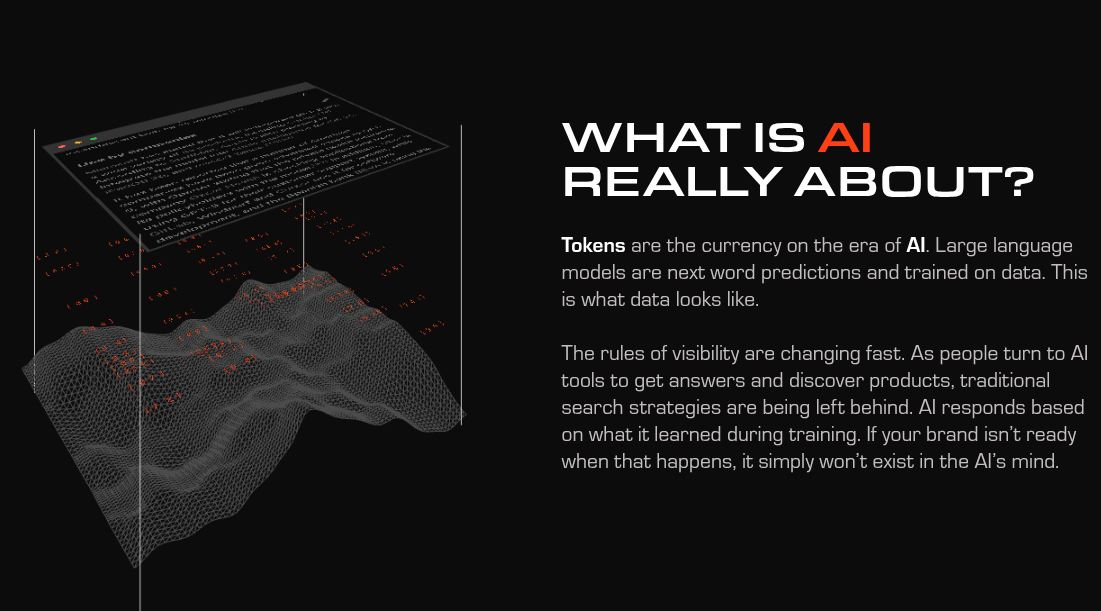
Whereas traditional search engines are based on predictable mechanics such as crawling, indexing, ranking and link-driven authority, LLMs use very different techniques to surface information. According to geoSurge, they blend internal parametric memory with external evidence, but the exact nature of that blend is highly unstable, evolving as models improve. When a major update is pushed out, it’s based on a completely different training mix that alters how they retrieve information.
Because of the frequency of LLM updates, brands have found themselves vanishing from sight overnight. For instance, when ChatGPT moved from GPT-4.5 to GPT-5, the Irish low-cost airline Ryanair DAC completely vanished from its responses, despite its flight schedules often being surfaced beforehand. It was a similar story in the U.S., where brands such as Chanel, Burberry Group Plc and Michael Kors GmbH were all competitive with GPT-4.5, only to disappear when GPT-5 was pushed out.
GeoSurge co-founder and Chief Executive Francisco Vigo said there are structural reasons why these brands can no longer be found by AI chatbots very easily. “LLMs don’t pull from a live index. They generate answers from compressed memory that shifts with every update,” he explained. “That means a brand can go from high visibility to completely gone overnight, and most won’t even know it has happened.”
GeoSurge says its goal is to prevent this kind of thing from happening. It does this by helping organizations to understand how they are encoded inside LLMs, where their representations are weak, and how upcoming model releases might affect them. It uses standard generative engine optimization techniques to enhance visibility, with a focus on high-quality content and technical optimization, ensuring websites are structured in a way that facilitates easy access for AI models.
With corpus engineering, geoSurge goes further, helping brands to develop content that strengthens the signals AI models learn from, with a priority on understanding and addressing user’s specific needs. It also applies techniques such as “memory shaping” to reduce visibility volatility across model updates, and “freshness cycles” to ensure that content is current when it is retrieved by AI models.
Support our mission to keep content open and free by engaging with theCUBE community. Join theCUBE’s Alumni Trust Network, where technology leaders connect, share intelligence and create opportunities.
Founded by tech visionaries John Furrier and Dave Vellante, SiliconANGLE Media has built a dynamic ecosystem of industry-leading digital media brands that reach 15+ million elite tech professionals. Our new proprietary theCUBE AI Video Cloud is breaking ground in audience interaction, leveraging theCUBEai.com neural network to help technology companies make data-driven decisions and stay at the forefront of industry conversations.