

 INFRA
INFRA
INFRA
INFRA
INFRA

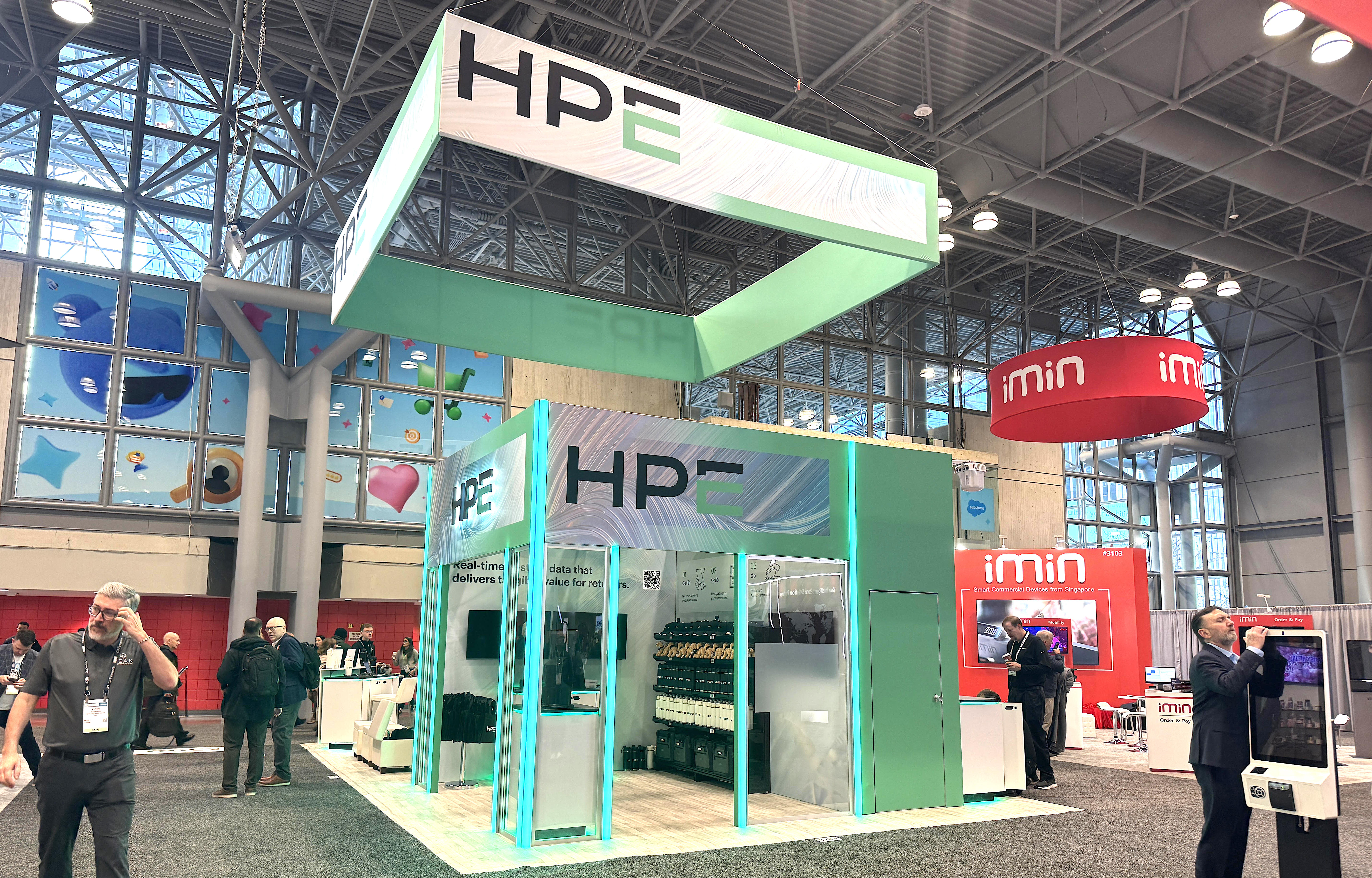
As CES wound down, industry watchers are now turning their attention to the National Retail Federation show across the country in New York.
Retail, once is slow moving industry, is now ripe with change and the in-store environments have become operationally more complex. It’s now common to find more digital services and connected systems as the networks now support point-of-sale terminals, kiosks, cameras, sensors and guest Wi-Fi, all of which are expected to function without interruptions. At the same time, many retailers are doing this with fewer staff and resources. Also, there is little room for error as when the technology fails, retailers lost money.
To address these challenges, Hewlett-Packard Enterprise Co. today announced a number of product updates across its networking, analytics, and compute portfolios that are aimed specifically at retailers.
Continuous operations are the core tenet of HPE’s announcements. Since acquiring Juniper Networks, HPE has been positioning itself as “network first.” In a prebriefing, Gayle Levin, head of marketing for wireless products at HPE Aruba Networking, told me the company has a goal of being “the best networking business on the planet,” and will lean into its self-driving network narrative to accomplish this.
On my call, Levin noted that HPE is placing major emphasis on AI enabled operations to help retailers cope with staff shortages. “Retailers are struggling so much with staffing, and they’re managing stores remotely,” she said. “Having that kind of self-driving capability is a huge win for them.”
So much of the industry chatter regarding artificial intelligence is that the technology taking jobs, but in industries such as retail, business can’t hire people fast enough. AI can help remove many of the complex and repetitive tasks, enabling information technology operations to focus on strategic initiatives.
HPE ties much of its retail strategy to its broader push toward self-driving networks. The idea comes up repeatedly in retail conversations because sending IT support staff to stores is expensive and time-consuming and retailers are trying to avoid it whenever possible.
By combining telemetry, AI for IT operations, and automation, retailers can detect and resolve problems remotely. Levin pointed to customers that have significantly reduced on-site IT visits by relying more heavily on self-driving capabilities. For example, one major retail customer was able to cut store visits by 85% thanks to more self‑driving operations.
HPE is careful not to frame self-driving as an all-or-nothing proposition. Retailers can decide which actions are automated and which require approval from the IT team first. Levin explained: “This allows customers to move to self-driving at their own pace, and get to that comfort level.”
On the hardware side, HPE is expanding the Aruba Networking CX 6000 switch family with fanless, compact eight-port models to address space and noise issues in retail. The switches are designed for checkout lanes, kiosks and other customer-facing areas, not wiring closets. They can be installed under counters or in tight overhead spaces.
These are one-gigabit switches that HPE is positioning as an entry point in the CX 6000 family. Retailers can move up to higher-capacity models if needed. Levin said the goal is to provide a consistent switching platform that can scale from a small convenience store to a large retailer, all managed through the same Aruba Central platform.
The new models support both Power over Ethernet and non-PoE configurations. With more PoE capacity than older models, retailers will be able to add newer devices without having to redesign their networks. This is especially beneficial for those moving to Wi-Fi 7.
Wi-Fi 7 is a recurring theme in HPE’s retail messaging. HPE updated the Aruba User Experience Insight, part of Aruba Central, with support for Wi-Fi 7 and new sensors. The sensors can identify issues related to network upgrades or configuration changes, helping IT teams establish performance baselines and test network health.
“It’s one of the first sensors that’s out there specifically designed for Wi-Fi 7 to look at not just the six-gigahertz channel utilization, but also some of the capabilities that are unique to Wi-Fi 7,” said Levin.
Levin explained that the sensors continuously run synthetic user tests — about a thousand per day — to proactively detect issues. The tests simulate common network interactions, such as user sign-on activity, to prevent problems before they affect real users.
Another focus area for HPE is analytics. The company has integrated the Marvis virtual network assistant with Premium Analytics from its Juniper networking portfolio, giving retailers access to up to 13 months of data. This allows retailers to see how stores performed during the same period last year and track seasonal changes. All Mist customers have access to 30 days of data but the Premium subscription extends that by 10 more months for deeper analysis.
The analytics component is handled by HPE’s Mist AIOps platform, which collects and analyzes performance and location data, while Marvis is the interface where users interact with the data. Levin compared the experience to asking a question in a chat interface, rather than navigating traditional dashboards or reports.
“We’re able to use our natural-language interface in Marvis (from Juniper) and AIOps, then take all the rich data and get not only IT insights, but also business insights,” said Levin. “And because retail is so seasonal, it helps with those seasonality components as well. For example, how should I staff at Christmas this year based on what we saw last year?”
Levin said retailers are doing more than just network troubleshooting. They’re using the data for occupancy planning, to make staffing decisions, and to gauge how product placement affects traffic flow inside stores.
All of the work HPE is doing at the store edge ultimately depends on what happens behind the scenes. The company is updating its fault-tolerant NonStop Compute platform, which is still widely used for payment processing. For instance, a large share of credit-card transactions pass through NonStop systems at some point.
The latest NonStop release can scale across thousands of nodes and delivers about 15% more performance than the previous generation. HPE also introduced Transparent Data Encryption to strengthen protection for payment and customer data.
Another notable change is how NonStop can be deployed. HPE now offers a software-based version that can run on standard infrastructure or in cloud environments. For retailers, that opens up more options. They can also access NonStop through HPE’s GreenLake platform, adding capacity during peak periods as needed.
The NonStop Compute platform is ideally suited when uptime is everything. On our call, HPE said 90% of retail transactions flow through the product. While there are many high-availability compute products available, there is a big difference between them and fault-tolerant solutions, which offer 100% redundancy in hardware and never go down. Prior to being an analyst, I worked as an IT pro at a financial firm, and we used similar systems to power our trading desk as any downtime meant lost revenue.
HPE’s announcements at NRF 2026 give retailers a closer look at how these pieces fit together across stores, networks and core systems. Levin said the common thread is reducing operational friction for retailers: “This is really about the enhancements that we’re making so that we can deliver the backbone for the best retail experiences and transactions.”
For HPE, the set of announcements was a combination of Aruba, Juniper and its compute products. Historically, the various groups within HPE haven’t always come to market together, so it was good to see a set of innovations for retailers from “HPE.” Customers are now looking for business outcomes and that requires vendors to eliminate the historical silos that may live within their companies. Moving into 2026 it would be good to see HPE and its peers continue to announce products structured along the lines of customer challenges.
Zeus Kerravala is a principal analyst at ZK Research, a division of Kerravala Consulting. He wrote this article for SiliconANGLE.
Support our mission to keep content open and free by engaging with theCUBE community. Join theCUBE’s Alumni Trust Network, where technology leaders connect, share intelligence and create opportunities.
Founded by tech visionaries John Furrier and Dave Vellante, SiliconANGLE Media has built a dynamic ecosystem of industry-leading digital media brands that reach 15+ million elite tech professionals. Our new proprietary theCUBE AI Video Cloud is breaking ground in audience interaction, leveraging theCUBEai.com neural network to help technology companies make data-driven decisions and stay at the forefront of industry conversations.