 AI
AI
AI
AI







AI

Databricks Inc.’s 2026 State of AI Agents report, released today, documents rapid growth in the use of artificial intelligence agents within enterprises but acknowledges that few are deploying the technology at large scale.
The use of multi-agent workflows grew 327% over four months, driven by the rapid introduction of agent orchestration features. However, only 19% of audited organizations have deployed agents at scale, reflecting a gap between experimentation and production.
The report is based on aggregated and anonymized activity from more than 20,000 Databricks customers worldwide. Though not statistically projectable to the enterprises as a whole, Databricks’ large customer base, which includes 60% of the Fortune 500, should make the data broadly meaningful, said Craig Wiley, senior director of product for artificial intelligence and machine learning at Databricks.
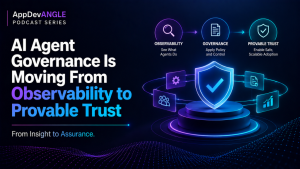
The report indicates a strong correlation between success with AI agents and strong governance processes. “It comes back to how to control AI and guarantee that it works,” Wiley said. Databricks telemetry shows that companies using governance tools deploy 12 times more AI projects to production than the average firm, and that use of the Databricks’ AI Gateway governance product grew sevenfold in nine months.
Enterprises initially focused on chatbots are now building multi-agent systems capable of planning and executing complex tasks, the report says. About 40% of identified use cases relate to customer experience functions such as support, onboarding and personalized communications. The top use case is market intelligence, followed by predictive maintenance.
 One striking finding is that 80% of new databases and 97% of database testing and development environments are now generated by agents, a shift Databricks said is associated with natural-language-driven application development, or “vibe coding.”
Agents can now create ephemeral environments in seconds to support new applications, enabling nontechnical users to automate workflows and experiment with new applications without the burden of long setup times.
The number of databases created by AI agents in Neon, a serverless database Databricks acquired last spring, surged from 0.1% to 80% of all new databases in just two years. Neon is the core technology behind Databricks Lakebase operational database built on PostgreSQL.
Governance has emerged as a critical prerequisite for scaling agent deployments, the report said. Governance is a trailing behavior that tends to follow initial adoption, Wiley said. “Once organizations have built enough that it starts to get nerve-wracking, they start to worry about governance,” he said.
The report also links evaluations to production success. Those are structured, repeatable tests that ensure that an AI system performs specific tasks accurately and reliably. Databricks said companies that use evaluation tools achieve six times more production deployments than those that don’t.
Evaluations remain underused because “They’re hard and the industry hasn’t been leaning as hard on them as it should,” Wiley said. But they are becoming “existential” when agent output affects financial or reputational risk.
AI’s efficiency gains won’t come without operational impacts. The speed at which agents create infrastructure raises questions about the role of database administration and oversight. Wiley said information technology departments will need to develop new approaches to managing software development as tools becomes more accessible. “IT departments are going to need to create a new way of thinking about how they govern the organizations and the business units they work with,” he said.
Databricks Unity Catalog anchors its governance strategy, providing centralized access control, auditing, lineage and data discovery across multiple workspaces and cloud platforms. Control and governance are “the difference between success and not success for a lot of these organizations,” he said.
Support our mission to keep content open and free by engaging with theCUBE community. Join theCUBE’s Alumni Trust Network, where technology leaders connect, share intelligence and create opportunities.
Founded by tech visionaries John Furrier and Dave Vellante, SiliconANGLE Media has built a dynamic ecosystem of industry-leading digital media brands that reach 15+ million elite tech professionals. Our new proprietary theCUBE AI Video Cloud is breaking ground in audience interaction, leveraging theCUBEai.com neural network to help technology companies make data-driven decisions and stay at the forefront of industry conversations.