 AI
AI
AI
AI








AI

The AI spending frenzy shows no signs of stopping in 2026, as OpenAI, Anthropic and Nvidia continue to gobble up funds.
With NYSE media week coming up, everyone is watching to see if enterprise tech’s investments will pay off. Microsoft took a hit while IBM rose up 12%, and OpenAI is looking for even more funding to sustain its momentum.
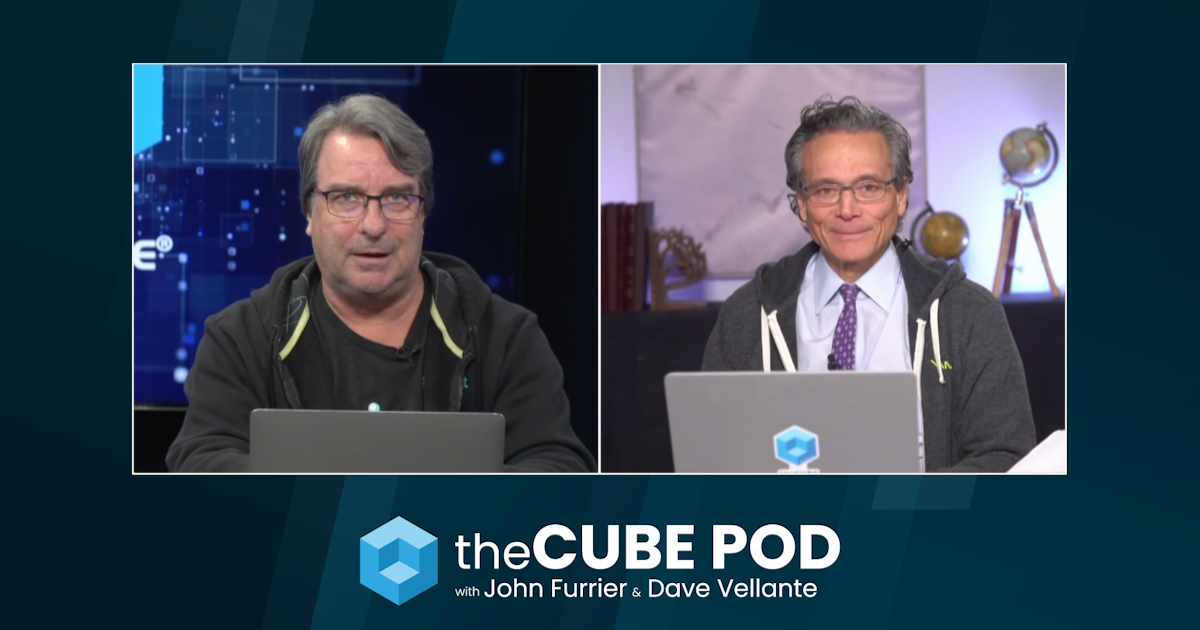
“This week has been all about AI money, AI fear and the market that’s kind of blinking,” said John Furrier (left), executive analyst for theCUBE Research. “Microsoft got hammered, lowest price ever. The deal making went into overdrive. There’s no signs of anything slowing down, so the whole kind of bubble thing is still in play. OpenAI and Anthropic are hoovering up capital like it’s nobody’s business — like a vacuum. They’re sucking all the oxygen out of the room.”
On the latest episode of theCUBE Pod, Furrier and Dave Vellante (right), chief analyst for theCUBE Research, discussed the future of AI powerhouses OpenAI and Nvidia. They also delved into IBM’s renaissance and Elon Musk’s plans to merge xAI with SpaceX.
As OpenAI seeks $60 billion more in funding and looks toward a possible IPO, onlookers remain concerned about whether or not the AI market can sustain its growth. Anthropic has leaned fully into enterprise AI, while OpenAI has kept a large part of its focus on the consumer — a strategy that could pay off long-term.
“Innovation starts in the consumer and then it migrates to the enterprise,” Vellante said. “We’ve seen that before with Microsoft, certainly with Intel and others. Look at Nvidia: gaming. So ,I think it’s going to be an advantage for [OpenAI]. I think it will confer advantage in the form of data and volume and knowledge.”
AI has seemingly replaced cloud as the new buzzword, with companies rapidly rebranding as AI businesses in order to get funding. The dollar is also losing value, which means companies might as well throw cash at AI initiatives, according to Vellante. He and Furrier predict that as the market settles, OpenAI and Anthropic will stick it out while surrounding AI companies disappear–as many websites did after the dotcom boom.
“The dynamic of market dominance has changed … this idea that there’s no fast follower,” Furrier said. “There’s an arms race here. Apple quietly dropped two billion on Q.ai, its biggest AI acquisition ever, signaling that wearables and on-device AI is a serious front. We’ve got MWC coming up; we’ll see a lot more edge.”
One of the biggest concerns critics have about the AI craze is its circular spending model, suggesting that it could go the route of the dotcom boom. However, Vellante predicts that Nvidia and OpenAI will weather the coming storm, so long as their foundational business models remain sound and AI starts to return value.
“I think Nvidia is a winner,” Vellante said. “The mistake people made in the dotcom is they thought a company with a website had a durable business model. But the fundamentals of Nvidia are very strong, unless AI is BS. I don’t think it is. I think you’re going to start to see real returns this year in enterprise AI ROI.”
In order for Nvidia, and the entire AI ecosystem, to sustain its growth, Furrier thinks three questions have to be answered: Will AI factories be an enabler? Will the networks enable edge and distributed computing? Will AI-native applications happen?
“On all three factors, it’s a yes, yes, yes,” Furrier said. “So to me, Nvidia has massive headroom. Plenty of developers, plenty of use cases. And if you want to even get more aggressive, look at the physical AI side. That’s every car, everything that’s instrumented.”
The market was a little queasy this week, with Microsoft getting its lowest price ever and Amazon doing another wave of lay-offs, but the real key to getting a return on AI investments is model reliability, according to Furrier. In enterprise, there’s a higher bar for mistakes so eliminating hallucinations is crucial.
“When that happens, the enterprise explodes in growth because that is the only limitation,” Furrier said. “That combined with CapEx requirements. You’re going to see more efficiencies around mixing and matching XPUs and GPUs for architectural things on the factory side. But the key will be, can they get their own models to hit that one point — accuracy?”
Another looming shift in enterprise tech is a possible merger between Musk’s xAI (which owns X, formerly Twitter), SpaceX and maybe Tesla. Some are theorizing the resulting conglomerate could be the new Berkshire Hathaway, though Vellante has his doubts.
“I don’t see it as Berkshire Hathaway,” he said. “I don’t buy that at all. Elon is gaining synergies with all these companies through AI. AI is a horizontal substrate across all of those assets. Berkshire Hathaway buys great companies and runs them and then has them send all the cash left over up to the corporate headquarters so they can invest it. I just don’t see Elon as that kind of operator.”
And rounding out the AI news this week was a win for IBM, which has embraced AI wholeheartedly with its watsonx platform. Big Blue was up 12%, beating analyst expectations, and its generative AI book of business exceeds $12 billion. The results reflect the remarkable turnaround IBM has made since the 2010s.
“IBM is one of these companies that has AI chops internally,” Vellante said. “Companies like IBM, JPMorganChase, Dell … they’re applying AI internally and they’re getting returns. These big companies are seeing [returns], and their learnings are going to trickle down to other companies.”
Gemma Allen, theCUBE host
Jeremy Burton, CEO of Observe
Jim Cramer, investment pro and TV personality
Marc Benioff, chair and CEO of Salesforce
Bill McDermott, chairman and CEO of ServiceNow
Larry Ellison, chairman of the board and CTO of Oracle
Paul Nashawaty, principal analyst at theCUBE Research
Guillermo Flor, angel investor
David Floyer, analyst emeritus at theCUBE Research
Satya Nadella, chairman and CEO of Microsoft
Tom Eggemeier, CEO of Zendesk
Erik Bradley, chief strategist and director of research at Enterprise Technology Research
John Chambers, CEO of JC2 Ventures
Elon Musk, CEO of Tesla
Chamath Palihapitiya, CEO of Social Capital, co-host of All-In
Arvind Krishna, chairman and CEO of IBM Corp.
Jim Kavanaugh, CEO of World Wide Technology
Dario Gil, under secretary for Science, U.S. Department of Energy and director of the Genesis Mission
Rob Thomas, SVP, software and chief commercial officer of IBM
Bill Belichick, former general manager of the New England Patriots
Malcolm Butler, former American football cornerback
Eric Mangini, American football coach
Michael Jordan, businessman and former basketball player
Chuck Noll, American football player
Vince Lombardi, American football coach
Here’s the full episode of this week’s theCUBE Pod:
Don’t miss out on the latest episodes of “theCUBE Pod.” Join us by subscribing to our RSS feed. You can also listen to us on Apple Podcasts or on Spotify. And for those who prefer to watch, check out our YouTube playlist. Tune in now, and be part of the ongoing conversation.
Support our mission to keep content open and free by engaging with theCUBE community. Join theCUBE’s Alumni Trust Network, where technology leaders connect, share intelligence and create opportunities.
Founded by tech visionaries John Furrier and Dave Vellante, SiliconANGLE Media has built a dynamic ecosystem of industry-leading digital media brands that reach 15+ million elite tech professionals. Our new proprietary theCUBE AI Video Cloud is breaking ground in audience interaction, leveraging theCUBEai.com neural network to help technology companies make data-driven decisions and stay at the forefront of industry conversations.