

 AI
AI
AI
AI

AI

As enterprise AI initiatives move from experimentation to scrutiny, many organizations are confronting a familiar gap between promise and payoff. Early pilots have demonstrated technical capability, but translating those efforts into measurable business impact has proven far more difficult.
At Celonis SE, the company’s position is increasingly direct: Enterprise AI requires operational context to deliver meaningful results. Celonis’ process intelligence — originally focused on mapping and analyzing workflows — has evolved into what the company describes as a foundation for moving AI from isolated pilots to outcome-driven execution across the enterprise.
For organizations that have invested heavily in generative AI without seeing clear returns, the conversation has shifted. Technology leaders are no longer asking whether AI can work in theory. They are asking how it improves performance in practice — and how quickly those improvements can be measured.
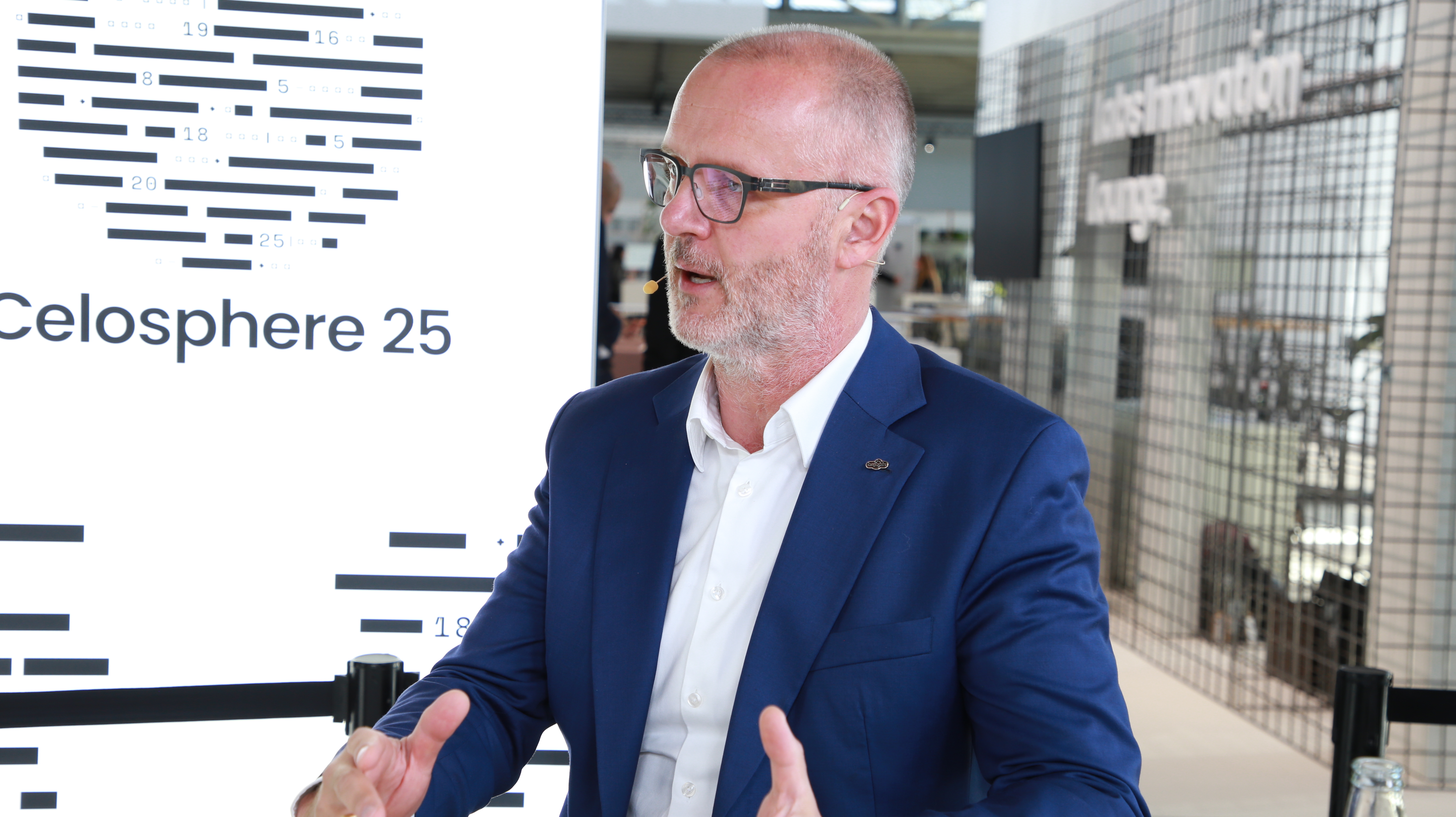
“It’s really: Get the insights, make the decision and perform the action — that’s how value is created,” said Rudy Kuhn (pictured), lead evangelist at Celonis.
During the recent Celosphere conference, Kuhn spoke with theCUBE, SiliconANGLE Media’s livestreaming studio, about how process intelligence connects AI insight to execution, helping enterprises drive operational change rather than isolated experimentation.
This feature is part of SiliconANGLE Media’s ongoing coverage of the rise of process intelligence, AI-driven execution and real-time enterprise operations. (* Disclosure below.)
Process mining alone has become a crowded category, but process intelligence — a blend of mining, orchestration and contextual execution — is increasingly positioned as something more foundational. Industry research reflects this shift. For example, Celonis was named a leader in “The Forrester Wave: Process Intelligence Software, Q3 2025” report, which cited the platform’s ability to support enterprise-scale intelligence and operational control.
For years, companies have used process mining to see how work moves across systems — where bottlenecks live, where delays lurk, where compliance slips through the cracks. But visibility alone does not change outcomes. Watching inefficiencies repeat without intervention offers little value.
Celonis’ strategy is to turn insight into intervention. At its Celosphere event, the company solidified a narrative that process intelligence needs to be more than “visibility.” It must become the context layer for AI. Celonis stitches together transactional event logs from ERP, CRM, supply chain, finance and other systems with business context to form a Process Intelligence Graph — a living digital twin of operations. That digital twin feeds AI the hard facts about how a business actually works, not how it’s supposed to work on paper.
AI without context is guesswork. Context makes AI actionable, according to Alex Rinke, co-chief executive officer and co-founder of Celonis.
“AI is great for everyday tasks, like writing emails,” he told theCUBE. “The reality is that the return [on AI] isn’t visible yet at anywhere near the scale or magnitude that we expect — and it’s really because you need to look under the covers. But to provide maximum value for business, it needs to do things like tell you which customer deliveries are at risk and take automated action to reroute deliveries and notify logistics partners.”
The message cuts through marketing abstraction and lands on a practical requirement: Enterprise AI must act on operational truth to generate value.
The cornerstone of Celonis’ approach is its Process Intelligence Platform, anchored by the Process Intelligence Graph. The graph merges raw event data from disparate systems with business context so that AI can properly interpret what it sees.
Identifying a spike in overdue orders is one thing. Understanding why those delays exist across finance, logistics, fulfillment and customer commitments — and triggering corrective action — is another. That distinction defines the platform’s value proposition. Around this foundation, Celonis has layered capabilities designed to move from insight to execution. AI-enabled offerings such as the AgentC suite and Process Copilots draw directly from the Process Intelligence Graph, supplying AI agents with operational context in real time. The Orchestration Engine coordinates actions across systems and teams, triggering workflows, alerts and automated responses when thresholds are crossed.
The company’s Solution Suites package these capabilities into industry- and function-specific deployments for finance, supply chain, sustainability and front office operations, bundling connectors, metrics and business logic to accelerate time to value.
Celonis’ go-to-market strategy centers on value realization rather than feature adoption. Instead of positioning process intelligence as a standalone analytics layer, the company sells it as an execution foundation tied to measurable business outcomes. Enterprise engagements typically begin with targeted value discovery, identifying high-impact process inefficiencies before expanding across functions and systems.
Partners play a critical role in that motion. Global systems integrators embed Celonis into ERP modernization, supply chain transformation and digital operations programs, while cloud partnerships ensure the platform integrates directly into existing enterprise architectures. The result is a land-and-expand model anchored in delivered value, not proof-of-concept experimentation.
This outcome-first approach aligns closely with board-level scrutiny around AI investments. CFOs and business leaders increasingly demand traceable ROI, not theoretical capability. Celonis’ GTM narrative reflects that reality: AI earns its place when it demonstrably improves execution.
That positioning resonates with analysts tracking enterprise adoption.
“Most organizations aren’t looking to ‘slap an AI on it’ when it comes to process automation,” said Rob Strechay, principal analyst at theCUBE Research. “They are looking to improve efficiency. Celonis’ object-based technology allows for this.”
Paul Nashawaty, practice lead and principal analyst at theCUBE Research, echoed a similar assessment: “Celonis has clearly evolved beyond being seen as a standalone process-mining vendor. The analyst discussions at events like Celosphere consistently position the company as a process intelligence and execution platform, designed to help enterprises move from visibility into operations toward real, measurable action.”
That shift reflects broader enterprise fatigue with dashboards that look impressive but fail to reduce cycle times or costs. The central question has moved from “Can AI work?” to “Can AI pay?”
Industry data underscores the urgency. At Celosphere, Celonis reported more than 120 customer “Value Champions” generating over $10 million each in measurable value, totaling more than $8.1 billion across its customer community. Those results are tied to concrete operational improvements rather than experimental pilots.
The broader implication is clear: Enterprise AI struggles without operational context. With process intelligence, AI can act — and when it acts effectively, it creates value.
If Celonis’ strategy continues to resonate, process intelligence may become less of a category and more of a prerequisite for enterprise AI success — the layer that finally connects insight to execution and turns promise into ROI.
(* Disclosure: TheCUBE is a paid media partner for Celosphere. Neither Celonis, the sponsor of theCUBE’s event coverage, nor other sponsors have editorial control over content on theCUBE or SiliconANGLE.)
Support our mission to keep content open and free by engaging with theCUBE community. Join theCUBE’s Alumni Trust Network, where technology leaders connect, share intelligence and create opportunities.
Founded by tech visionaries John Furrier and Dave Vellante, SiliconANGLE Media has built a dynamic ecosystem of industry-leading digital media brands that reach 15+ million elite tech professionals. Our new proprietary theCUBE AI Video Cloud is breaking ground in audience interaction, leveraging theCUBEai.com neural network to help technology companies make data-driven decisions and stay at the forefront of industry conversations.