

 CLOUD
CLOUD
CLOUD
CLOUD
CLOUD

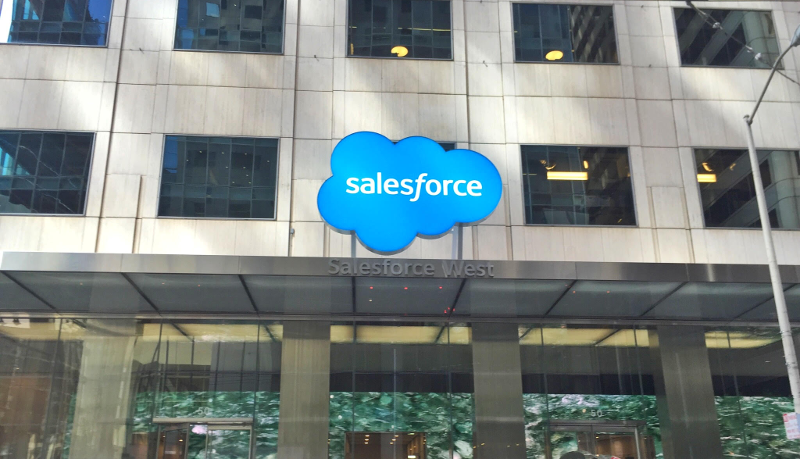
Salesforce Inc. is shifting resources away from its Heroku platform-as-a-service offering to prioritize other parts of its business.
Nitin Bhat, the chief product officer of Heroku, announced the move in a blog post published today. He wrote that Salesforce will stop offering Enterprise Account subscriptions to new customers. The company also plans to scale back the development of new Heroku features, but still intends to release a recently announced revamp of the platform’s managed PostgreSQL service. It will also continue releasing cybersecurity and reliability updates.
Heroku launched in 2007 as a startup-operated cloud platform for hosting Ruby applications. Salesforce acquired it four years later for $212 million. Over the subsequent years, the cloud giant added support for other programming languages besides Ruby and also extended Heroku’s feature set in other ways.
Heroku runs customer workloads in Linux containers called dynos. Those containers are coordinated by an orchestration engine, dyno manager, that can detect software-level issues in a dyno and restart it. If an outage is caused by a malfunction in the underlying hardware, dyno manager automatically moves the affected workloads to a new server.
The service offers dynos alongside higher-level application building blocks. One of the most popular of those offerings is Heroku Postgres, a managed relational database. It automates not only infrastructure maintenance chores but also a range of other tasks. It also periodically backs up its contents and enables developers to quickly create copies of a database for testing and load balancing purposes.
Over the past few years, Salesforce has released updates designed to make Heroku more suitable for artificial intelligence workloads. Heroku Postgres, for example, received support for an open-source tool called pgvector. It enables the database to store embeddings, the mathematical objects in which AI models keep information.
When Salesforce bought Heroku in 2011, the industry’s three major public clouds were a few years old. Their platform-as-a-service capabilities were relatively limited. Today, the major cloud providers all offer alternatives to Heroku’s core components. That increased competition may have influenced Salesforce’s decision to switch the platform to maintenance mode.
The feature overlaps between Heroku and certain newer Salesforce offerings may have also been a factor. Heroku includes a service dubbed Managed Inference and Agents that developers can use to create custom AI agents. In 2024, Salesforce launched a tool called Agent Builder that offers similar capabilities.
“We’re focusing our product and engineering investments on areas where we can deliver the greatest long-term customer value, including helping organizations build and deploy enterprise-grade AI in a secure and trusted way,” Bhat wrote in today’s blog post.
Heroku users with existing Enterprise Account contracts will retain the ability to renew their subscriptions. Additionally, both existing and new customers who pay with a credit card can continue using the platform. Bhat stated that pricing, billing and other key aspects of the user experience will remain unchanged.
Support our mission to keep content open and free by engaging with theCUBE community. Join theCUBE’s Alumni Trust Network, where technology leaders connect, share intelligence and create opportunities.
Founded by tech visionaries John Furrier and Dave Vellante, SiliconANGLE Media has built a dynamic ecosystem of industry-leading digital media brands that reach 15+ million elite tech professionals. Our new proprietary theCUBE AI Video Cloud is breaking ground in audience interaction, leveraging theCUBEai.com neural network to help technology companies make data-driven decisions and stay at the forefront of industry conversations.