 EMERGING TECH
EMERGING TECH
EMERGING TECH











EMERGING TECH

Freeform Future Corp., a startup using custom 3D printers to make metal parts, has raised $67 million in funding.
The company stated in its announcement of the deal today that Nvidia Corp.’s NVentures and Boeing Co.’s AE Ventures were among the participants. They previously backed Freeform’s Series A raise in 2024. The company’s latest round also included contributions from Apandion, Founders Fund, Linse Capital, Threshold Ventures and Two Sigma Ventures.
Metal components are typically made using large, automated cutting tools called CNC machines. Such machines can be difficult and time-consuming to set up. That makes them impractical for certain low-volume manufacturing tasks. Spending months to set up a CNC production line that will make only a handful of parts often isn’t economic.
In many cases, metal 3D printers of the kind used by Freeform offer a more cost-efficient alternative. Engineers can program a 3D printer to make a certain part and then reconfigure it to produce another relatively quickly. As a result, the costs associated with setting up a production line are lower than with CNC machines. Furthermore, 3D printers often produce less metal waste.
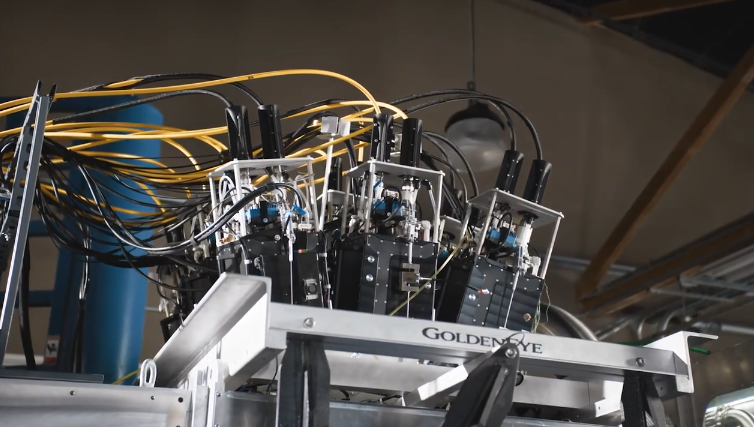
Freeform has developed a 3D printing system called GoldenEye that is specifically optimized for metalworking. According to the company, it uses 18 lasers to make parts from metal powder. Built-in sensors collect data about the manufacturing workflow to identify areas for improvement.
The most common 3D printing approach that involves lasers and metal powder is called SLM. An SLM printer deposits a thin layer of metal particles on a flat substrate and melts them together into shapes using laser light. It then deposits another layer of powder, melts it and repeats the process until the component is ready.
SLM printers’ lasers are typically powered by a highly modified fiber-optic cable. The cable often comprises multiple layers and includes ytterbium, a rare-earth element that is also used to make quantum computer qubits.
According to TechCrunch, Freeform’s 3D printing hardware is supported by on-premises server clusters equipped with H200 graphics cards. The chips run simulations that help the company improve manufacturing quantity and quality.
Quality optimization is an important element of the 3D metal printing workflow because 3D printers are prone to certain errors. If a printer doesn’t spend enough time heating metal powder, the powder might not fuse properly, which weakens the structure of the component being fabricated. That can lead to cracks and other defects.
Freeform doesn’t sell 3D printers, but instead operates a 3D printing facility where it produces parts for customers. The company says that its approach removes the need for organizations to build production lines and hire technical staff, which lowers costs.
Freeform will reportedly use its funding round to upgrade its GoldenEye 3D printing system. The company is working on a new version that includes several hundred lasers and will be capable of making “thousands of kilograms of metal parts” per day.
Freeform plans to reveal the system, which it calls Skyfall, in the second half of the year. The company expects the machine to boost its manufacturing capacity by a factor of more than 25. Freeform will hire up to 100 new employees to support its growth efforts.
Support our mission to keep content open and free by engaging with theCUBE community. Join theCUBE’s Alumni Trust Network, where technology leaders connect, share intelligence and create opportunities.
Founded by tech visionaries John Furrier and Dave Vellante, SiliconANGLE Media has built a dynamic ecosystem of industry-leading digital media brands that reach 15+ million elite tech professionals. Our new proprietary theCUBE AI Video Cloud is breaking ground in audience interaction, leveraging theCUBEai.com neural network to help technology companies make data-driven decisions and stay at the forefront of industry conversations.