

 AI
AI
AI
AI

AI

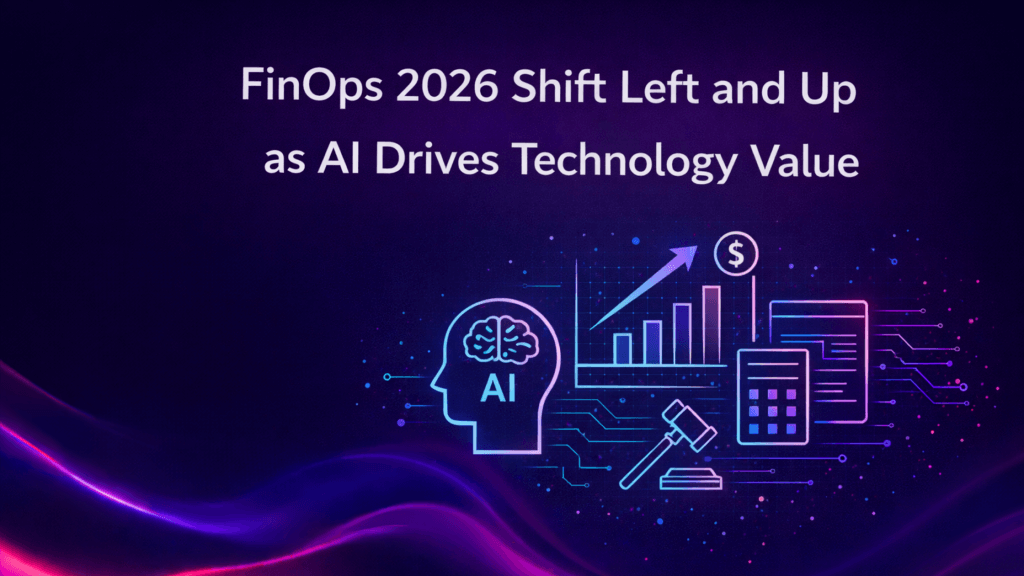
Once a practice centered on cloud cost optimization, FinOps is now a fundamental part of managing the value of technology — especially AI.
The just-released “State of FinOps 2026 Report“ revealed that 98% of respondents now manage AI spend, while 90% manage SaaS as part of their scope. Furthermore, FinOps practitioners with executive alignment show two to four times more influence over technology selection decisions.
In a recent analysis by theCUBE Research, Paul Nashawaty and Sam Weston observe that more organizations are experimenting with the FinOps Open Cost and Usage Specification (FOCUS) — which normalizes billing data from different sources — and AI-driven insights.
“FOCUS standardization, executive alignment and shift-left costing suggest a future where financial intelligence operates as a parallel control plane alongside observability and security,” Nashawaty and Weston wrote in their analysis. “FinOps is no longer a cost-reporting function. It is evolving into the operating model for technology value in the AI era.”
Nashawaty and Weston’s FinOps 2026 analysis is part of continuing coverage ahead of theCUBE’s live coverage from FinOps X June 8-10. Read on for further insight into the “State of FinOps 2026 Report” and what it means for machine learning and application development. (* Disclosure below.)
Organizations now seek to introduce financial context before readying infrastructure and deploying AI workloads. By evaluating the cost implications of, say, cloud region selection or data residency strategies, practitioners can make smart financial decisions earlier in the application development process.
“Shift-left FinOps reframes architecture decisions as economic decisions,” Nashawaty and Weston said. “Once waste is prevented upstream, it disappears from downstream reporting. This complicates developer incentivization and ROI attribution, a theme repeatedly surfaced in the analyst briefing.”
A constant theme throughout the report was the convergence of AIOps and FinOps, with both FinOps for AI and AI for FinOps becoming higher priorities for the surveyed companies. AI has complicated cost assessments, making FinOps a natural part of the current machine learning conversation.
“A significant majority of organizations leverage AIOps to accelerate observability and simplify operations,” Nashawaty and Weston specified in their analysis. “Meanwhile, AI for FinOps itself is rising as a future priority, with nearly half rating AI use within FinOps as highly important. This creates a feedback loop. AI increases infrastructure complexity and spend variability. FinOps governs that spend. AI then improves FinOps productivity through forecasting, anomaly detection and cost attribution automation.”
TheCUBE’s research shows that 46.5% of organizations must deploy applications 50–100% faster than three years ago, accelerating the need for predictive design. Managing costs is not just about workload optimization anymore; it’s also about forecasting business value.
“While workload optimization remains a current priority for 58% of respondents, practitioners increasingly describe diminishing returns,” Nashawaty and Weston added. “The largest misconfigurations have already been addressed. Savings opportunities now require deeper architectural insight rather than surface-level clean-up.”
FinOps is not just moving left, but up. That means it is now a bigger part of technology selection decisions at the executive level. The data backs this up: 78% of FinOps teams now report to the chief technology officer or chief information officer.
“Perhaps the most transformative development is structural,” Nashawaty and Weston explained. “FinOps leaders are participating in provider negotiations, commitment modeling and M&A diligence discussions. They are answering ROI and investment realization questions rather than merely reporting past spend. FinOps is becoming a decision-support system for enterprise technology strategy.”
FinOps’ shift left and up represents a transition from cloud cost to total technology value. While FinOps practitioners used to primarily manage the public cloud, most now work in private cloud environments and software-as-a-service ecosystems, with about 28% including labor costs as well.
“Standardization becomes critical in this environment,” Nashawaty and Weston added. “Among organizations spending $100M+ annually, approximately 68% are already using or experimenting with FOCUS-formatted data to normalize cost and usage telemetry across providers. Requests for expanded AI and data center support in FOCUS further reinforce that financial telemetry must match architectural diversity.”
TheCUBE Research analysis concluded that financial interoperability is becoming as important as application programming interface interoperability. The importance of this transformation cannot be understated, according to Nashawaty and Weston. FinOps’ new position as an AI operation model has huge implications for the cost evaluation of AI workloads and the presence of cost telemetry in the developer experience.
“This is not merely a finance update,” they said. “It represents a material change in how architecture, AI pipelines, multicloud strategies and platform engineering decisions are evaluated. FinOps is embedding itself into the software delivery lifecycle.”
(* Disclosure: TheCUBE is a paid media partner for the FinOps X event. Neither the FinOps Foundation, the sponsor of theCUBE’s event coverage, nor other sponsors have editorial control over content on theCUBE or SiliconANGLE.)
Support our mission to keep content open and free by engaging with theCUBE community. Join theCUBE’s Alumni Trust Network, where technology leaders connect, share intelligence and create opportunities.
Founded by tech visionaries John Furrier and Dave Vellante, SiliconANGLE Media has built a dynamic ecosystem of industry-leading digital media brands that reach 15+ million elite tech professionals. Our new proprietary theCUBE AI Video Cloud is breaking ground in audience interaction, leveraging theCUBEai.com neural network to help technology companies make data-driven decisions and stay at the forefront of industry conversations.