 AI
AI
AI
AI






AI

Virtana today introduced a new application observability capability designed to track performance problems across the full technology stack from application code to infrastructure, networks, storage and artificial intelligence workloads, an approach the company says addresses gaps in other application performance monitoring tools.
The San Jose-based company, whose legal name is Virtual Instruments USA Inc., said the new offering reflects a shift in how modern applications must be monitored as enterprise systems become more distributed and increasingly dependent on AI workloads.
The platform combines application telemetry with infrastructure-level data to automatically correlate performance issues across hybrid environments. Virtana said its approach identifies root causes more quickly and supports what it calls “system-level observability” rather than the code-centric monitoring used by many legacy APM platforms.
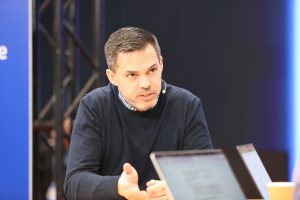
“Pretty much every player in the market is strong in one area and then tries to broaden their platform across multiple areas,” said Paul Appleby, chief executive officer of Virtana. “Just about every one of the Global 2000 ends up with somewhere between six and 12 observability tools that they try to weave together.”
The new product, called Virtana Application Observability, extends the firm’s existing observability platform by adding deeper application-level tracing and correlation with infrastructure and platform signals.
Virtana said its new platform is designed to address those challenges through a system dependency graph that continuously maps relationships across applications, infrastructure and AI platforms.
The system correlates telemetry signals, such as logs, traces and infrastructure metrics, to identify the most likely root cause of performance issues. AI-powered root cause analysis identifies where latency, failures or constraints originate and prioritizes the most likely limiting dependency with supporting evidence.
The Kubernetes-aware platform provides visibility into clusters, workloads, nodes and resource contention across container environments. By automating those processes, the company said, information technology teams and AI agents can diagnose problems more quickly and reduce downtime.
Virtana paired the product launch with new research by the company that suggests observability tools are struggling to keep pace with modern enterprise environments. Its survey of IT leaders responsible for enterprise infrastructure and application found that 52% reported persistent visibility gaps despite significant spending on monitoring tools.
Appleby said the complexity is increasing as organizations move from experimenting with artificial intelligence to deploying it at large scale. Fragmentation slows incident response and forces IT teams to manually correlate events across different systems, a task made more difficult by the speed at which AI agents operate.
“Observability isn’t about mean time to innocence,” Appleby said, referring to a tongue-in-cheek metric for the average time it takes for a team to prove that their component is not the cause of an application failure. “It’s about mean time to resolution.”
Large-scale AI infrastructure, or “AI factories,” is intensifying the problem, Appleby said in an interview with theCUBE, SiliconANGLE’s streaming video platform. That’s because infrastructure behind AI-driven services is far more complex than most organizations realize.
“We think of AI factories as just a bunch of GPUs,” he said. “The reality is an AI factory is a hugely complex system that the GPUs are just a part of.”
Because those environments span data pipelines, networking, storage and computer systems, performance failures can originate almost anywhere in the stack. That means the only practical way to diagnose those failures is to monitor the entire system rather than isolated components.
Virtana’s research suggests the industry may not yet be ready for that shift. “There is a big disconnect between what executives believe about their enterprise readiness and what the IT organization actually thinks,” Appleby told theCUBE. “At least 25% of AI jobs fail.” Other industry research suggests the figure is much higher than that.
Virtana said the new Application Observability capability is available immediately. Unlike most competing platforms, pricing will be based on devices rather than data volumes. “We’re about driving business outcomes, and charging for data doesn’t help customers do that,” he said.
Support our mission to keep content open and free by engaging with theCUBE community. Join theCUBE’s Alumni Trust Network, where technology leaders connect, share intelligence and create opportunities.
Founded by tech visionaries John Furrier and Dave Vellante, SiliconANGLE Media has built a dynamic ecosystem of industry-leading digital media brands that reach 15+ million elite tech professionals. Our new proprietary theCUBE AI Video Cloud is breaking ground in audience interaction, leveraging theCUBEai.com neural network to help technology companies make data-driven decisions and stay at the forefront of industry conversations.