

 AI
AI
AI
AI

AI

The rapid expansion of artificial intelligence is driving a convergence toward an AI operating system that governs how data, compute and intelligence move through enterprise infrastructure.
The conversation has moved past experimentation and into the hard questions of inference at scale, agent sprawl and the operational mechanics of running AI in production. Companies, including Vast Data and Solidigm, are positioning a unified software layer as the connective tissue, highlighting how constraints in one part of the stack quickly ripple across AI storage economics, according to Dave Vellante, chief analyst at theCUBE Research, in the keynote analysis at Vast Forward.
“Their point is, we need a new operating system because the old world isn’t going to get us through the next 20 years,” Vellante said. “We’re entering a new era with the new architecture. What does that operating system do? It manages and allocates resources. It’s basically the orchestrator of all that stuff.”
Vellante, along with theCUBE host Rebecca Knight, spoke with industry experts at Vast Forward, during an exclusive broadcast on theCUBE, SiliconANGLE Media’s livestreaming studio. They examined how AI infrastructure is evolving toward a unified operating layer designed to manage data, compute and intelligent systems at scale. (* Disclosure below.)
Here’s theCUBE’s complete video analysis with Vellante and Knight:
Check out three insights you may have missed during theCUBE’s coverage of Vast Forward:
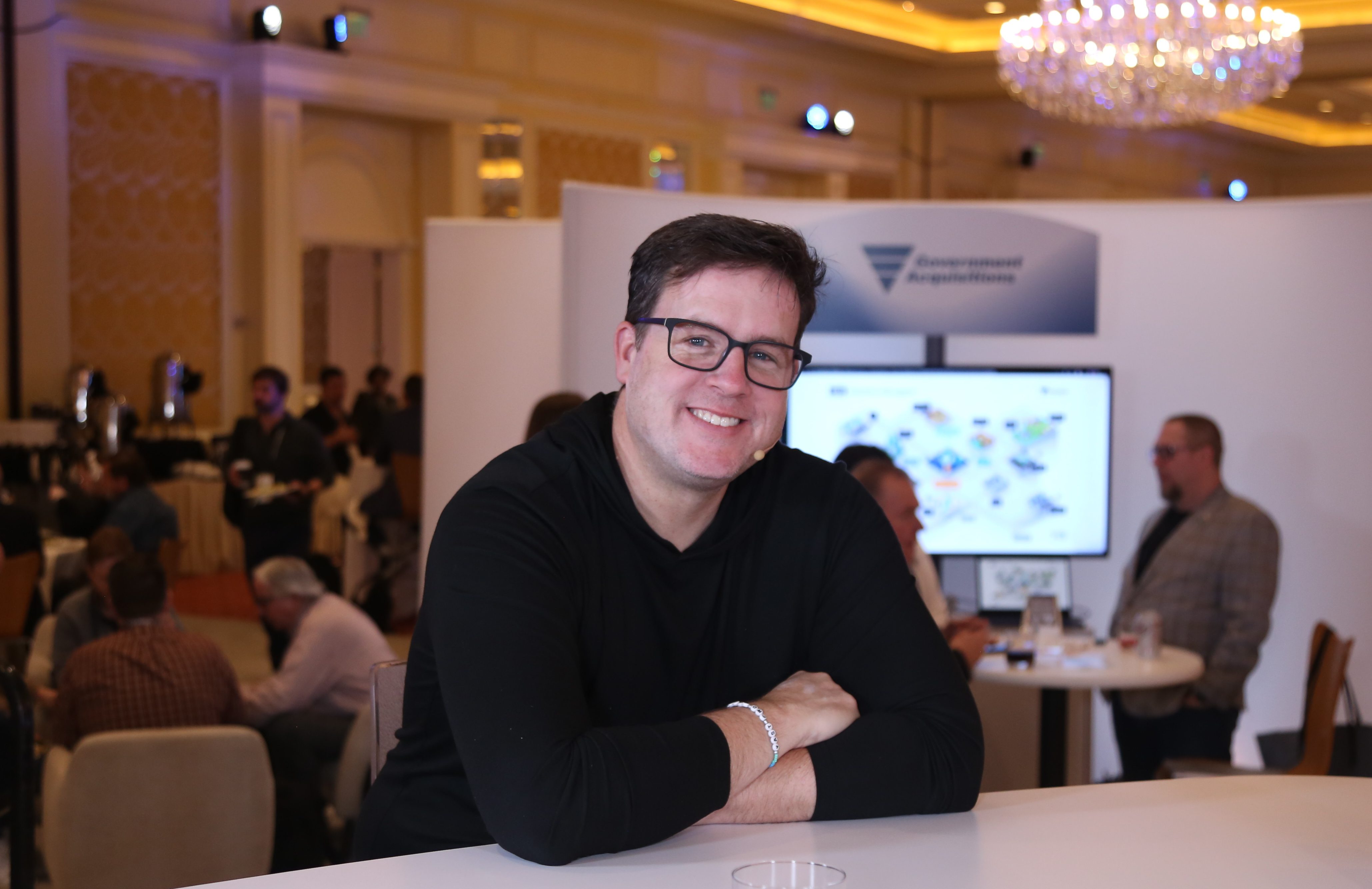
Vast Data is framing its momentum as a “gradually, then suddenly” dynamic as AI forces infrastructure decisions into a single, compressed cycle. The company is getting pulled upstream because AI is widening the problem from storage into a software layer that can schedule compute, run models and enforce policy without breaking operational control, Jeff Denworth (pictured), co-founder of Vast Data explained.
“An operating system is a few things,” he said in a theCUBE interview. “You have a run time that you can run your applications on. You have a file system that you keep kind of like your unstructured data in. Sometimes you have an index for that file system that’s in the form of a database or something like that. The idea was let’s envision the first 10 years of the product and let’s envision it for all the forms that we wanted it to be.”
Here’s theCUBE’s complete video interview with Jeff Denworth:
Vast Data is positioning AI’s next phase as a full-stack rebuild where data access patterns become the defining constraint as workloads shift deeper into inference and multi-agent execution. Renen Hallak, founder and chief executive officer of Vast Data, views an AI operating system not as a label, but as the layer that makes enterprise AI workable by collapsing orchestration, scheduling and security into one operational surface.
“It’s my analogy for that software infrastructure layer,” he told theCUBE. “We’re not hardware people, we’re not AI model people, but we want to provide that middle of the sandwich software infrastructure stack that includes storage, that includes database, that includes scheduling of jobs and orchestrating compute. It includes security.”
Here’s theCUBE’s complete video interview with Renen Hallak:
Inference growth is turning NAND and dynamic random access memory supply into a strategic limiter rather than a routine procurement issue. As adoption accelerates, the practical reality is that many enterprises cannot simply buy their way through capacity constraints, which is pushing efficiency and reuse to the front of infrastructure strategy, noted Ace Stryker, director of AI and ecosystem marketing at Solidigm, a trademark of SK Hynix NAND Product Solutions Corp.
“By all accounts, what’s happening here is something fundamentally different and structural to where we’re headed in the future,” Stryker said in an interview with theCUBE. “What we’ve seen since then is an explosion, not on the training side, but on the inference side, really driving massive demand for DRAM and NAND bits.”
Here’s theCUBE’s complete video interview with Ace Stryker and Phil Manez, vice president of go-to-market execution at Vast Data:
The operational response is increasingly about making AI deployment less fragile for organizations that do not have specialist teams to stitch together a workable stack. Partnerships are emerging as a delivery model for validated systems that reduce integration risk and shorten time to production, according to Danny McGinniss, VP of product management, Compute Business Unit, at Cisco Systems Inc.
“The AI Factory is absolutely an evolution,” he told theCUBE. “We’ve always had this concept at Cisco of Cisco Validated Design. That’s where we take a lot of our infrastructure with third party partners like Vast and build out an end-to-end validated stack. But what happened is that kind of morphed, especially with AI coming into the scene as like this very new infrastructure model. Some of the most sophisticated IT teams in the world are struggling to get that house of cards working.”
Here’s theCUBE’s complete video interview with McGinniss and John Mao, VP of business development and alliances at Vast Data:
In media production, the same pressures show up as a demand for predictable performance in highly interactive creative workflows. As animation pipelines grow more data-intensive, studios are leaning on storage platforms that can keep latency consistent while absorbing punishing render loads, emphasized Eric Bermender, head of data infrastructure and platforms at Pixar Animations Studios.
“The reason why the flash layer is very important to us is because latency is one of what our artists are most sensitive to,” he said during Vast Forward. “They’re doing stuff in real time at their desktops, visualizing these different components that they’re working on. The performance has to be guaranteed.”
Here’s theCUBE’s complete video interview with Eric Bermender, Ace Stryker and Andy Pernsteiner, field chief technology officer of Vast Data:
GPU-heavy workloads are forcing cloud architecture to move beyond the abstractions that shaped the first wave of hyperscale computing. Specialized AI clouds are rebuilding the stack around throughput, observability and explicit control over how compute, storage and networking behave under real training and inference pressure, according to Chen Goldberg, SVP at CoreWeave Inc.
“What we saw happen over the last 15 years is this cloud-native ecosystem,” she told theCUBE. “We talked about stateless workloads. We talked about portability of workload. We talked about simplifying consumption of infrastructure. Now, we’re in a similar but probably bigger moment. There is yet a new technology. There’s actually several new technologies. We have GPUs, extremely powerful. We have large language models, we have AI models, and then what can you do with them? How can you really unleash innovation and just see what’s possible? And that’s where the AI clouds come, solving for that moment.”
Here’s theCUBE’s complete video interview with Chen Goldberg:
Cybersecurity is accelerating along the same curve, with adversaries moving faster than traditional detection and response pipelines can track. As enterprises push AI deeper into production, the security problem increasingly becomes one of architecture and response speed, not incremental tooling.
“The adversaries have picked up on the new technology a lot faster than most of the enterprises have,” Josh Salmanson, VP of the cyber defensive practice at Leidos Inc., told theCUBE during the event. “In the last six, seven months, research reports have shown that adversaries are getting into an environment in under a minute now. They’re doing everything that they’re going to do on the objective and they’re getting back out. Without making a change in the fundamental architecture for our defenders, we’re not going to be able to keep up.”
Here’s theCUBE’s complete video interview with Josh Salmanson; Robert Linger, VP of information advantage practice at Leidos; and Randy Hayes, VP of Vast Federal at Vast Data:
To watch more of theCUBE’s coverage of Vast Forward, here’s our complete video playlist:
(* Disclosure: TheCUBE is a media partner for Vast Forward. Sponsors of theCUBE’s coverage, including presenting sponsor Solidigm, do not have editorial control over content on theCUBE or SiliconANGLE.)
Support our mission to keep content open and free by engaging with theCUBE community. Join theCUBE’s Alumni Trust Network, where technology leaders connect, share intelligence and create opportunities.
Founded by tech visionaries John Furrier and Dave Vellante, SiliconANGLE Media has built a dynamic ecosystem of industry-leading digital media brands that reach 15+ million elite tech professionals. Our new proprietary theCUBE AI Video Cloud is breaking ground in audience interaction, leveraging theCUBEai.com neural network to help technology companies make data-driven decisions and stay at the forefront of industry conversations.