
 AI
AI
AI
AI

AI

Healthcare is facing its most significant transformation in decades. Physician burnout, outdated infrastructure and mounting administrative demands have pushed the system to a breaking point. In response, clinical and technology leaders are turning to agentic healthcare as the best path for reform.
During the HIMSS Global Health Conference & Exhibition in Las Vegas, industry leaders explored how Google Cloud LLC and its partners are accelerating adoption of artificial intelligence across payers, providers and patient experiences. Discussions ranged from responsible AI governance in radiology to digital concierge tools for consumers. The clear takeaway: Healthcare is shifting from AI as a passive assistant to workflow-native agentic AI.
“We are entering into a special moment,” Aashima Gupta, global director of healthcare strategy and solutions at Google Cloud, told theCUBE during the event. “It is an agentic era for healthcare, and the shift in the technology is not what AI can do, but what AI is trusted to do.”
During theCUBE’s coverage of Google Cloud at HIMSS26, host Rebecca Knight spoke with healthcare and technology leaders about how Google Cloud and its partners are accelerating AI adoption throughout the industry. The conversations focused on the rise of agentic AI in healthcare — from governance and interoperability to workforce redesign and patient-facing tools — and what it will take to scale those systems in production. (* Disclosure below.)
Here are six vital signs that agentic healthcare is maturing:
Agentic AI in healthcare depends on a strong trust infrastructure. Systems that act, not just suggest, must operate within clear guardrails, compliance systems and auditability, Gupta noted. This approach is already in use, with conversational AI built on Google Cloud’s platform now handling 80% of inbound patient calls in one deployment, freeing clinicians from routine triage, information-gathering and scheduling, according to Baiju Jacob, healthcare strategy executive at TEKsystems Global Services LLC. The discussion highlighted Google Cloud’s full AI stack, from infrastructure to Vertex AI and Gemini, as the foundation for scaling agentic healthcare workflows responsibly.
Catch the full segment on theCUBE.
Responsible AI in healthcare is no longer just a compliance concern; it is becoming an operational requirement as health systems mature their governance around where AI should be used and who should oversee it, explained Sonia Gupta, chief medical officer of enterprise imaging at Optum Inc. That means identifying the right problem first, engaging clinical, IT, finance, legal and regulatory stakeholders and continuously monitoring models for accuracy and drift after deployment.
Here’s theCUBE’s complete interview with Gupta and Jason Klotzer, customer engineer for healthcare and life sciences at Google Cloud.
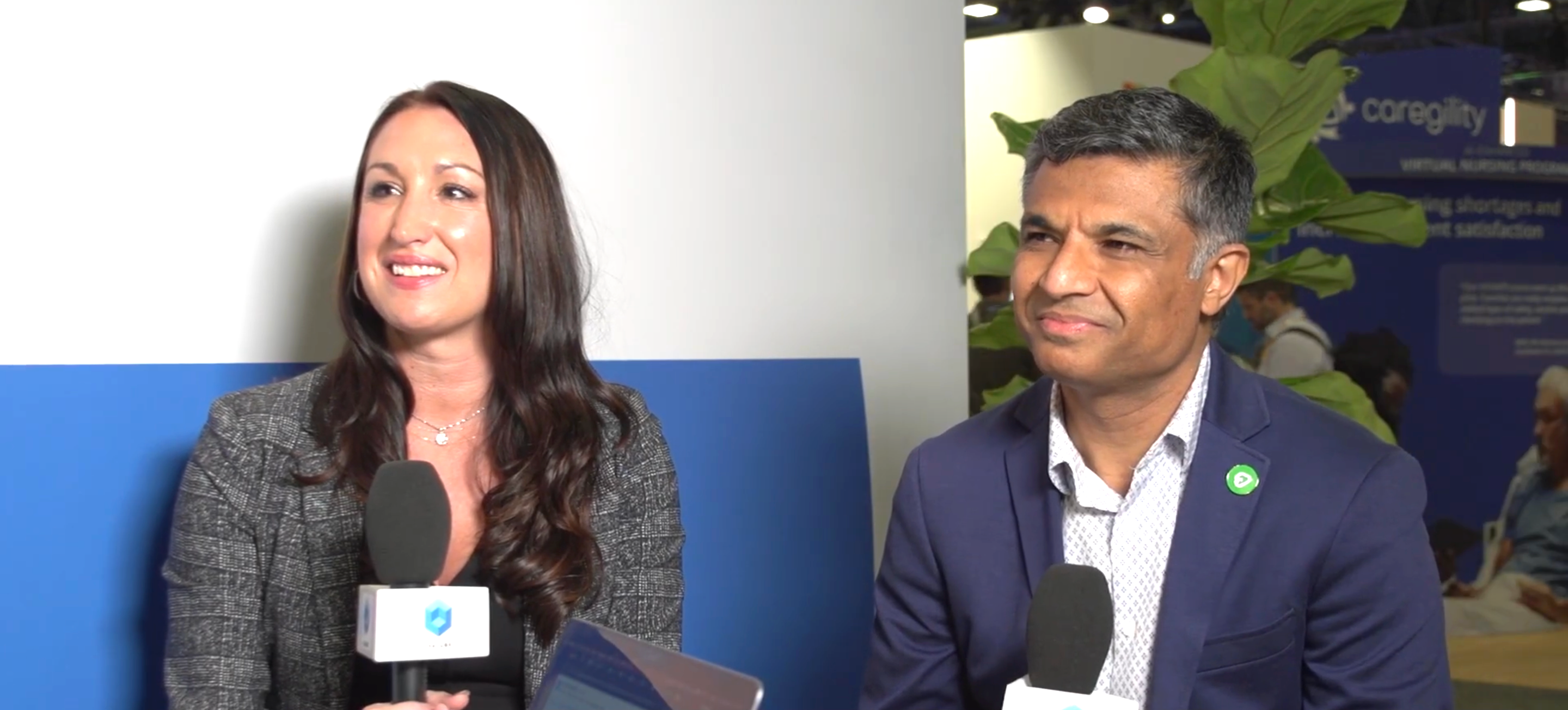
Healthcare’s AI challenge is not a lack of tools so much as the difficulty of connecting them to the highly regulated legacy environments most organizations still operate in, according to Stephanie Rickard (pictured, left), vice president of healthcare strategy and growth at Cognizant Technology Solutions Corp. Google’s Vertex AI acts as the interoperability layer across those systems, while Gemini’s multimodal capabilities help organizations work across text, imaging, voice and structured data, noted Rajiv Batra (right), director and head of North American GSI partnerships at Google Cloud.
Don’t miss the full segment on theCUBE.
What is changing now is not just that AI can complete a task, but that it can carry information from one step to the next without requiring a human handoff each time. In one radiology deployment, Quantiphi Inc. used Google Cloud technologies to unify fragmented patient data into a longitudinal record, automate disease screening, surface data gaps and feed anonymized research workflows, according to David Denov, global healthcare practice leader at Quantiphi.
Watch theCUBE’s full exclusive.
Last year’s HIMSS conversations were dominated by questions about AI’s value; this year, that question has largely been answered for organizations that made the leap to deployments. The new discussion is about how AI agents are reimagining the healthcare workforce, with humans operating above the loop — setting strategy and expectations — while agents take on more of the execution, according to Nneka Emegwa, managing director of US health and public services at Accenture PLC.
Catch the entire segment with Emegwa and Aashima Gupta on theCUBE.
The most powerful reframe at HIMSS26 may have been the simplest: Every job in healthcare has a chore and a purpose. Agentic AI is taking on the chore — the repetitive, high-frequency work that crowds out meaningful care — and that logic now extends well beyond the clinic to revenue cycle, claims, case management, contracting and HR, Aashima Gupta explained. That vision looks like “an agent for every employee” and “an always-on concierge” for patients, including Humana Inc.’s AI Agent Assist, which supports 20,000 associates handling 80 million calls annually, and the Quest Diagnostic AI Companion, which helps patients interpret lab results through a grounded, always-available interface, she added.
For the full story, check out the segment on theCUBE.
Here’s the complete video playlist, part of SiliconANGLE’s and theCUBE’s coverage of Google Cloud at HIMSS26:
(* Disclosure: TheCUBE is a paid media partner for the theCUBE’s coverage of Google Cloud at HIMSS26. Neither Google Cloud, the primary sponsor of theCUBE’s event coverage, nor other sponsors have editorial control over content on theCUBE or SiliconANGLE.)
Support our mission to keep content open and free by engaging with theCUBE community. Join theCUBE’s Alumni Trust Network, where technology leaders connect, share intelligence and create opportunities.
Founded by tech visionaries John Furrier and Dave Vellante, SiliconANGLE Media has built a dynamic ecosystem of industry-leading digital media brands that reach 15+ million elite tech professionals. Our new proprietary theCUBE AI Video Cloud is breaking ground in audience interaction, leveraging theCUBEai.com neural network to help technology companies make data-driven decisions and stay at the forefront of industry conversations.