









 AI
AI
AI
AI
AI

As an industry, healthcare tends to be slow-moving and significantly behind others. There are many reasons for this, including budgets, availability of technology and the fact that any errors in healthcare can result in lost lives.
Healthcare transformation has been a big part of past Nvidia GTC conferences, and it was again this year. In fact, during his keynotes, Chief Executive Jensen Huang always calls out healthcare as being the industry where artificial intelligence can have the biggest impact on society.
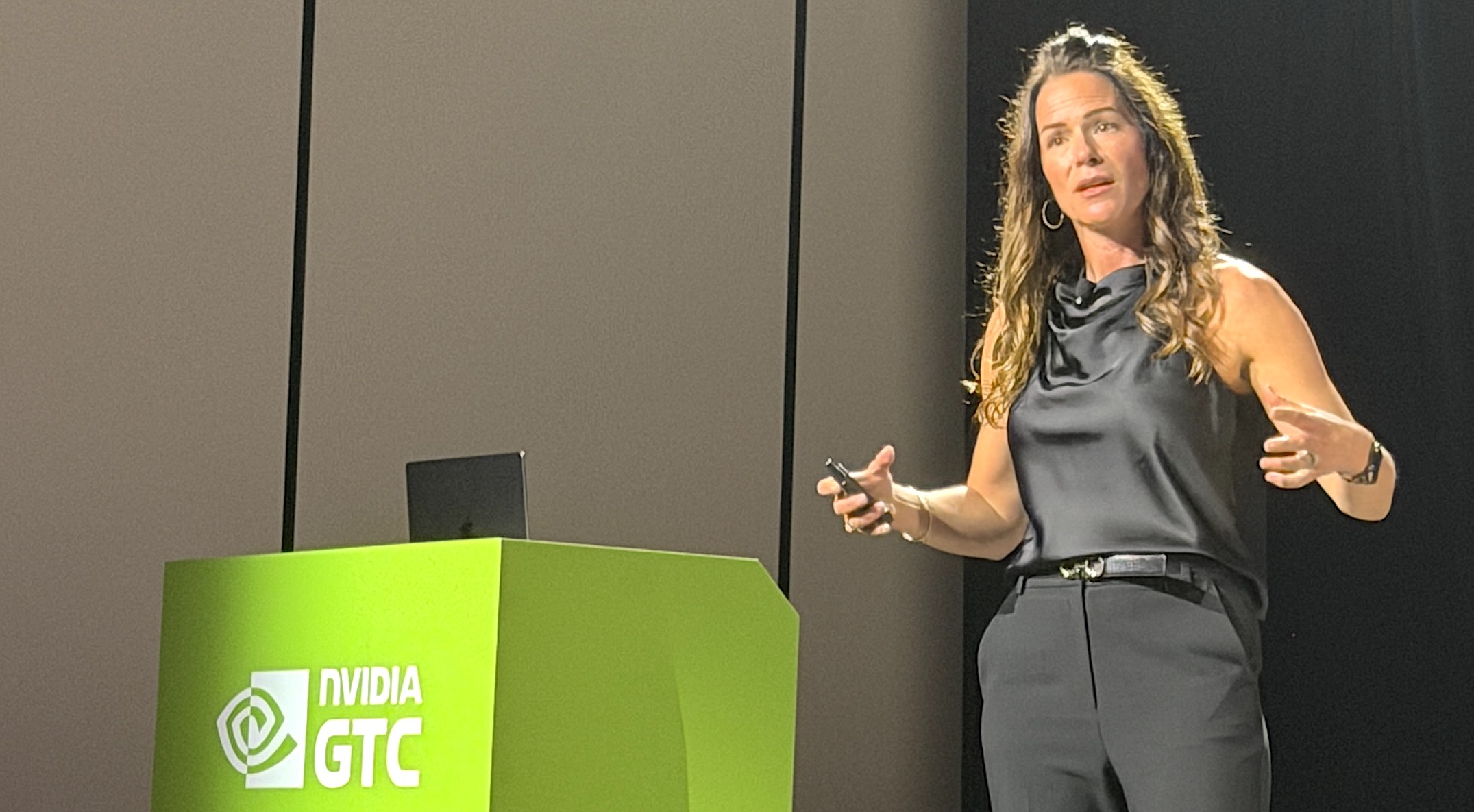
At GTC26, the narrative around AI in healthcare changed. For years, we’ve talked about AI as a tool that lives on a screen, something that helps a radiologist spot a tumor or helps a researcher sort through data. But as Kimberly Powell, Nvidia’s vice president of healthcare and life sciences, made clear during an analyst-only session, the era of “screen AI” is over. We have entered the era of agentic and physical AI.
In the world of healthcare, a $10 trillion global industry currently facing an existential labor shortage, this shift isn’t just “cool tech.” It’s the only way the system survives. Powell put it bluntly: “AI is now hiring.” You aren’t just buying software anymore; you are hiring a digital or physical workforce to extend the reach of your clinicians.
The last two years were defined by “AI scribes” — tools that turn spoken language into clinical notes. That was the opening act. Now, Nvidia is providing the “mosaic of agentic digital health platforms” that actually do the work.
Powell highlighted a company called Abridge, which illustrates this. It’s not just transcribing; it’s using generative AI to traverse and understand the patient journey. If a doctor mentions an MRI, the agent identifies that it doesn’t have the pre-authorization data. Instead of waiting six months for a manual back-and-forth, the agent handles it right there during the visit. As Powell noted, “these agentic systems can essentially have an agent call upon another agent, call upon another agent to traverse the otherwise workflow and journey of patients.”
While digital agents handle the paperwork, physical AI is moving into the operating room and the hospital hallways. Nvidia unveiled a massive suite of open tools at GTC designed specifically for healthcare robotics. This includes:
Industry leaders like Johnson & Johnson, MedTec and CMR Surgical are already using these tools. The goal isn’t just a “robot arm” driven by a human; it’s a system with situational awareness that can manage instruments and sterile coordination in real-time.
One of the biggest concerns I hear from chief information officers is the “digital divide.” Will only the elite, high-budget health systems in Boston or San Francisco get these robots? Powell’s answer followed classic Nvidia playbook: Accelerated computing shrinks costs. She pointed out that while a consultation with an AI agent might have cost a dollar a few years ago, Nvidia’s latest hardware and software optimizations have driven that cost down to less than a cent.
By moving from capex (buying a multimillion-dollar robot) to opex (hiring AI as a service), rural and underfunded hospitals can finally compete. “We have to change this idea of capturing every user experience and feeding it back into the intelligence of the system to improve,” she explained.
It’s not just patient care that is being impacted as AI can revolutionize the lab. Traditionally, drug discovery was 90% “wet lab” (expensive, slow, manual) and 10% computer simulation. Nvidia is flipping that ratio.
With Nvidia BioNeMo, researchers can now model biology, DNA and chemical structures as if they were a language. Powell referenced a company at GTC that built an “AI scientist” capable of compressing six months of research into just 16 hours by spawning 200 agents to run analyses and write code.
Nvidia is no longer just a “chip company” or even just a “platform company.” In healthcare, it has become a catalyst for modernization enabling the evolution of the physical workforce and biological research.
Whether it’s an AI agent handling insurance claims, a humanoid robot delivering linens to a burnt-out nurse, or a generative model designing a new protein, the primary theme for healthcare from GTC was that the “AI factory” has arrived in medicine. If you’re a healthcare CIO and you aren’t looking at how to “hire” this technology to solve your staffing crisis, you’re already behind.
Zeus Kerravala is a principal analyst at ZK Research, a division of Kerravala Consulting. He wrote this article for SiliconANGLE.
Support our mission to keep content open and free by engaging with theCUBE community. Join theCUBE’s Alumni Trust Network, where technology leaders connect, share intelligence and create opportunities.
Founded by tech visionaries John Furrier and Dave Vellante, SiliconANGLE Media has built a dynamic ecosystem of industry-leading digital media brands that reach 15+ million elite tech professionals. Our new proprietary theCUBE AI Video Cloud is breaking ground in audience interaction, leveraging theCUBEai.com neural network to help technology companies make data-driven decisions and stay at the forefront of industry conversations.