

 INFRA
INFRA
INFRA
INFRA

INFRA

The rapid expansion of AI infrastructure is pushing global energy grids to their limits. To keep pace with the power demands of modern GPUs, the industry is shifting toward voltage at scale to reduce material waste and improve delivery efficiency.
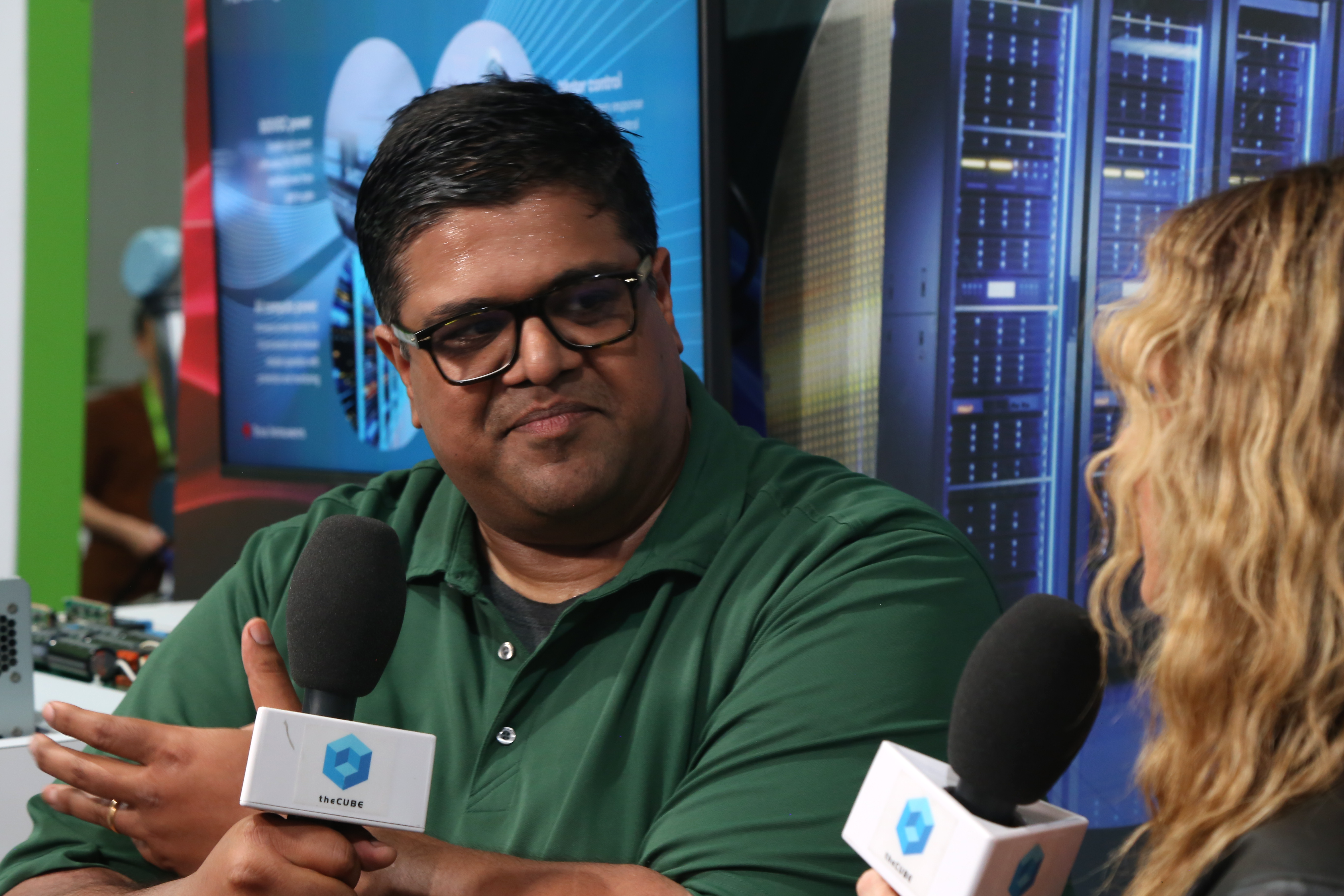
The transition is critical for sustaining the projected 40% year-over-year growth in data center power draw. By moving from traditional 48V systems to 800V architectures, engineers can significantly reduce the amount of copper needed for server racks, according to Kannan Soundarapandian (pictured), vice president and general manager of high-voltage power at Texas Instruments Inc. That approach will not only lower costs and minimize energy loss during high-density power delivery, but also raises the stakes for system design and safety.
“There’s an incontrovertible fact that the only way to deliver more and more power into a smaller and smaller volume is to bring higher and higher voltages close to the point of consumption,” Soundarapandian said. “If you are going to be bringing 800 volts into a rack — necessitated by the amount of power you need to deliver — that better be completely decluttered. It better be completely clean … and it has to be done safely, securely and it has to last a lifetime.”
Soundarapandian spoke with theCUBE’s Gemma Allen at the Nvidia GTC AI Conference & Expo, during an exclusive broadcast on theCUBE, SiliconANGLE Media’s livestreaming studio. They discussed the move to 800V power architecture and how Texas Instruments is expanding its U.S. manufacturing footprint to meet soaring AI demand. (* Disclosure below.)
As power density reaches two kilowatts per cubic inch, the mechanical and thermal pressure on individual components becomes immense. Companies — including Texas Instruments — are now leveraging decades of experience in automotive safety to ensure these high-voltage systems remain reliable over a lifetime of continuous operation, according to Soundarapandian.
“Reliability becomes supremely important, and that’s where the blast radius becomes a problem, because … in AI data centers, building redundancy into your infrastructure is a lot more difficult than it used to be before,” he noted. “If there’s a failure in one power converter somewhere that’s in the pathway of power to the GPU, you lose an entire workload.”
Strategic investments in new 300-millimeter wafer factories on U.S. soil are underway to secure the supply chain for these critical power nodes, Soundarapandian explained. This domestic expansion ensures that the analog silicon required to feed AI clusters is available as the industry transitions toward renewable and nuclear energy sources, helping make voltage at scale sustainable.
“The best time to put 300-millimeter capacity in the soil was 10 years ago, and we did it,” Soundarapandian said. “[Texas Instruments is] going to be able to meet that moment with the capacity we’re actually building out here in the U.S.”
Here’s the complete video interview, part of SiliconANGLE’s and theCUBE’s coverage of the Nvidia GTC AI Conference & Expo:
(* Disclosure: Texas Instruments sponsored this segment of theCUBE. Neither Texas Instruments nor other sponsors have editorial control over content on theCUBE or SiliconANGLE.)
Support our mission to keep content open and free by engaging with theCUBE community. Join theCUBE’s Alumni Trust Network, where technology leaders connect, share intelligence and create opportunities.
Founded by tech visionaries John Furrier and Dave Vellante, SiliconANGLE Media has built a dynamic ecosystem of industry-leading digital media brands that reach 15+ million elite tech professionals. Our new proprietary theCUBE AI Video Cloud is breaking ground in audience interaction, leveraging theCUBEai.com neural network to help technology companies make data-driven decisions and stay at the forefront of industry conversations.