 AI
AI
AI
AI






AI

The enterprise computing stack is undergoing its most consequential transformation in decades, as agentic infrastructure shifts from an experimental workload to the organizing logic of every new application.
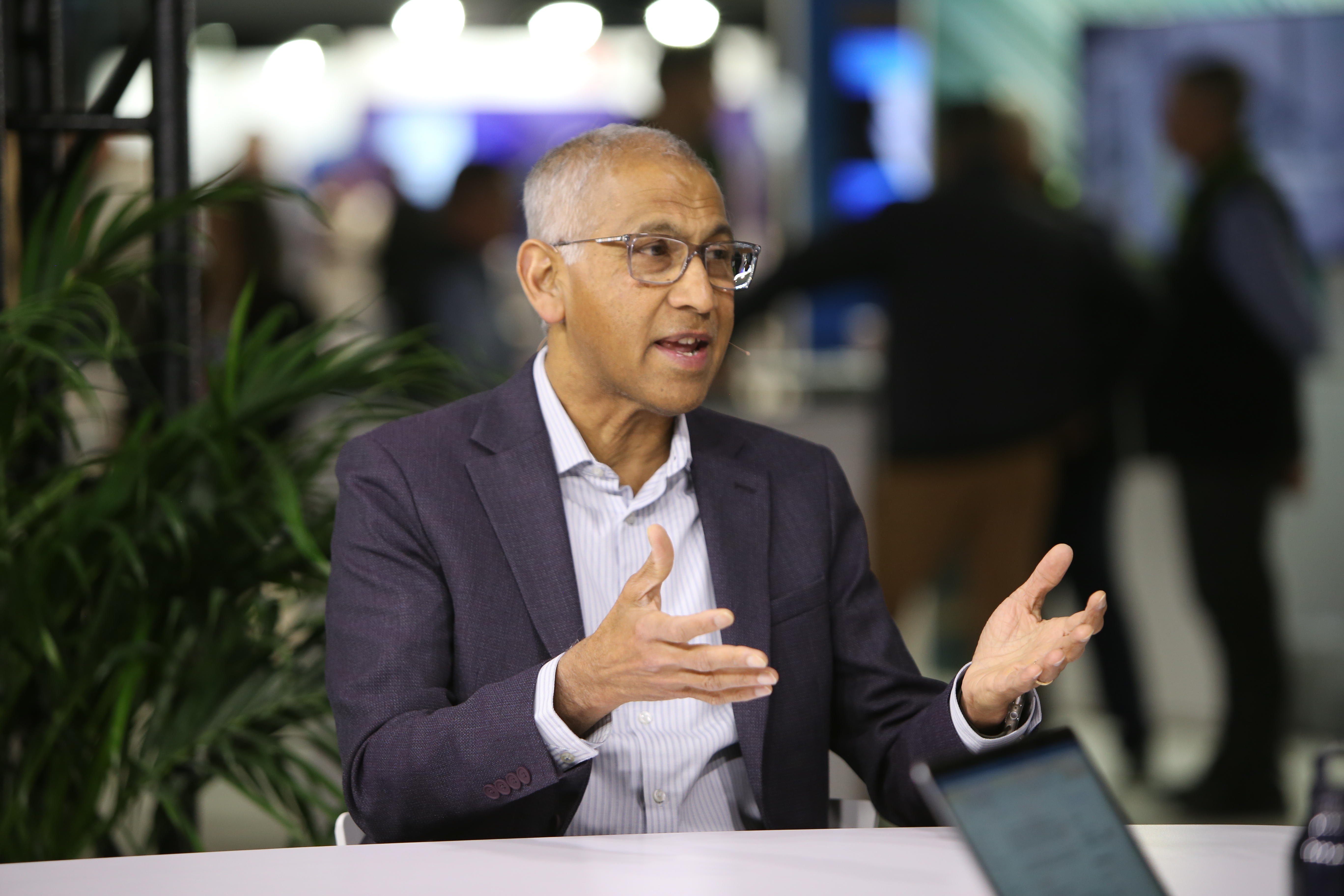
That shift is forcing a fundamental rethink of what infrastructure must actually do — not just host workloads, but orchestrate intelligent agents, govern data pipelines and optimize the economics of inference at scale. The question for every platform company is whether its architecture was designed for this moment or merely adapted to it, according to Rajiv Ramaswami (pictured), president and chief executive officer of Nutanix Inc. Now, the answer defines everything the company is building toward.
“We truly want to be the platform company where all applications run,” Ramaswami told theCUBE. “Today’s applications, tomorrow’s applications, in this new AI world. We want to become the platform of choice for our customers all around the world.”
Ramaswami spoke with theCUBE’s John Furrier and co-host Alison Kosik at Nutanix .NEXT, during an exclusive broadcast on theCUBE, SiliconANGLE Media’s livestreaming studio. They discussed the company’s evolution from a hyperconverged infrastructure provider to a full agentic infrastructure platform, including its expanding ecosystem, sovereign cloud opportunity and vision for the next five years. (* Disclosure below.)
Nutanix’s platform evolution carries a clear technical mandate: making GPU resources work harder. As Nutanix has expanded its platform with new agentic infrastructure capabilities announced at .NEXT, the underlying engineering work centers on eliminating the idle compute that inflates cost per token. The same optimization logic Nutanix applied to CPU virtualization a decade ago now applies directly to GPU workloads, Ramaswami explained.
“You want to make maximum use of the GPU that you buy,” he said. “GPUs sitting idle is bad, because think about it — on the one hand you’re spending more and more tokens, and if you’re going to need to buy more and more GPUs to go and use that, it’s not efficient. Same thing as we saw in compute-centric workloads back before virtualization came on — utilization was very low. With virtualization [utlization] became much higher. The same thing is happening now with GPUs.”
The ecosystem story at .NEXT proved equally central. More than 100 partners sponsored the event — spanning major cloud, server, storage and chip providers — a signal that reflects the network effect of a genuine platform rather than a product line, according to Ramaswami. A recent strategic partnership with Advanced Micro Devices Inc. — in which AMD committed up to $250 million in investment and joint engineering to co-develop an open agentic AI platform — reinforced that the ecosystem is hardening into something structural. Cost per token has become the defining unit of economics across every customer conversation, he added.
“The value of a platform is directly tied to the ecosystem around it. All these partners are seeing the value of the platform that we bring today to the market and realize the value of being integrated together with us,” Ramaswami said. “Now we’ve got a whole new ecosystem that we are just starting to build around AI.”
Sovereignty is emerging as a second major growth vector. Governments worldwide are building sovereign AI clouds to keep data and economic value within national borders, and Nutanix is positioning itself as the platform of choice for those deployments. Government initiatives to finance and populate these buildouts are creating a direct pipeline of anchor customers for Nutanix’s hybrid platform, Ramaswami noted.
“The whole move towards sovereignty is here to stay,” he said. “You want to have your own infrastructure. You want to be in control of it yourself. You want your citizens to run it and manage it and not be dependent on outside parties. That represents a huge opportunity for Nutanix, because we enable sovereign clouds to be built that meet these needs.”
Here’s the complete video interview, part of SiliconANGLE’s and theCUBE’s coverage of Nutanix .NEXT 2026:
(* Disclosure: TheCUBE is a paid media partner for Nutanix .NEXT. Sponsors of theCUBE’s event coverage do not have editorial control over content on theCUBE or SiliconANGLE.)
Support our mission to keep content open and free by engaging with theCUBE community. Join theCUBE’s Alumni Trust Network, where technology leaders connect, share intelligence and create opportunities.
Founded by tech visionaries John Furrier and Dave Vellante, SiliconANGLE Media has built a dynamic ecosystem of industry-leading digital media brands that reach 15+ million elite tech professionals. Our new proprietary theCUBE AI Video Cloud is breaking ground in audience interaction, leveraging theCUBEai.com neural network to help technology companies make data-driven decisions and stay at the forefront of industry conversations.