 AI
AI
AI
AI



AI

AI can now generate thousands of lines of working code in minutes — but the question of whether enterprises can trust what those systems build has become the defining challenge of the current moment. Now, Oracle Corp. is betting on AI database convergence as a solution.
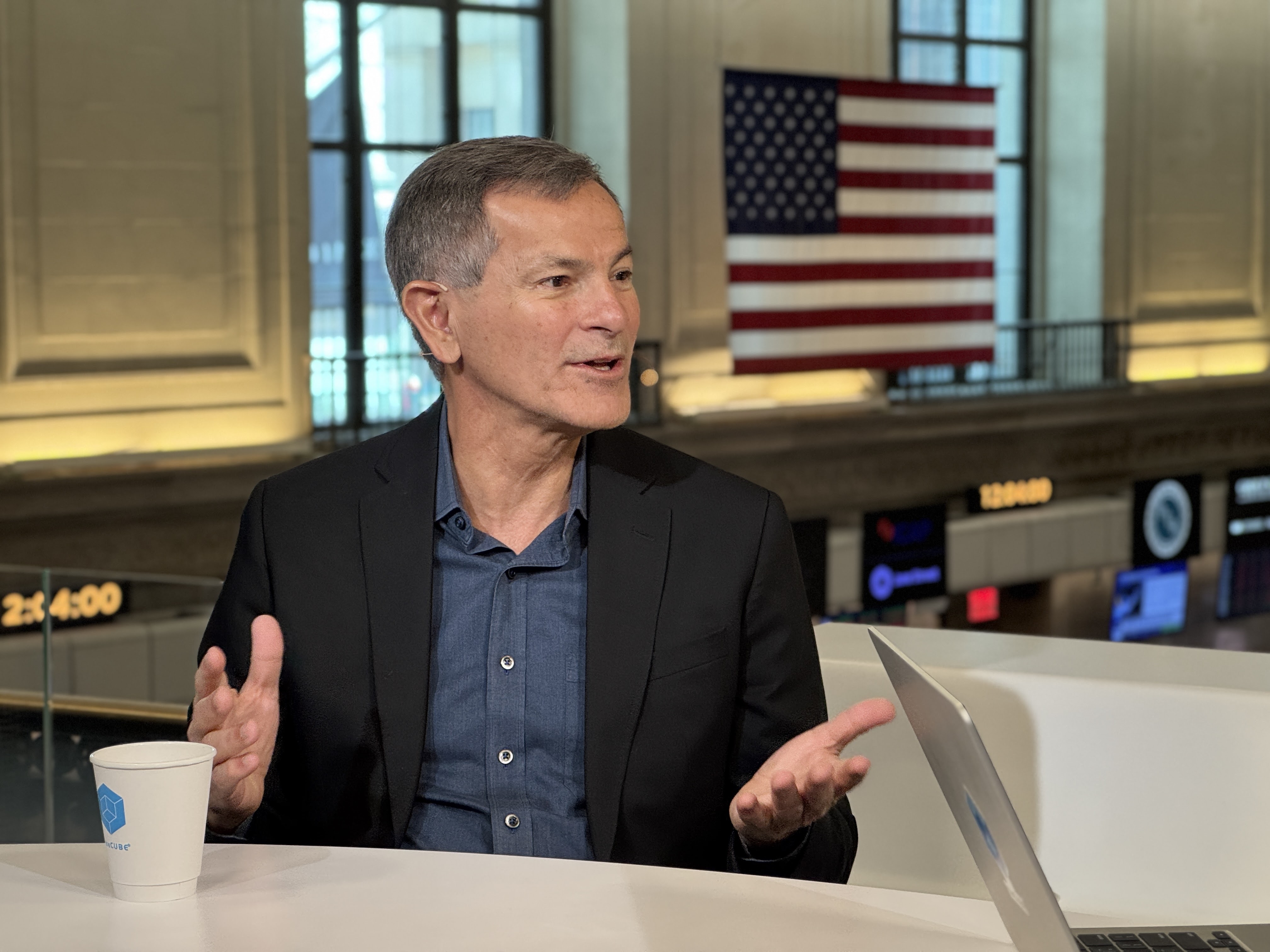
As agentic AI reshapes enterprise data architecture, the pressure is mounting on database providers to prove that speed of development does not come at the cost of accuracy, security or reliability. The database must now function as more than back-end plumbing — it must serve as the trusted foundation for everything built on top of it, according to Juan Loaiza (pictured), executive vice president of Oracle Database Technologies at Oracle.
“Suppose I could build a hundred story high-rise in 20 minutes,” Loaiza told theCUBE. “Am I going to move my family into there? Well, you better have a lot of trust in the structure of that building and what it’s built on. Data’s the foundation of everything that is knowledge, and so we are building into the Oracle database the ability to trust things that are built on top of it.”
Loaiza spoke with theCUBE’s Dave Vellante at the Oracle Data Deep Dive NYC event, during an exclusive broadcast on theCUBE, SiliconANGLE Media’s livestreaming studio. They discussed how Oracle is engineering trust and AI database convergence directly into its core platform. (* Disclosure below.)
Oracle has long argued that data is best when it is unified, and that philosophy now underpins its entire agentic AI strategy. As specialized databases proliferate across the enterprise stack, Oracle is doubling down on AI database convergence — embedding vector, graph, JSON, relational and agent memory capabilities into a single engine rather than spinning up purpose-built silos, Loaiza explained.
“We’re not in one thing,” he said. “It’s not just the hundred yard dash or something. We need to be general purpose and win the whole Olympics. We need to be better than the specialists at what they’re good at. Now, they can sometimes jump ahead because they don’t have to deal with everything else — they don’t have to integrate it all together — but with a matter of time, we’ll catch up and we’ll pass them. That’s what we’ve done over the years.”
Central to Oracle’s latest push is the Oracle Unified Memory Core, which enables AI agents to store and reason across a diversity of data inputs in a single converged engine, with consistent transactions and without external syncing. The capability directly addresses a core failure mode in multi-agent systems where context spread across fragmented stores goes stale under production load, Loaiza noted. Agents operating in sophisticated enterprise systems may now work alongside dozens of other agents simultaneously, and that shared knowledge must remain current and governed.
“Agents are kind of like the new programming language,” he said. “We have specialized agents now for different purposes. Our agents understand the data, understand the database, understand the data security, understand how to manage data, how to process data. When you build on top of that you start out way ahead of the game because all that’s built in.”
Security is the other axis of Oracle’s agentic strategy. AI increasingly bypasses the traditional application tier to query data directly — a shift that introduces serious data leakage risk in regulated industries, Loaiza explained. Oracle’s answer, Deep Data Security, enforces end-user-specific access rules at the database layer itself, ensuring that an agent acting on a user’s behalf can only see that user’s data.
“Leaking financial data is a crime. Leaking medical data is a crime,” Loaiza said. “You go to jail for doing that. We can’t guarantee that at the application tier anymore. It has to be guaranteed, and the only place you can really guarantee anymore … [is the] data tier, because the AI is operating directly against the data tier.”
Here’s the complete video interview, part of SiliconANGLE’s and theCUBE’s coverage of the Oracle Data Deep Dive NYC event:
(* Disclosure: TheCUBE is a paid media partner for the Oracle Data Deep Dive NYC event. Neither Oracle, the sponsor of theCUBE’s event coverage, nor other sponsors have editorial control over content on theCUBE or SiliconANGLE.)
Support our mission to keep content open and free by engaging with theCUBE community. Join theCUBE’s Alumni Trust Network, where technology leaders connect, share intelligence and create opportunities.
Founded by tech visionaries John Furrier and Dave Vellante, SiliconANGLE Media has built a dynamic ecosystem of industry-leading digital media brands that reach 15+ million elite tech professionals. Our new proprietary theCUBE AI Video Cloud is breaking ground in audience interaction, leveraging theCUBEai.com neural network to help technology companies make data-driven decisions and stay at the forefront of industry conversations.