















 EMERGING TECH
EMERGING TECH
EMERGING TECH

EMERGING TECH

Quantum computing is emerging as a practical complement to traditional supercomputing, with early applications in optimization, machine learning and complex simulation now moving from theory into real-world experimentation.
World Quantum Day is giving researchers a chance to highlight how quantum computing is evolving from a largely experimental discipline to tackle real-world use cases.
The Pawsey Supercomputing Research Centre in Perth, Australia, is working to integrate quantum systems into existing supercomputing environments through its Setonix-Q initiative. The effort reflects a shift away from positioning quantum machines as replacements for classical systems to using them as specialized tools to solve certain classes of problems.
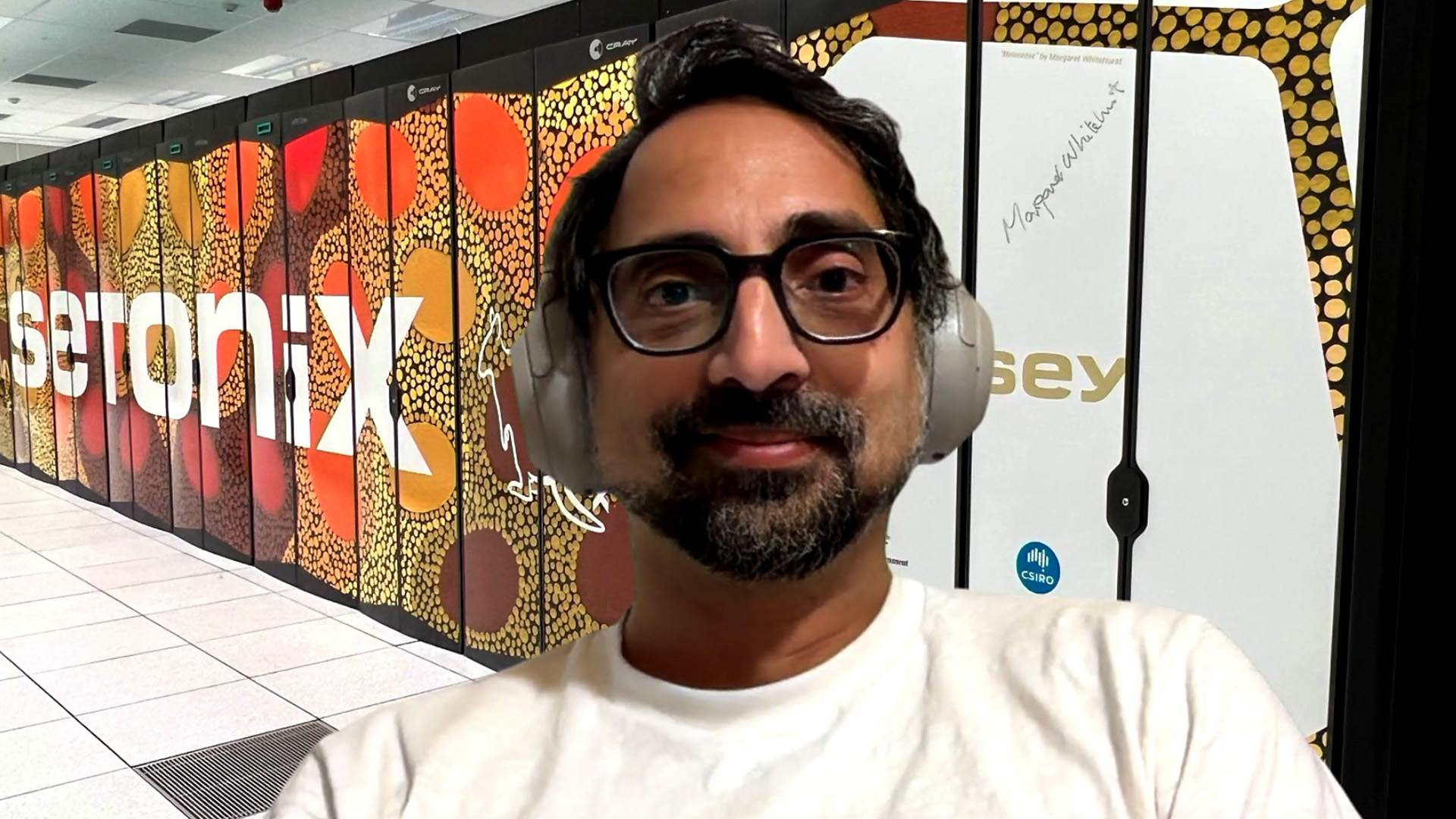
“Quantum computers are a great way to tackle a certain set of problems, like optimization problems,” said Pascal Elahi (pictured), quantum supercomputing research lead at Pawsey. But classical systems remain essential for most workloads.
Elahi spoke with theCUBE, SiliconANGLE Media’s livestreaming studio, for an exclusive interview during the HPE World Quantum Day event. (* Disclosure below.)
That hybrid model is central to Pawsey’s approach. Its Setonix supercomputer, built by Hewlett-Packard Enterprise’s Cray division, is the most powerful research computer in the Southern Hemisphere and one of the most energy efficient in the world.
It provides traditional high-performance computing resources, while the Setonix-Q initiative extends those capabilities to give Australian researchers access to quantum hardware, simulation tools, and expertise. The goal is to help researchers identify which parts of complex problems benefit most from quantum acceleration.
Quantum computing differs fundamentally from classical computing in how it represents and processes information, Elahi explained. Traditional systems rely on binary mathematics using zeros and ones and executing operations sequentially or in parallel. Quantum systems use qubits, which can exist in multiple states simultaneously and can be linked via entanglement. This allows quantum machines to explore large solution spaces far more efficiently for certain problems.
Calculations involving hundreds of possible solutions, such as optimizing delivery routes or blade configurations in jet engine designs, might take a conventional computer years to process sequentially, but a quantum computer can consider all solutions simultaneously.
As exciting as that sounds, quantum computing is not right for every use case. Its value lies in addressing problems that are difficult or impractical for classical systems. Pawsey’s work focuses on combining both approaches.
The research center is also finding ways to expand access. Quantum hardware is scarce and expensive, with expertise concentrated among a small number of specialists. Setonix-Q aims to “democratize” access by providing researchers across Australia with tools, infrastructure and guidance to experiment with quantum techniques.
“We want to expand access not just to quantum computing researchers, but to people who want to solve a problem,” Elahi said.
Pawsey is also working to make quantum computing reliable at scale. It’s using its classical supercomputer to develop error correction techniques that address noise problems that trigger errors in qubits. It’s also working Quantum Brilliance Pty Ltd. to build a hybrid workflow that seamlessly combines classical and quantum processing capabilities
Quantum Brilliance’s diamond-based quantum systems can operate at room temperature, in contrast to others that require extreme cooling. It’s one of the half-dozen quantum architectures being developed, all with different strengths and weaknesses.
Elahi said the field is unlikely to converge on a single architecture. He sees a diverse ecosystem of quantum technologies emerging for different use cases. In the same with a conventional computers use a variety of processors and co-processors, “there will be many types of quantum accelerators,” he said.
Looking ahead, Elahi expects broader participation beyond quantum specialists, with more researchers and industry users exploring practical applications over the next few years. As hardware improves and becomes less error-prone, interest in real-world deployment will grow with quantum computing becoming an additional layer in the computing stack that can vastly expand the range of problems that science and industry can address.
Here’s the complete video interview, part of SiliconANGLE’s and theCUBE’s coverage of the HPE World Quantum Day event:
(* Disclosure: TheCUBE is a paid media partner for the HPE World Quantum Day event. Neither HPE, the sponsor of theCUBE’s event coverage, nor other sponsors have editorial control over content on theCUBE or SiliconANGLE.)
Support our mission to keep content open and free by engaging with theCUBE community. Join theCUBE’s Alumni Trust Network, where technology leaders connect, share intelligence and create opportunities.
Founded by tech visionaries John Furrier and Dave Vellante, SiliconANGLE Media has built a dynamic ecosystem of industry-leading digital media brands that reach 15+ million elite tech professionals. Our new proprietary theCUBE AI Video Cloud is breaking ground in audience interaction, leveraging theCUBEai.com neural network to help technology companies make data-driven decisions and stay at the forefront of industry conversations.