 EMERGING TECH
EMERGING TECH
EMERGING TECH








EMERGING TECH

The European Union is taking ambitious steps to coordinate efforts by its member countries to achieve global leadership in quantum computing. The EU Quantum Computing Act, which is scheduled to take effect this year, aims to coordinate EU and national research and innovation in quantum technologies and stimulate investment in quantum infrastructure and industrial uses of quantum technologies.
The Lumi-Q consortium brings together 13 partners from eight European countries with the goal of enabling researchers to experiment with hybrid architectures that combine classical supercomputers with emerging quantum systems.
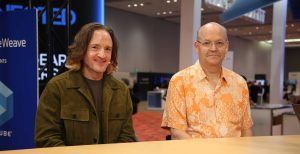
“We want to give European users the opportunity to start testing and experimenting with quantum computing and really figure out what use they will have in the future,” said Mikael Johansson (pictured), manager of quantum technologies at CSC – IT Center for Science Ltd. in Espoo, Finland.
The Lumi-Q effort reflects a broader industry shift away from viewing quantum computers as standalone replacements for classical systems. Instead, Johansson emphasized that the two technologies are complementary.
“We are going to need both the raw power of supercomputers for a long time and to enhance their operations by offloading some of the most complex equations to quantum computers,” he said.
Johansson spoke with theCUBE, SiliconANGLE Media’s livestreaming studio, for an exclusive interview during the HPE World Quantum Day event. (* Disclosure below.)
Access to quantum hardware has improved in recent years, with cloud providers offering early-stage systems. However, Johansson said the bigger challenge lies in identifying practical applications.
Quantum systems differ fundamentally from classical machines, operating on quantum logic rather than binary bits. This enables them to address certain types of problems far more efficiently, particularly those rooted in quantum mechanics.
“Quantum computers make it possible to solve certain types of mathematical problems in a much more efficient manner,” Johansson said.
One of the most promising areas is materials science, where quantum simulations could accelerate the development of new technologies. Johansson pointed to applications such as designing catalysts, batteries and magnets, which are critical to clean energy. These problems are difficult for classical systems because they require modeling interactions at the atomic scale. Quantum computers, by contrast, approach them more naturally.
Commercial applications are also emerging, particularly in pharmaceuticals and financial services. Johansson said drug discovery could benefit from improved modeling of molecular interactions, while optimization problems in finance, such as risk analysis and portfolio management, are also potential candidates. However, he cautioned that “we are maybe not there quite yet” in terms of mainstream deployment.
Despite growing interest, quantum computing remains highly specialized. Current systems often require extreme operating conditions, including temperatures near absolute zero, making them impractical for general-purpose use. “You will not have a quantum computer at home; it is specialized hardware,” Johansson said, comparing the needed infrastructure to large-scale supercomputers.
Globally, Johansson sees increasing competition to achieve what is known as “quantum advantage,” when quantum systems outperform classical computers on specific tasks.
“We are now being at the doorstep of true quantum advantage,” he said, adding that competition among nations is helping to accelerate progress.
At the same time, the field remains fragmented, with multiple competing hardware approaches. Johansson said it is too early to identify a dominant architecture and predicted that a variety of architectures will persist.
“We will have diversity for a long time,” he said. “We probably will not have one single winning technology.”
Unlike the rapid rise of generative AI, quantum computing is expected to evolve more gradually. Johansson doesn’t anticipate a single breakthrough moment comparable to ChatGPT’s debut. Instead, progress will come through incremental improvements in hardware and expanding use cases.
CSC is working to accelerate that process through new infrastructure investments. The organization is developing a tightly integrated platform that combines AI, classical computing and quantum systems, enabling researchers to explore new applications. Johansson said the goal is to “explore the combination of AI, classical AI and quantum computing in a completely new manner.”
Here’s the complete video interview, part of SiliconANGLE’s and theCUBE’s coverage of the HPE World Quantum Day event:
(* Disclosure: TheCUBE is a paid media partner for the HPE World Quantum Day event. Neither HPE, the sponsor of theCUBE’s event coverage, nor other sponsors have editorial control over content on theCUBE or SiliconANGLE.)
Support our mission to keep content open and free by engaging with theCUBE community. Join theCUBE’s Alumni Trust Network, where technology leaders connect, share intelligence and create opportunities.
Founded by tech visionaries John Furrier and Dave Vellante, SiliconANGLE Media has built a dynamic ecosystem of industry-leading digital media brands that reach 15+ million elite tech professionals. Our new proprietary theCUBE AI Video Cloud is breaking ground in audience interaction, leveraging theCUBEai.com neural network to help technology companies make data-driven decisions and stay at the forefront of industry conversations.