 AI
AI
AI
AI








AI

OpenAI Group PBC today announced a major revamp of its artificial intelligence coding tool Codex, giving it a number of new “agentic” capabilities that enable more complex task automation.
The ChatGPT maker is engaged in a fierce battle for AI coding supremacy with its rival Anthropic PBC, and is widely perceived to be in danger of losing its lead in users, with Claude Code seen as the de facto leader among most businesses.
But OpenAI is now hitting back, with one of the most notable updates today giving Codex the ability to operate in the background on a computer and carry out various tasks with a cursor that clicks and types. This new capability enables Codex to deploy multiple AI agents, which can work on user’s Mac computers in parallel, “without interfering with your own work in other apps,” the company said today.
Because Codex just runs in the background, users will be able to operate their computer as normal, even while Codex’s agents are working independently. This allows it to function as a kind of coding assistant that’s able to perform auxiliary tasks while the user focuses on the most complex, topline work, OpenAI said. The company explains that this might include “iterating on frontend changes, testing apps, or working in apps that don’t expose an API.”
The update not only makes Codex a more comprehensive coding assistant, but transforms it into a multifaceted tool that can assist in various other corporate tasks.
Some of today’s other updates seem to mimic recent additions to Claude Code. For instance, Anthropic last month gave Claude Code and Cowork the ability to remotely control user’s computers while they’re away from the device, and Codex gets similar features. There’s also a new in-app browser for Codex, which allows users to issue commands instructing it to perform tasks over the web. According to OpenAI, this will be especially useful for game and frontend development.
Elsewhere, OpenAI introduced a preview of “memory,” which allows Codex to recall previous work sessions and access content about how users work when performing specific jobs themselves. There’s also a new image generation tool that Codex can use to generate product designs, slides, presentations, mockups, placeholder images and other imagery.
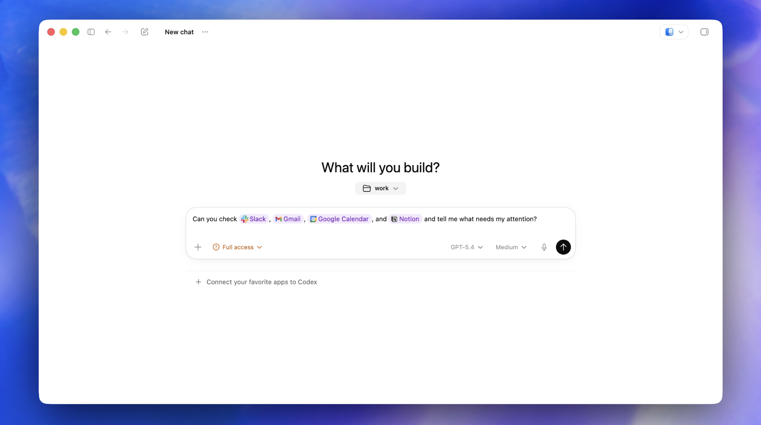
Finally, the company revealed more than 90 new plugin integrations for applications such as GitLab Issues and CodeRabbit, allowing Codex to use those tools as necessary to accomplish desired tasks. According to OpenAI, Codex needs these plugins to perform all of the clerical work developers need to get done, and will help them to become much more organized. For instance, they allow Codex to look at the user’s Slack messages and Google Calendar and create a to-do list for each day, saving them time that would otherwise be spent on planning.
In a different kind of update, OpenAI revealed a new pay-as-you-go pricing option for ChatGPT Enterprise and Business users, offering more flexibility for those who either want to test, or require only limited access to Codex’s capabilities.
Support our mission to keep content open and free by engaging with theCUBE community. Join theCUBE’s Alumni Trust Network, where technology leaders connect, share intelligence and create opportunities.
Founded by tech visionaries John Furrier and Dave Vellante, SiliconANGLE Media has built a dynamic ecosystem of industry-leading digital media brands that reach 15+ million elite tech professionals. Our new proprietary theCUBE AI Video Cloud is breaking ground in audience interaction, leveraging theCUBEai.com neural network to help technology companies make data-driven decisions and stay at the forefront of industry conversations.