 AI
AI
AI
AI







AI

Healthcare has long operated in data silos — payers, providers and patients each holding fragmented pieces of the same clinical story. That fragmentation, once accepted as the cost of doing business, is now the central obstacle to healthcare data readiness and the broader promise AI holds for one of the world’s most consequential industries.
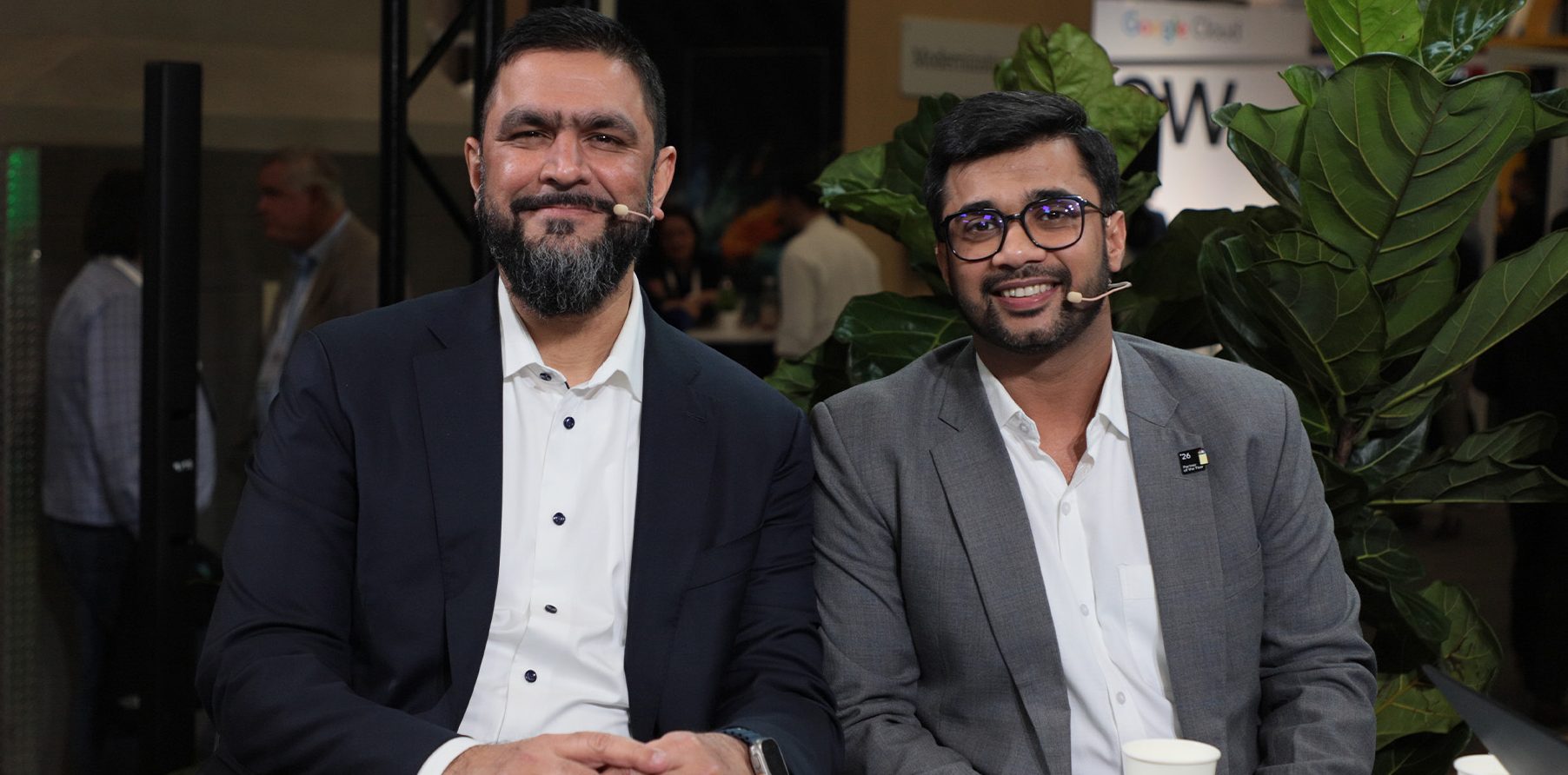
The breaking point arrived faster than most expected. Pandemic-era failures exposed how costly healthcare data fragmentation could be, and new regulatory momentum — from data portability legislation in Canada to the U.S. Centers for Medicare and Medicaid Services mandating new standards — has made the case for change unavoidable, according to Fawad Shaikh (pictured, left), global vice president of business development at Telus Health, a division of Telus Corp.
“I think what’s changing in 2026 is that [fragmentation is] no longer acceptable,” Shaikh said. “You’ve seen the hard lessons we’ve learned through COVID and it basically puts an ecosystem at its knees when you have those data silos that you have to work with.”
Shaikh and Saurabh Mishra (right), global head of Google Cloud business at Quantiphi Inc., spoke with theCUBE’s John Furrier and co-host Alison Kosik at Google Cloud Next, during an exclusive broadcast on theCUBE, SiliconANGLE Media’s livestreaming studio. They discussed healthcare data readiness, the journey from fragmented data silos to a unified agentic platform and how Telus Health and Quantiphi are building the data foundation that makes production AI possible. (* Disclosure below.)
Telus Health’s path to healthcare data readiness started not with an AI roadmap but with a reporting use case. Over the past five years, a dozen acquisitions left the company inheriting a new legacy system with each deal, operating across more than 200 countries and territories, Shaikh noted. The team consolidated data from 11 disparate sources into a single platform using master data management, metadata management and pre-built automation connectors, reducing the time to generate a customer report by 80%, representing about 15 hours saved per agent per year. That initial effort represented something far more ambitious than a standard data project, according to Mishra.
“When Telus Health came up with this entire business problem around building a platform that can enable a lot of different types of agents, what we realized [was that] it’s not just a data consolidation or a data migration project as we used to do earlier,” Mishra said. “This is more like building a new nervous system for a global healthcare platform. When we are thinking about a project of this nature, there are three critical elements. The first aspect is around deep understanding about the data foundation expertise. The second aspect is around advanced platform engineering expertise. The third, which is the most important in cases of healthcare customers like Telus Health, is understanding the healthcare ecosystem, because you can’t build a healthcare solution without understanding the nuances of [protected health information].”
The key to acceleration was Codeaira, Quantiphi’s proprietary AI-powered software engineering agent, Mishra explained. With a foundation in place, Telus Health began building reusable data products scoped to specific business problems, creating a scalable sandbox for AI agents, according to Shaikh. One example was automating provider payment processing, where the same microservice architecture eliminated a third-party provider entirely. Another came in physician inbox management, with significant efficiency gains.
“Now that we’re at a stage where we’ve actually got our data in a place where we can leverage it to train some of these AI agents, the use cases are just exploding,” Shaikh said. “We’ve all been in a doctor’s office where you’ve got these [electronic faxes] coming into the inbox, you’ve got all these document attachments and you’re trying to get a referral built up. What we did was take that inbox, structure it in a specific way, apply some machine learning algorithms and we were able to match the patients automatically to the documents that were coming in and be able to build the profile if they didn’t exist. That reduces the burden of processing that by a half. That’s pretty significant.”
Here’s the complete video interview, part of SiliconANGLE’s and theCUBE’s coverage of Google Cloud Next:
(* Disclosure: Quantiphi sponsored this segment of theCUBE. Neither Quantiphi nor other sponsors have editorial control over content on theCUBE or SiliconANGLE.)
Support our mission to keep content open and free by engaging with theCUBE community. Join theCUBE’s Alumni Trust Network, where technology leaders connect, share intelligence and create opportunities.
Founded by tech visionaries John Furrier and Dave Vellante, SiliconANGLE Media has built a dynamic ecosystem of industry-leading digital media brands that reach 15+ million elite tech professionals. Our new proprietary theCUBE AI Video Cloud is breaking ground in audience interaction, leveraging theCUBEai.com neural network to help technology companies make data-driven decisions and stay at the forefront of industry conversations.