 EMERGING TECH
EMERGING TECH
EMERGING TECH


EMERGING TECH

True Anomaly Inc., a startup that develops satellites optimized for maneuverability, has raised $650 million in late-stage funding.
CNBC reported today that the Series D round values the company at $2.2 billion. The investment was led by Eclipse and Riot Ventures with participation from more than a dozen other backers.
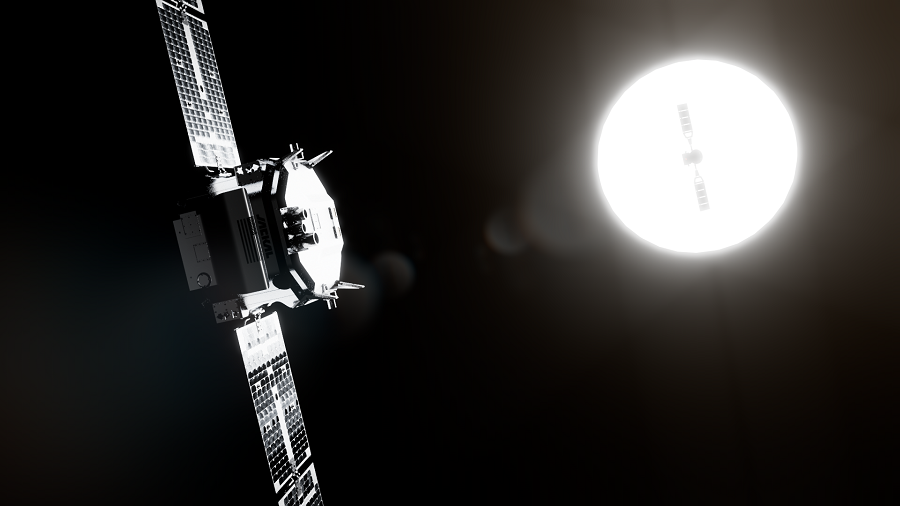
True Anomaly’s flagship product is a fridge-size satellite called Jackal that is geared toward the U.S. defense sector. It includes 20 thrusters that enable it to turn and move in orbit rapidly. Jackal also features multiple hardpoints, points along the satellite’s surface to which customers can attach hardware modules.
The default version of Jackal is designed to operate in low-Earth orbit, which corresponds to an altitude of between 100 and 1,200 miles. That section of space hosts multiple internet constellations including SpaceX Corp.’s Starlink. Jackal units in Low-earth orbit can cover about 2,600 feet per second and carry 110 pounds.
True Anomaly also offers a version of the satellite that is optimized to operate in a geostationary orbit, or 22,236 miles above the Earth. That altitude is popular among companies with weather monitoring and TV streaming constellations.
Satellites in geostationary orbit are exposed to more radiation than their lower-altitude counterparts. As a result, the geostationary version of Jackal includes hardier electronics and more radiation shielding than the standard version. It’s also faster: the satellite can travel at a maximum speed of 328 feet per second.
The most advanced version of Jackal can travel to the moon, where conditions are even more challenging than in geostationary orbits. One of the main challenges is that satellites face larger temperature fluctuations. According to True Anomaly, the lunar version of Jackal includes thermal management components that mitigate the issue.
The moon is 10 times farther from the Earth than geostationary satellites, which means that signals take more time to travel to and from spacecraft. The longer trip increases the likelihood of data transmission errors. True Anomaly plans to address the challenge by equipping Jackal with high-bandwidth networking equipment, as well as features that will reduce the system’s reliance on instructions from Earth.
Customers can manage their Jackal satellites using a software product called Mosaic. According to True Anomaly, the platform also supports third-party spacecraft. Mosaic turns the data collected by an organization’s orbital assets and ground-based sensors into a real-time view of its satellite constellation.
Aerospace experts can use the information provided by Mosaic to create satellite mission plans. According to the company, built-in artificial intelligence features speed up tasks such as adjusting plans based on new information.
True Anomaly’s technology has caught the attention of the U.S. Space Force. Later this year, the service branch will launch a pair of Jackal satellites into low Earth orbit as part of a project called Victus Haze. The goal is to test the Space Force’s ability to deploy orbital monitoring satellites on short notice.
True Anomaly currently operates two factories with 140,000 square feet of aggregate floor space. Over the next four years, the company will grow its manufacturing capacity to 2 million square feet. True Anomaly also expects to more than quadruple its headcount to more than 1,000 employees.
Support our mission to keep content open and free by engaging with theCUBE community. Join theCUBE’s Alumni Trust Network, where technology leaders connect, share intelligence and create opportunities.
Founded by tech visionaries John Furrier and Dave Vellante, SiliconANGLE Media has built a dynamic ecosystem of industry-leading digital media brands that reach 15+ million elite tech professionals. Our new proprietary theCUBE AI Video Cloud is breaking ground in audience interaction, leveraging theCUBEai.com neural network to help technology companies make data-driven decisions and stay at the forefront of industry conversations.