







 CLOUD
CLOUD
CLOUD
CLOUD
CLOUD

Google LLC’s parent company Alphabet Inc. delivered a stunning earnings beat as it reported its first-quarter financial results today, with sales also surpassing expectations thanks to rampant growth in its cloud infrastructure business.
The company reported earnings before certain costs such as stock compensation of $5.11 per share, almost double the $2.63-per-share analyst target. Revenue for the period rose 22% from a year earlier, to $109.9 billion, ahead of Wall Street’s $107.2 billion target. Meanwhile, net income surged to $62.58 billion, up from $34.54 billion in the year-ago quarter.
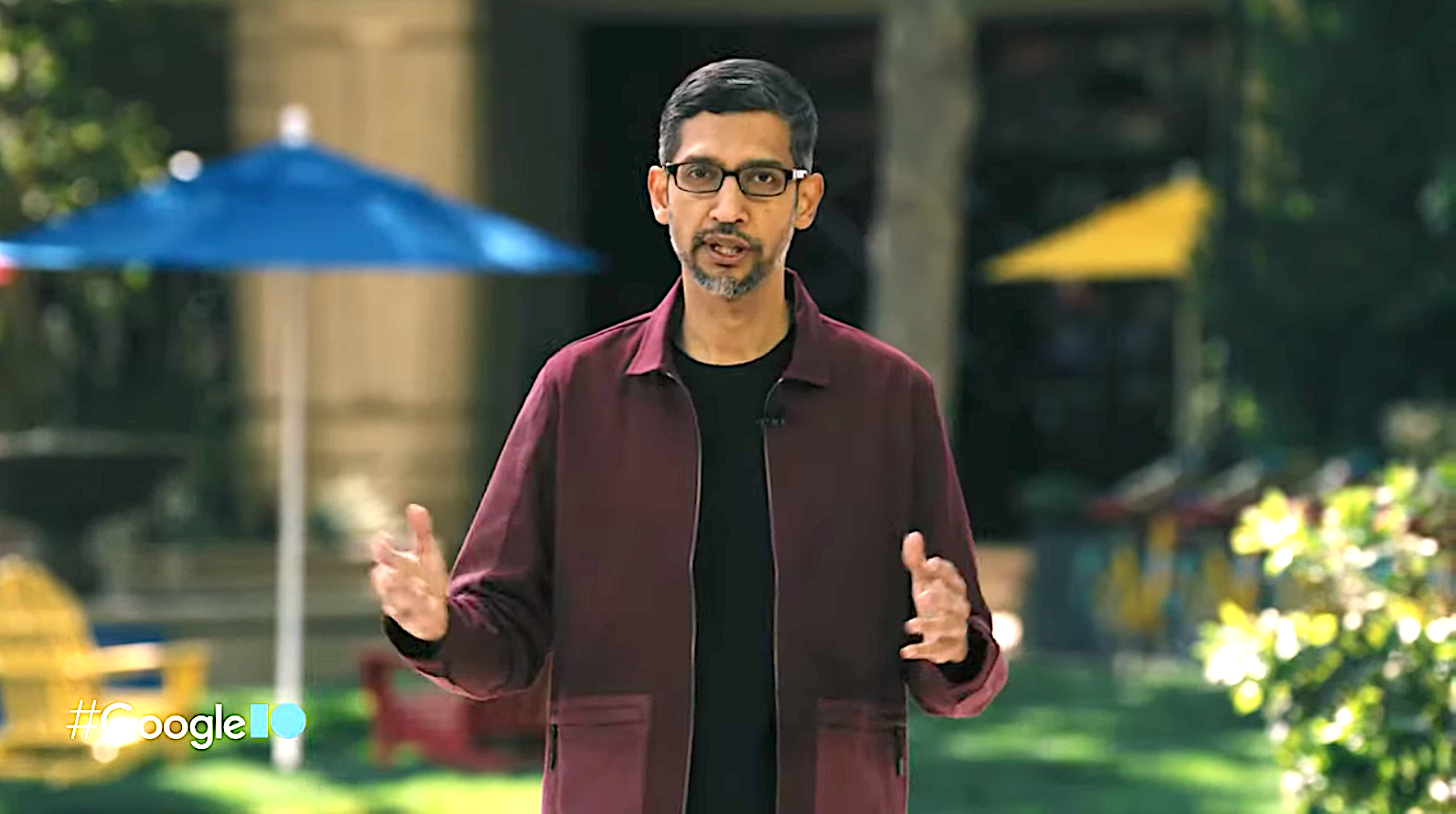
Chief Executive Sundar Pichai (pictured) told analysts on a conference call that the company’s “enterprise AI solutions have become our primary growth driver for the cloud for the first time.” He was referring to artificial intelligence offerings such as Gemini Enterprise, which saw paid monthly active users increase by 40% from the previous quarter.
Google Cloud, which houses the company’s AI products, posted sales of $20.2 billion in the quarter, up 63% from a year earlier and above the Street’s $18.05 billion target. Growth there was led by strong AI and enterprise infrastructure sales, with the company pointed to a growing backlog of $460 billion.
Alphabet said it’s updating its guidance for capital expenditures in 2026 to between $180 billion and $190 billion, compared with an earlier estimate of between $175 billion and $185 billion. Chief Executive Anat Ashkenazi also warned investors that the company expects its fiscal 2027 capex to “significantly increase” from this year.
During the previous quarter, the company’s capex came to $35.7 billion, including money spent on real estate, data centers and the servers and other infrastructure that goes into them. Like its cloud computing peers Amazon Web Services Inc. and Microsoft Corp., Alphabet has been pouring billions of dollars into its AI infrastructure in an effort to capitalize on rising demand for the technology. “We are compute constrained in the near term,” Pichai told analysts on the call. “Our cloud revenue would have been higher if we were able to meet the demand.”
Some investors have become alarmed by the runaway spending of infrastructure providers amid the AI boom. But Alphabet has shown that its capex forecast is well within its spending power, thanks to the durability and quality of its revenue growth curve, said Investing.com analyst Thomas Monteiro.
He told SiliconANGLE that the company has managed to reframe the debate around capex, making it less about cost inflation and margins, and more about who has the firepower on the revenue side to compete in the AI infrastructure market. “The answer is that virtually no one can compete with Alphabet at the moment,” Monteiro said. “While others continue to burn cash and escalate on the debt side, Alphabet continues to lead with healthy margins and further room to step on the gas if needed.”
What that means is that Alphabet is no longer asking investors to underwrite its AI spending based on faith alone, the analyst explained. He said it has demonstrated a closed loop between its infrastructure investments, product usage, enterprise demand and operating leverage. “Combining all aspects of the business, from revenue growth to extremely healthy cash flows and unparalleled demand, Alphabet continues to project a faster and more diversified growth profile as the AI leader than almost any peer in the market,” Monteiro said. “In a market where everyone needs more compute, Alphabet is proving it can afford the race while still expanding all sides of the business.”
Investors were clearly satisfied with the results, for Alphabet’s stock gained more than 7% in after-hours trading, adding to momentum that has seen it rise 21% in the last month, outperforming its megacap peers. Money has been flowing into the stock despite concerns that rising oil prices caused by the war in Iran may result in increased AI infrastructure costs.
Valoir analyst Rebecca Wettemann told SiliconANGLE that investors are likely encouraged by Google’s ecosystem and organic enterprise investments, with Gemini Enterprise now the main growth driver for Google Cloud and both customer acquisition and deal size growing impressively. “While Microsoft is struggling with Copilot adoption momentum, Google and is seeing both use and token growth, partly thanks to deals with partners like Five9 that are beginning to pay off,” she said.
The analyst said one reason for Google’s enterprise AI growth is its investment in governance and security, which help reassure enterprises that are concerned about AI “hallucinations” and other vulnerabilities. She also pointed to the company’s success on the consumer side, noting that it’s “winning in the living room and the boardroom,” giving it more moats than its competitors.
“Most importantly, Google is becoming a better storyteller,” Wettemann said. “Beyond its technical capabilities, organizations invest with technology providers that they believe understand them and that they can trust to help them be successful. Google has done a good job of making the pivot from technical prowess to how customers trust them across multiple sectors.”
Other areas of Alphabet’s business did well, too. Google Search had a strong quarter, with AI experiences helping it to generate an all-time high number of queries and revenue growth of 19% compared with the previous year. That also helped boost Google’s advertising revenue, which rose 15% from a year earlier, to $77.25 billion.
There was disappointment for YouTube’s ad business, however. YouTube ads, which are reported separately from Google ads, generated revenue of $9.88 billion during the quarter, coming in below the $9.99 billion consensus estimate. However, Chief Business Officer Philipp Schindler said the company is seeing more revenue from YouTube subscriptions, adding that they’re now growing faster than YouTube ads.
Alphabet’s Other Bets unit, which encompasses the self-driving car business Waymo and other experimental businesses, recorded $411 million in sales, down from $450 million in the year-ago period. The numbers were likely affected by a decision to spin out Verily Life Sciences during the quarter.
As for Waymo, it had a busy quarter, raising $16 billion in funding and surpassing 500,000 fully autonomous rides per week for the first time. The company also announced plans to expand to cities including Dallas, Houston, Orlando and San Antonio later this year.
Support our mission to keep content open and free by engaging with theCUBE community. Join theCUBE’s Alumni Trust Network, where technology leaders connect, share intelligence and create opportunities.
Founded by tech visionaries John Furrier and Dave Vellante, SiliconANGLE Media has built a dynamic ecosystem of industry-leading digital media brands that reach 15+ million elite tech professionals. Our new proprietary theCUBE AI Video Cloud is breaking ground in audience interaction, leveraging theCUBEai.com neural network to help technology companies make data-driven decisions and stay at the forefront of industry conversations.