 AI
AI
AI
AI







AI

Customer experience used to be something tuned at the edges. Better call center scripts, nicer portals, lower prices or a new survey could make incremental improvements in consumers’ perceptions of a brand.
Today, it starts much earlier because every interaction across the channels customers use every day matters. Text, voice and messaging are no longer just “pipes” for getting a message from point A to point B. They’re now the primary mechanism through which trust is built or eroded in seconds.
The evolution of CX is long overdue. My research shows that 90% of companies now say they compete primarily on customer experience, up from just 28% five years ago. Many consumers will walk away after just one or two bad interactions. In that environment, the communications plumbing behind those moments isn’t back-office information technology anymore; it’s strategic infrastructure. RingCentral announced several innovations today to help businesses achieve step-function improvements in CX.
The innovation payload introduced several capabilities to make customer interactions more trusted, interactive and real-time.
Collectively, these can unify identity, trust, and reach across channels, making every interaction identifiable, contextual and measurable.
As mentioned earlier, CX is how brands compete. Product availability is no longer an issue, making the experience different. This is why many business leaders consider CX improvement the top use case for AI solutions.
At the same time, consumer tolerance is collapsing; one or two poor interactions are now enough for many customers to churn to a competitor, especially in digital-first segments such as banking, retail and healthcare.
In that environment, three realities collide:
RingCentral’s announcement is interesting because it doesn’t add yet another standalone CX tool; instead, it focuses on enriching existing channels, making them more trusted and more automated, particularly for mobile messaging and Teams-based workflows.
As businesses evolve their CX strategies, trust must be a core component. With RCS Branded Messaging, a text from a generic short code becomes a verified, visually branded experience that displays the name, logo, and tagline in the native messaging thread. Subsequent phases will add rich media, carousels, and one-tap replies, turning one-way alerts into conversational flows that support confirmations, rescheduling and promotions without requiring an app download.
That matters because recognition reduces the “is this spam?” hesitation that leads to messages being ignored and appointments being missed. Rich, app-like experiences within the messaging client can handle more of the journey, including search, selection, and confirmation, without bouncing the customer around.
On the voice side, Enterprise Branded Calling gives businesses a consistent, recognizable identity: name and logo on outbound calls. In sectors like healthcare, where organizations see higher callback and answer rates from clearly identified calls, that means fewer missed critical conversations and less staff time spent following up with patients.
For CX leaders, the implications are simple to understand. If customers don’t trust who is contacting them, you never get to show how good your service is. Branded identity across SMS and voice will become table stakes for modern engagement because it fosters trust.
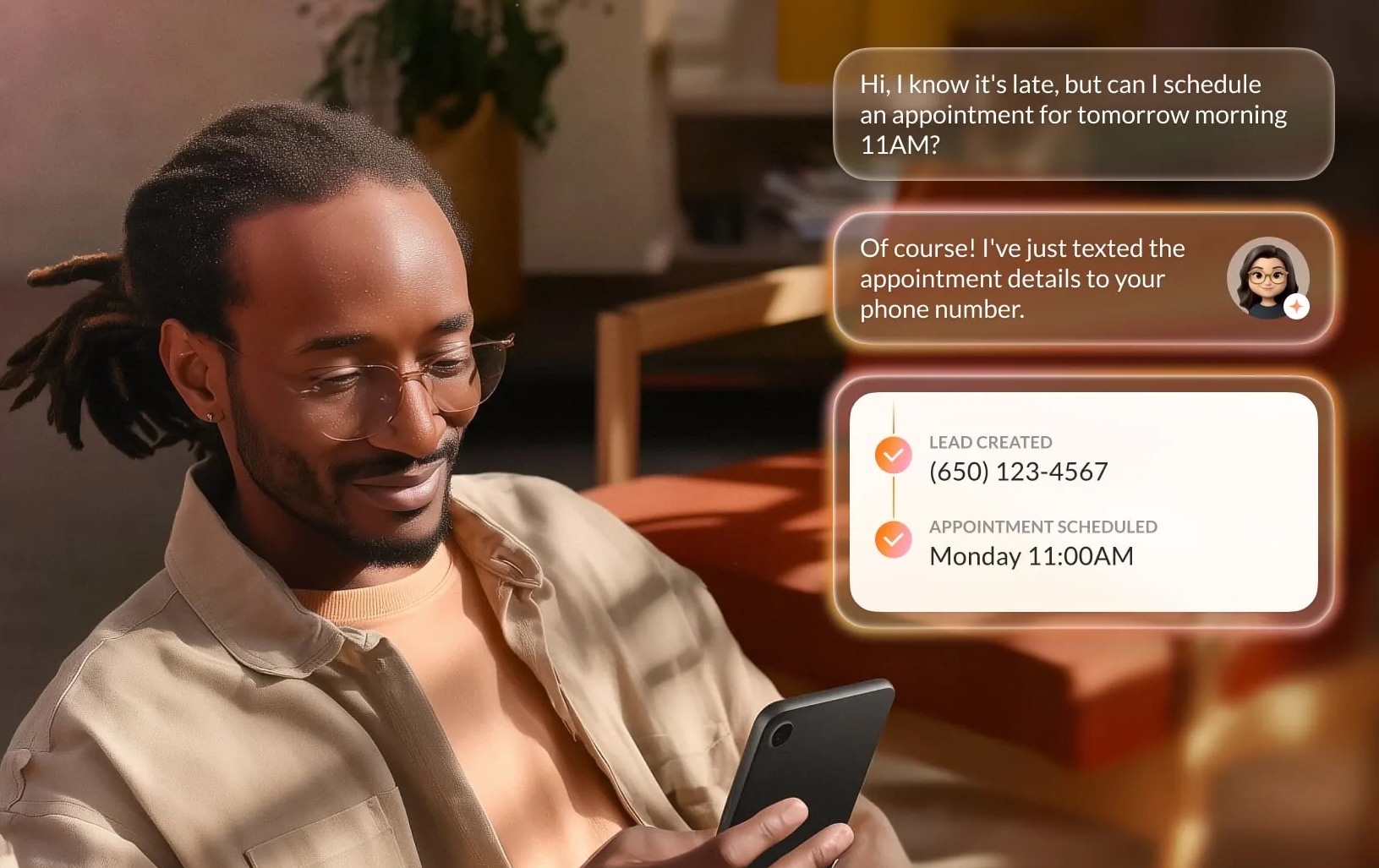
Most AI narratives in CX focus on cost reduction. More compelling is AIR’s role in eliminating “dark moments” in the journey. By extending AI Receptionist to shared SMS inboxes and call queues, RingCentral enables cross-channel automation.
Key capabilities include:
This directly addresses many of the hidden CX killers, including missed messages, abandoned calls, slow first responses, and agents repeatedly asking customers to restate the same issue. Existing engagement stacks often lack unified data and analytics. AIR, along with the broader RingCentral platform, targets those integration and insight gaps.
For a CX leader, KPIs should shift away from call deflection and focus more on reducing missed interactions, shortening time to first meaningful response, and improving consistency of answers across channels. That’s the lens through which this kind of embedded AI can materially move NPS and CSAT.
Many enterprises now live in Microsoft Teams for internal collaboration, but customer engagement often sits somewhere else, in a contact center, point solutions, or legacy telephony. RingCentral has been ahead of the market in using an embedded approach to fix that.
The embedded RingCentral app brings a softphone dialer, SMS, call queues, and presence directly into the Teams UI, allowing users to place and manage calls without leaving Teams. With CEB for Teams, RingCentral is layering customer engagement on top of that foundation:
While many vendors bolt on calling to Teams via basic direct routing, RingCentral has set the standard for embedded telephony and engagement in Teams with its integrated softphone, presence sync, and now CEB features. Operator Connect for Teams extends that model globally, pairing RingCentral’s five-nines reliability and AI stack with Teams’ native admin experience.
These capabilities can improve a number of core CX metrics:
I asked Joe Rittenhouse, co-CEO of Converged Technology Professionals, one of RingCentral’s top resellers, about the impact on customers. “Customers are less interested in standalone tools and more focused on whether their existing channels actually work together for the customer,” he told me. “What we’re seeing with these RingCentral updates is a practical step toward that — trusted identity on calls and messages, AI that quietly handles the basics, and deeper use of Teams as a workspace rather than another silo.”
For CX leaders looking to modernize CX, there are several actionable steps I recommend:
As CX becomes the primary battleground and customer patience continues to erode, the winners will be the organizations that modernize the underlying communications fabric, making every interaction trusted, contextual and responsive, and meeting employees where they already work.
Zeus Kerravala is a principal analyst at ZK Research, a division of Kerravala Consulting. He wrote this article for SiliconANGLE.
Support our mission to keep content open and free by engaging with theCUBE community. Join theCUBE’s Alumni Trust Network, where technology leaders connect, share intelligence and create opportunities.
Founded by tech visionaries John Furrier and Dave Vellante, SiliconANGLE Media has built a dynamic ecosystem of industry-leading digital media brands that reach 15+ million elite tech professionals. Our new proprietary theCUBE AI Video Cloud is breaking ground in audience interaction, leveraging theCUBEai.com neural network to help technology companies make data-driven decisions and stay at the forefront of industry conversations.