 SECURITY
SECURITY
SECURITY




SECURITY

Artificial intelligence has rapidly changed the cybersecurity landscape, leaving organizations reeling — and in need of new trust infrastructure.
More than 70% of organizations are already deploying AI-powered security tools, yet nearly 90% remain unprepared for AI-driven threats, according to theCUBE Research. This highlights the urgent need for security systems that treat AI trust as a requirement, not an afterthought.
“Intelligent Trust is emerging as more than a security concept; it’s becoming an operational framework,” said Paul Nashawaty, principal analyst for theCUBE Research. “What DigiCert is doing is unifying PKI, DNS, software integrity and device identity into a single control plane, which is exactly what enterprises need to secure increasingly autonomous, AI-driven environments at scale.”
Research suggests that by 2026, 30% of regulated workloads and up to 60% of nonregulated environments will have AI embedded directly into production systems, according to Nashawaty. Trust and governance will be determining factors in whether or not organizations can scale AI safely and effectively, added Krista Case, principal analyst at theCUBE, who believes that intelligent trust is becoming foundational to how digital businesses operate.
“AI is moving into production faster than most organizations can govern it,” Case said. “The challenge now is continuous validation. Enterprises need to understand what their AI systems are doing, how they’re behaving and whether they can be trusted in real time. That’s where operational maturity starts to show.”
AI is not the only factor pushing organizations toward developing a strong trust infrastructure. The CA/Browser forum officially voted to reduce TLS certificate lifetimes to 47 days, making automation essential for effective certificate lifecycle management.
“The convergence of post-quantum cryptography and shorter certificate lifecycles is forcing a major shift in operational discipline,” Nashawaty said. “Enterprises need crypto agility now — not later — and the 47-day certificate mandate is accelerating automation, visibility and modernization across PKI and DNS environments.”
Post-quantum cryptography is another factor. “Q-day,” the day when quantum computers will be able to break current public key cryptography, is looming over the cybersecurity field and forcing its practitioners to rethink what security looks like.
“Post-quantum is accelerating a conversation that should already be underway,” Case said. “Most organizations still lack the visibility and agility to manage cryptography at scale. Quantum will expose those gaps quickly. The priority now is building the ability to adapt crypto environments without disruption.”
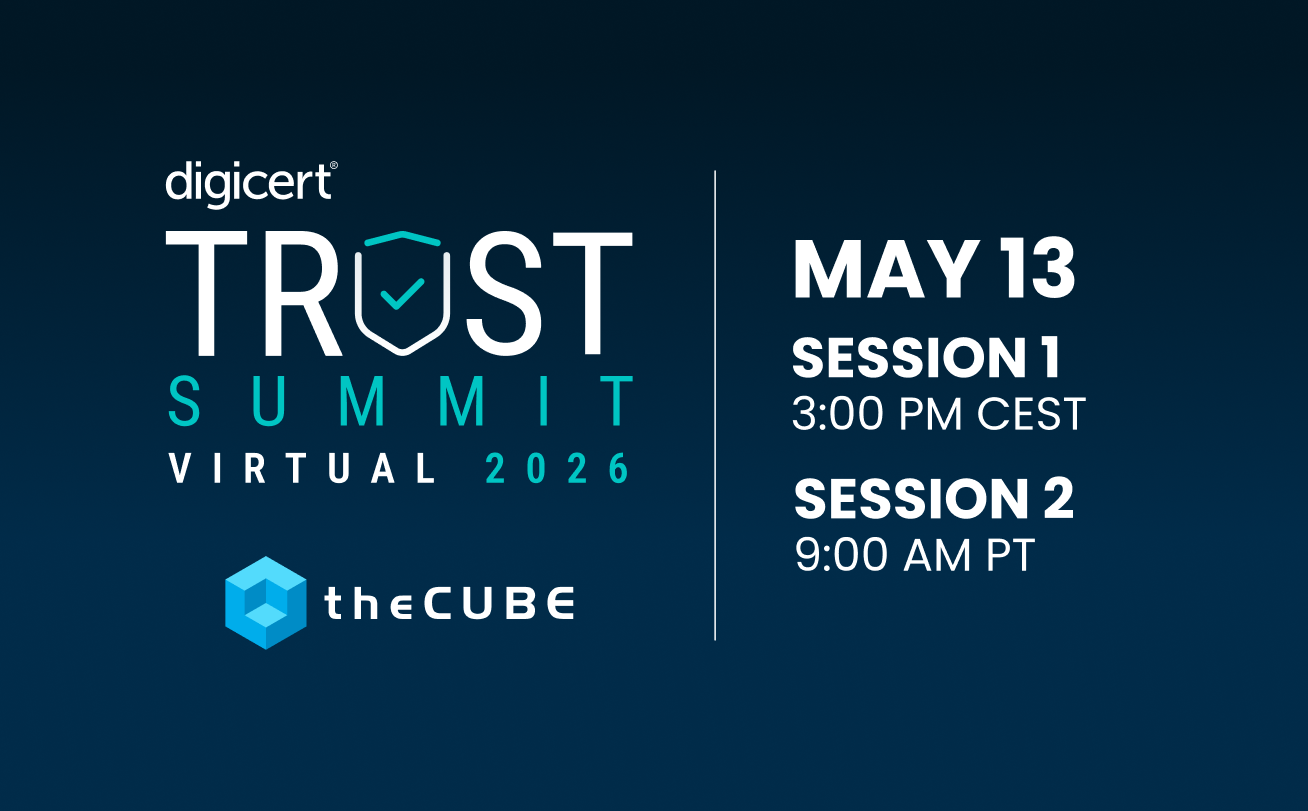
Don’t miss theCUBE’s coverage of the DigiCert Trust Summit on May 13. Plus, you can watch theCUBE’s exclusive content on-demand after the event.
We offer you various ways to watch theCUBE’s coverage of the DigiCert Trust Summit, including theCUBE’s dedicated website and YouTube channel. You can also get all the coverage from this year’s events on SiliconANGLE.
SiliconANGLE’s “theCUBE Pod” is available on Apple Podcasts, Spotify and YouTube, which you can enjoy while on the go. During each podcast, SiliconANGLE’s John Furrier and Dave Vellante unpack the biggest trends in enterprise tech — from AI and cloud to regulation and workplace culture — with exclusive context and analysis.
SiliconANGLE also produces our weekly “Breaking Analysis” program, where Dave Vellante examines the top stories in enterprise tech, combining insights from theCUBE with spending data from Enterprise Technology Research, available on Apple Podcasts, Spotify and YouTube.
During the DigiCert Trust Summit, theCUBE analysts will talk with industry executives, security leaders and technology experts about how organizations are building trust infrastructure for the AI era, including intelligent trust frameworks, post-quantum cryptography, identity governance and evolving compliance strategies.
(* Disclosure: TheCUBE is a paid media partner for the DigiCert Trust Summit. Neither DigiCert, the sponsor of theCUBE’s event coverage, nor other sponsors have editorial control over content on theCUBE or SiliconANGLE.)
Support our mission to keep content open and free by engaging with theCUBE community. Join theCUBE’s Alumni Trust Network, where technology leaders connect, share intelligence and create opportunities.
Founded by tech visionaries John Furrier and Dave Vellante, SiliconANGLE Media has built a dynamic ecosystem of industry-leading digital media brands that reach 15+ million elite tech professionals. Our new proprietary theCUBE AI Video Cloud is breaking ground in audience interaction, leveraging theCUBEai.com neural network to help technology companies make data-driven decisions and stay at the forefront of industry conversations.