 AI
AI
AI
AI


AI

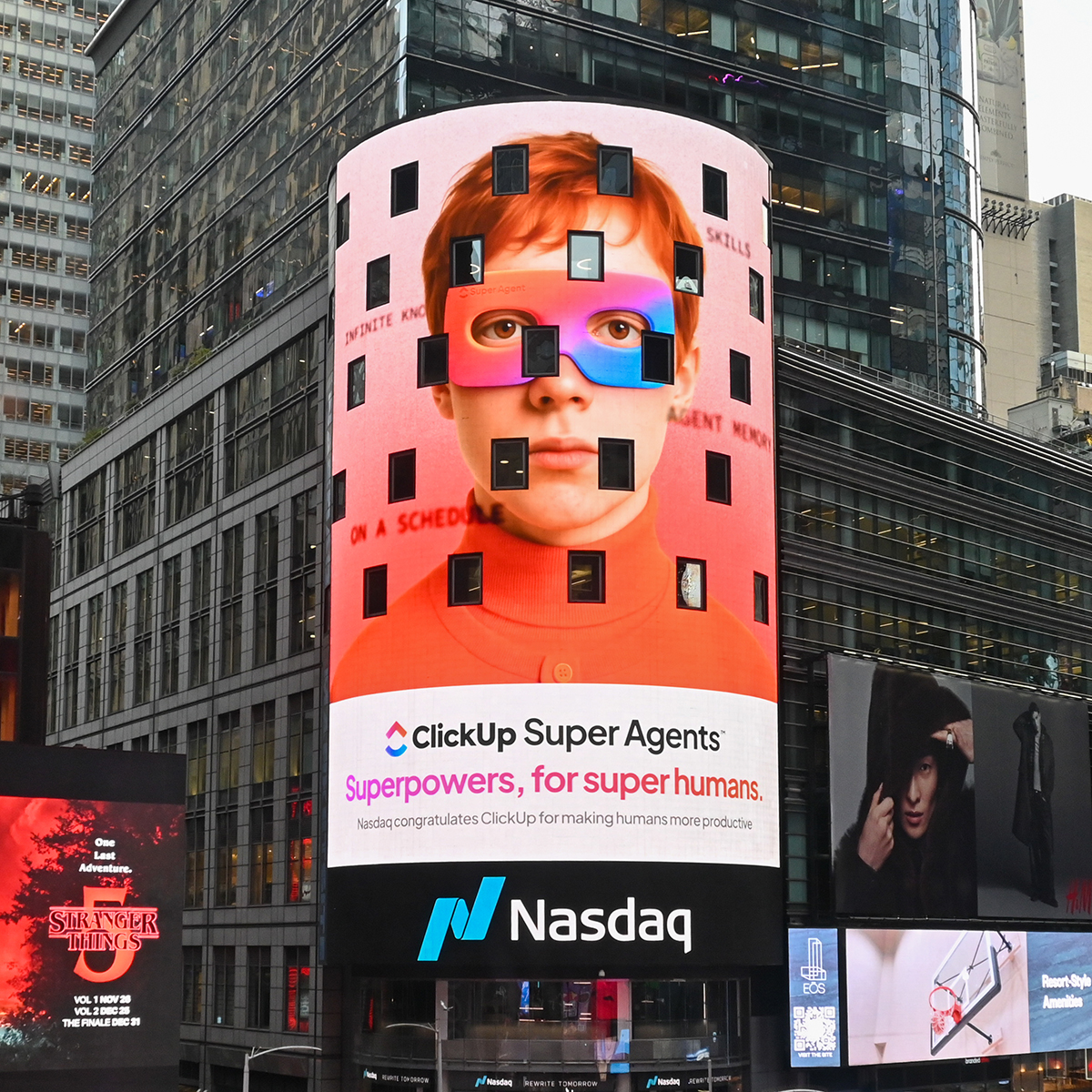
ClickUp, the business name of Mango Technologies Inc., today is introducing what it says is a major overhaul of its Brain artificial intelligence assistant inside its workplace collaboration platform, going beyond answering questions to executing complex work tasks.
The update, called Brain2, gives AI models direct contextual access to information stored in ClickUp workspaces and automatically routes tasks among multiple large language models based on the type of work. The company said the system can now generate polished slide presentations, interactive dashboards, websites and executable code from a single prompt.
“General-purpose AI doesn’t know anything about your work,” founder and Chief Executive Zeb Evans said in a statement. “Brain2 fixes that. Any model you choose gets full access to your workspace and can act on it, not just answer questions about it.”
The new system continues ClickUp’s aggressive push into AI over the past two years. The company, which has raised more than $530 million and has openly declared its intention to go public, recently acquired enterprise search startup Qatalog Inc. and AI coding startup Codegen Inc. to expand contextual understanding across workplace applications and strengthen software development automation capabilities.
Qatalog’s ActionQuery engine is a permission-aware AI search technology that included more than 100 integrations with other software platforms. “That’s now the backbone of how Brain² understands and retrieves information across the entire workspace without violating access controls,” said Jay Hack, the firm’s head of AI. “Brain² doesn’t just see everything. It sees what you’re allowed to see, in real time, with zero index lag.”
Codegen, which Hack founded, brought agentic talent to one of the hottest areas of AI development.
The acquisitions help position ClickUp against rivals such as Notion Labs Inc., Salesforce Inc.’s Slack and Asana Inc. in the market for AI-enabled productivity platforms.
Unlike earlier versions of ClickUp Brain, which required users to configure access manually to third-party AI models such as Claude, ChatGPT and Gemini, Brain 2.0 automatically injects workspace context. The platform can also shift tasks between models during execution based on which system is best suited to a particular step in the workflow.
The system minimizes the risk of errors in cross-model retrieval by using “an optimized context graph that enforces fast and correct context retrieval for better grounding,” Hack said. “Essentially, we make sure the LLM is exposed to the ground truth before generating an answer,” he said. “Brain² also proactively references these sources used in generating its responses, so you can easily check its work.”
The company said new persistent memory support allows the system to retain user preferences, formatting rules and organizational context across sessions instead of starting fresh with each interaction.
ClickUp is also extending Brain’s reach beyond its own platform through support for the Model Context Protocol, enabling it to access data from tools such as Gmail, GitHub, Figma and Slack.
Another distinguishing feature is what ClickUp calls an “anti-sycophancy” system prompt designed to make Brain more willing to challenge users’ decisions rather than simply agree with them.
Hack noted that some commercial LLMs tend to reinforce user statements and decisions to drive continued engagement, but “work requires asking the challenging questions, critical debate and ultimately, arriving at the best conclusion for your business,” he said. “Brain² is a friendly assistant, but will not sycophantically shield you from the truth because it feels good.”
That approach addresses a growing concern among enterprises that some large language models are trained to reinforce user decisions to encourage engagement, even if the decisions are bad. The criticism has created pressure for vendors to improve transparency and governance.
ClickUp emphasized that all actions taken by Brain agents are visible and auditable because they operate within the same platform as the organization’s work data and workflows.
The company also introduced Brain Max, a standalone mobile application that brings the same AI capabilities to iOS and Android devices.
To address cost concerns, ClickUp said it developed a proprietary compression system that reduces the size of the knowledge graph before information is sent to AI models, lowering operational costs to approximately 91 cents per user while reducing per-query costs as adoption increases.
ClickUp said Brain 2.0 and Brain Max are available now to a subset of users, with a rollout to all ClickUp users over the next couple of weeks. The company claims its platform now hosts more than 11 million agents. ClickUp said it surpassed $300 million in annual recurring revenue and is seeing sharp growth in AI-related sales.
Support our mission to keep content open and free by engaging with theCUBE community. Join theCUBE’s Alumni Trust Network, where technology leaders connect, share intelligence and create opportunities.
Founded by tech visionaries John Furrier and Dave Vellante, SiliconANGLE Media has built a dynamic ecosystem of industry-leading digital media brands that reach 15+ million elite tech professionals. Our new proprietary theCUBE AI Video Cloud is breaking ground in audience interaction, leveraging theCUBEai.com neural network to help technology companies make data-driven decisions and stay at the forefront of industry conversations.