 AI
AI
AI
AI






AI

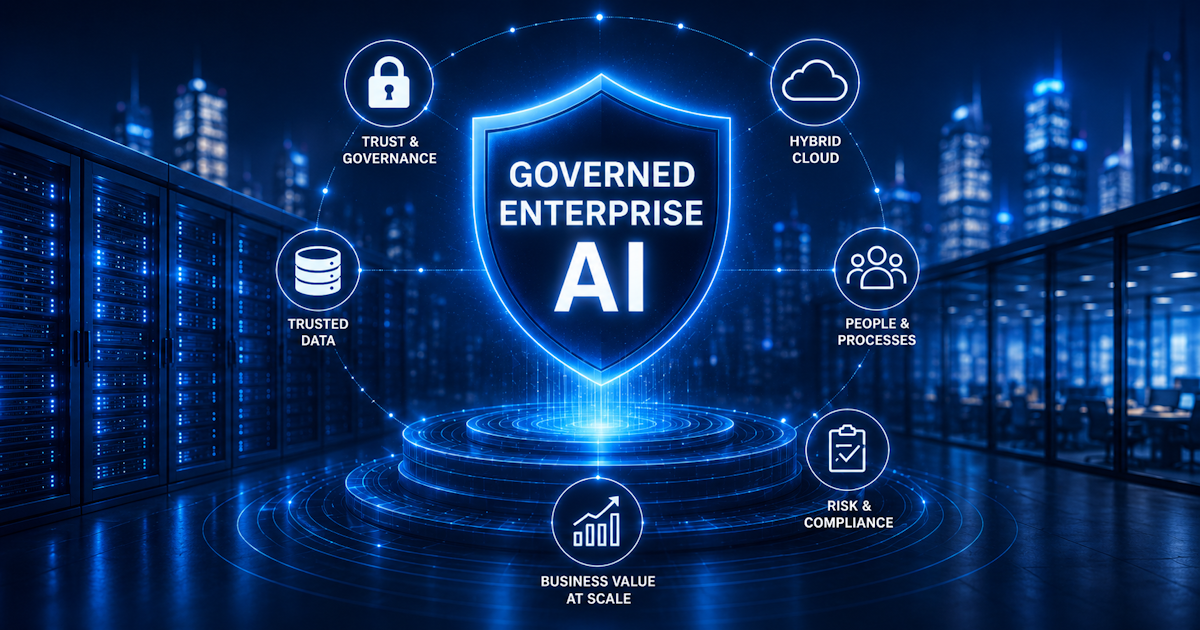
Before artificial intelligence can scale, governed enterprise AI has to prove it can be trusted.
As companies move from pilots to production, the real test is whether platforms can bring automation, trusted data and operational control into messy business environments without creating more risk than value. That shift gives IBM Corp. a practical opening as it works to turn watsonx, hybrid cloud and governance into a trusted execution layer for enterprise AI, according to John Furrier, executive analyst at theCUBE Research.
“IBM isn’t trying to win the AI hype cycle — they’re trying to win enterprise reality,” Furrier said. “If Think shows real deployments with watsonx on governed data inside complex environments, IBM becomes a serious second-wave AI leader.”
This feature is part of SiliconANGLE Media’s exploration of IBM’s AI strategy, hybrid cloud foundation, governance priorities and operating-model changes needed to scale enterprise AI. Be sure to check out SiliconANGLE’s extensive coverage of IBM Think, including interviews with IBM executives, hybrid cloud and AI experts, and other industry leaders. (* Disclosure below.)
Enterprise AI has entered a more demanding phase. Companies want agents, automation and generative AI, but they also need auditability, cost controls, trusted data and operating discipline across fragmented environments. IBM’s opportunity is to make governed enterprise AI less of a compliance layer and more of a production model, Furrier explained.
“While others chase frontier models, IBM is betting on something harder: trusted AI in production,” he said. “The question coming out of Think is simple — are they becoming the system of record for enterprise AI or just another layer in the stack?”
That distinction matters because enterprise AI is no longer just a model-selection problem. IBM is positioning around orchestration, governance and hybrid deployment, with watsonx serving as the center of that strategy, Furrier noted. The company’s challenge is making those capabilities feel operationally essential, not bolted on after deployment.
“This isn’t about chasing OpenAI or Anthropic on frontier models,” Furrier added. “IBM’s bet is that most enterprise value comes from applied AI on proprietary data. With watsonx, they’re building a stack designed to plug into messy, regulated, real-world environments — not greenfield AI labs.”
IBM’s hybrid cloud strategy gives it a practical opening as AI workloads move closer to production across public clouds, private systems, mainframes and edge locations. Its broader ecosystem, including Red Hat, watsonx, consulting services and technology partners, adds another layer for deploying AI across mixed enterprise environments, Furrier pointed out.
“IBM’s differentiation hinges on one idea: AI won’t live in a single cloud,” he said. “Their Red Hat-driven hybrid model positions them to orchestrate AI across on-prem, private and public environments. If that story lands, it’s a real strategic advantage — especially for large, regulated enterprises.”
That strategy also explains why IBM’s Red Hat acquisition continues to matter. The deal gave IBM a hybrid cloud foundation before enterprise AI became the defining workload. As AI shifts from isolated copilots to agentic systems that touch data, infrastructure and business logic, the value of a consistent control plane becomes easier to understand, according to Jim Kavanaugh, chief financial officer of IBM.
“Our investor announcement of Red Hat acquisition was predicated on three things,” Kavanaugh said in a recent interview with theCUBE. “One, that there was going to be a tighter integration of hybrid cloud and AI. Second, that the world was going to be multicloud. And, third, workloads were going to be optimized in multiple environments, public cloud, private cloud, on-prem, and now we’re all the way to the edge.”
IBM’s trust story also extends into post-quantum security, where enterprises face a looming shift in how long-protected data will be secured. With quantum-vulnerable public-key algorithms expected to be deprecated and removed by 2035, IBM is pushing customers to prepare now through stronger cryptographic visibility and agility, explained Mark Hughes, global managing partner of cybersecurity services at IBM, in a recent interview with theCUBE.
“Getting organized around cryptography now is essential — not just because of the quantum event, although that is absolutely a necessity,” he said. “You need to be doing that now so we can get to a state of what we’re describing at IBM [as] ‘crypto agility,’ where we move away from how we’ve traditionally managed crypt, which is hard-coded crypt. It’s worked, and it’s worked really well for us, but that’s not relevant now in today’s environment.”
The next wave of AI value will not come from adding more tools to old workflows. It will depend on changing how companies coordinate people, data, systems and automation. That puts finance, operations and technology leadership into the same conversation about AI returns, Kavanaugh noted.
“The role of a CFO is you have to be focused on creating long-term sustainable competitive advantage and value creation,” he said. “Underneath that, you might ask, ‘Well, what does agent of transformation mean? What is the day in the life of a CFO?’ I would tell you, it’s a fundamentally different mindset and I put it in three buckets. Number one, a CFO has to have strategic vision. Second, you’ve got to be able to enable business model innovation. And the third, very important is organizational agility.”
That financial framing is important because AI programs are under increasing scrutiny. Leaders are being asked to show returns, not just activity. For IBM, the message is that governance, hybrid architecture and process redesign are not separate priorities; they are part of the same value equation, Kavanaugh added.
“Great CFOs that are able to co-architect with the CEO as that partner, the AI vision, strategy and business model, I will tell you they will shape markets and they will create new sources of value,” he said. “That is what’s the most important role of a CFO, capital allocation, portfolio optimization, enterprise productivity to free up investment capability. That defines leadership roles in CFO.”
Agentic AI changes the risk profile for enterprise technology. Instead of software waiting for user commands, agents can act across systems, trigger workflows and make decisions that require oversight. That makes governance, observability and human accountability central to the next stage of enterprise AI, Kavanaugh emphasized.
“One, this is going to be the most powerful inflection shift that I’ve seen, let me personalize it, in my career around the agentic AI era,” he said. “Around that comes an important responsibility for companies, for worlds, for economies, for industries, to ensure that we responsibly and ethically scale this technology in the most proper manner for common good about how we get value and how we get the leverage of what technology is.”
The competitive landscape is tightening as cloud, data and software companies push their own enterprise AI platforms. IBM’s clearest opening is not being the flashiest AI company, but being one of the most credible choices for regulated, hybrid and risk-sensitive enterprises that need AI to work inside existing operations, Kavanaugh observed.
“Inside IBM, my point of view is we are not going to operate in a world of AI plus,” he said. “We are going to operate in a world of plus AI. To use your terminology, the human and the digital synergistically working together is going to be the world that we’re going to operate in, artificial intelligence combined with augmented intelligence at the end of the day.”
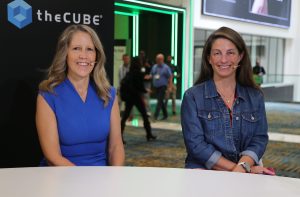
Here’s the complete video interview with IBM’s Jim Kavanaugh:
(* Disclosure: TheCUBE is a paid media partner for IBM Think. Neither IBM, the sponsor of theCUBE’s event coverage, nor other sponsors have editorial control over content on theCUBE or SiliconANGLE.)
Support our mission to keep content open and free by engaging with theCUBE community. Join theCUBE’s Alumni Trust Network, where technology leaders connect, share intelligence and create opportunities.
Founded by tech visionaries John Furrier and Dave Vellante, SiliconANGLE Media has built a dynamic ecosystem of industry-leading digital media brands that reach 15+ million elite tech professionals. Our new proprietary theCUBE AI Video Cloud is breaking ground in audience interaction, leveraging theCUBEai.com neural network to help technology companies make data-driven decisions and stay at the forefront of industry conversations.