 AI
AI
AI
AI



AI

As AI moves deeper into enterprise operations, the industry is entering a new phase: AI resilience. Autonomous systems and fragmented data are reshaping the modern infrastructure stack, forcing organizations to rethink how they secure and recover increasingly dynamic environments.
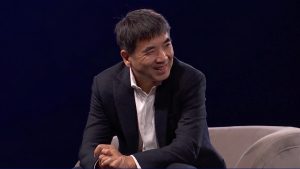
Security can simply not be an afterthought when AI agents are proliferating across every layer of the organization. During the VeeamON event keynote, Veeam Software Group GmbH Chief Executive Officer Anand Eswaran discussed “three triggers” around why AI trust infrastructure has become so critical, according to theCUBE’s Dave Vellante. For Veeam — long established as the backbone of enterprise backup and disaster recovery — delivering that trust layer isn’t a pivot. It’s a natural evolution of the company’s core mission into the era of AI.
“[Eswaran] said 81% of enterprises are running agents. That’s interesting — half of them probably don’t even know they’re doing that,” Vellante noted during a keynote analysis session. “The second [trigger] was infrastructure spend is enormous, $3 trillion by 2028; 82 agents for every human. That’s the trend that we’re going to see. [Trigger] number three is that that infrastructure that’s trusted hasn’t been delivered yet. The trust perimeter is gone — AI changes all that. It melts that trust perimeter and that is the new bottleneck.”
During the VeeamON event, Vellante and theCUBE’s Krista Case spoke with numerous Veeam representatives and industry professionals about the shift from traditional backup conversations to a broader platform discussion around data resilience, cyber recovery and AI-era risk management. They highlighted what’s next not only for AI resilience as a discipline, but for Veeam’s evolution in the industry. (* Disclosure below.)
Here are nine themes showing how the future of AI resilience and trust infrastructure is being defined:
Veeam is positioning its backup and data security expertise as a critical layer for securing and governing the emerging AI infrastructure stack, with a growing focus on AI resilience. Organizations sorely need AI systems that understand data sensitivity and value while ensuring information remains recoverable and resilient against disruption, according to Case. Veeam evolving into the answer makes perfect sense, Vellante added, noting that the company has followed every major infrastructure era — virtualization, cloud, containers — and that the agentic era is simply the next step in its ascendancy.
Catch the full segment on theCUBE.
As the industry shifted from machine learning to the agentic AI era, companies began adapting their strategies to capture the next wave of AI-driven growth. Early AI deployments showed that without trusted data, proper permissions and embedded governance controls, even advanced agentic applications fail to deliver reliable outcomes, Eswaran told theCUBE. After seeing the same AI trust and governance challenges repeatedly across customers, Veeam built a new strategy around creating a data and AI trust layer above enterprise data platforms, a thesis that ultimately drove Veeam’s acquisition of Securiti Inc. That acquisition, it turns out, was the groundwork for Veeam’s biggest product launch to date: the Veeam DataAI Command Platform, a unified platform bringing together data security, governance, compliance, privacy and resilience in a single knowledge graph — what Eswaran called “product truth, not vision.”
Here’s theCUBE’s complete interview.
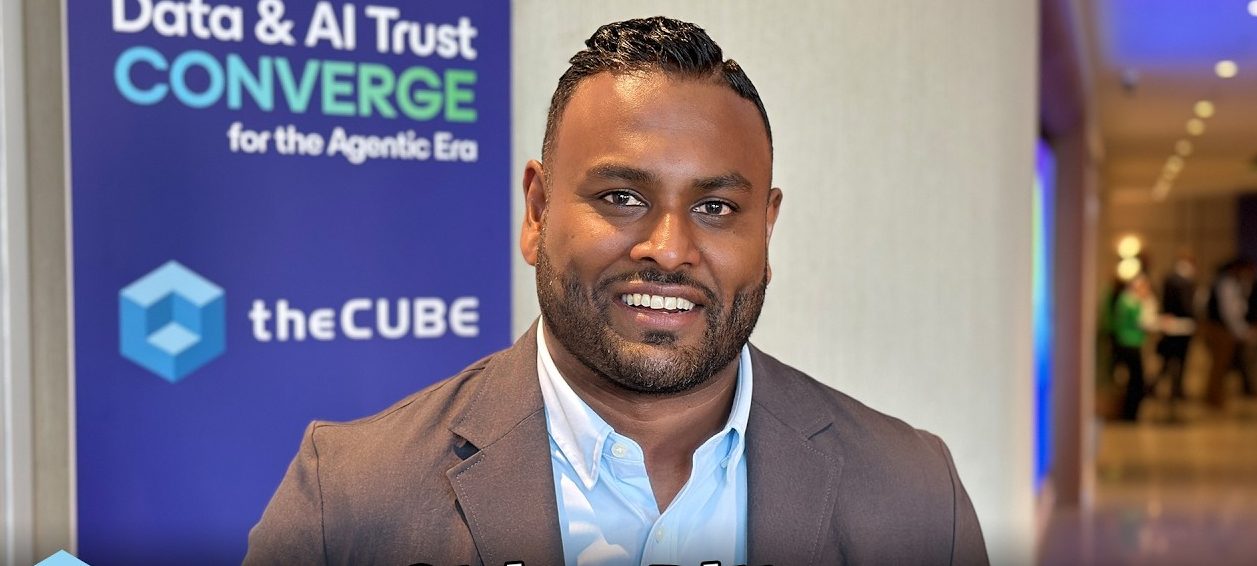
Veeam has, over the course of twenty years, consistently anticipated major infrastructure shifts, from virtualization and cloud to containers and now AI, which the company views as both a major growth opportunity and a transformative force for solving human challenges. AI is breaking down traditional enterprise silos by applying intelligence horizontally across the entire business, according to Shiva Pillay (pictured), Americas senior vice president and general manager at Veeam. That convergence isn’t theoretical — enterprises that treat security and AI resilience as separate disciplines will simply not be able to trust the systems they’re running.
Catch the entire segment on theCUBE.
Trust in AI ultimately depends on people making informed decisions with reliable data and confidence in the accuracy of AI-driven outcomes. Many people still grapple with the AI trust layer because while AI is used regularly at work, users often need significant domain knowledge to recognize when the technology is producing inaccurate results, explained Zeus Kerravala, founder and principal analyst at ZK Research LLC. AI is meant to democratize access to expertise, but today users still need deep domain knowledge because they do not fully trust the data and outputs the technology produces, he added.
Don’t miss the full segment on theCUBE.
Discussions around the emerging AI data trust layer also highlighted the importance of strategic partnerships, including with ExaGrid Systems Inc., as part of Veeam’s broader ecosystem approach. Cyber resilience spans many aspects of security, but its core role in the ecosystem is ensuring critical data remains available and recoverable during a cyberattack, according to Marc Crespi, director of business development and chief evangelist at ExaGrid. Built to deeply integrate with partners such as Veeam, ExaGrid recently introduced an AI-powered auto-detect and guard capability that uses a neural network to monitor backup and recovery behavior patterns, automatically alerting administrators to suspicious activity while continuously learning from expected operational changes.
Watch theCUBE’s full exclusive.
Despite growing enthusiasm around AI agents, many organizations lack confidence in their ability to securely scale AI and quickly produce the audit evidence needed for governance and compliance. As those agents proliferate, the industry is recognizing the challenge of managing both known and unknown data, driving efforts by Veeam and McKinsey & Co. to establish a broader industry standard for data and AI trust, noted Veeam Chief Customer Officer Tony Colon. While enterprises know they need to move forward with AI, many still lack a clear understanding of the data and risks within their own systems.
For the full story, check out the segment on theCUBE.
Enterprise IT leaders are under growing pressure to do more with limited budgets while increasing operational efficiency amid accelerating AI infrastructure investment. Organizations are prioritizing agility and operational efficiency while ensuring safety and reliability remain at the center of critical decision-making, noted Kristie Bunn-Kingston, systems and storage architect at WellSpan Health. To improve agility, organizations are moving away from traditional hardware procurement toward cloud operating models, accelerating large-scale infrastructure transformations. That shift reinforces a core principle regardless of where data lives — on premises, in the cloud or as a service — the responsibility for protecting it always stays with the customer, added Rick Vanover, vice president of product strategy at Veeam.
Catch the entire segment on theCUBE.
Growing customer demand for broader cyber resilience capabilities is pushing storage providers to evolve beyond traditional infrastructure into a more strategic last line of defense. EverPure Inc. and Veeam expanded their cyber resilience partnership with an anomaly detection integration that uses AI-driven monitoring to identify suspicious activity and automatically flag potential threats within backup environments, according to Tom Watson (left), global director of cyber resilience alliances at EverPure. Overall, the strategy is centered on simplifying cyber resilience operations to help customers achieve faster and more effective business outcomes, he added.
Don’t miss the full segment on theCUBE.
As attackers increasingly adopt AI tools, organizations are expanding their focus from operational and cyber resilience toward a broader strategy centered on AI resilience. While the core tactics of cyber extortion remain the same, AI is dramatically increasing the speed and scale of attacks, according to Ray Umerley, field chief information security officer for Coveware by Veeam. AI is becoming an accelerant and enabler for cyberattacks, increasing the complexity of organizational response while lowering the barrier to entry for threat actors.
Here’s theCUBE’s complete interview.
Here’s the complete video playlist, part of SiliconANGLE’s and theCUBE’s coverage of the VeeamON event:
(* Disclosure: TheCUBE is a paid media partner for the VeeamON event. Sponsors of theCUBE’s event coverage do not have editorial control over content on theCUBE or SiliconANGLE.)
Support our mission to keep content open and free by engaging with theCUBE community. Join theCUBE’s Alumni Trust Network, where technology leaders connect, share intelligence and create opportunities.
Founded by tech visionaries John Furrier and Dave Vellante, SiliconANGLE Media has built a dynamic ecosystem of industry-leading digital media brands that reach 15+ million elite tech professionals. Our new proprietary theCUBE AI Video Cloud is breaking ground in audience interaction, leveraging theCUBEai.com neural network to help technology companies make data-driven decisions and stay at the forefront of industry conversations.