 AI
AI
AI
AI










AI

The rise of intelligent digital workers and autonomous AI agents is compounding an already urgent cybersecurity challenge: attack surfaces expanding faster than security teams can manually assess them.
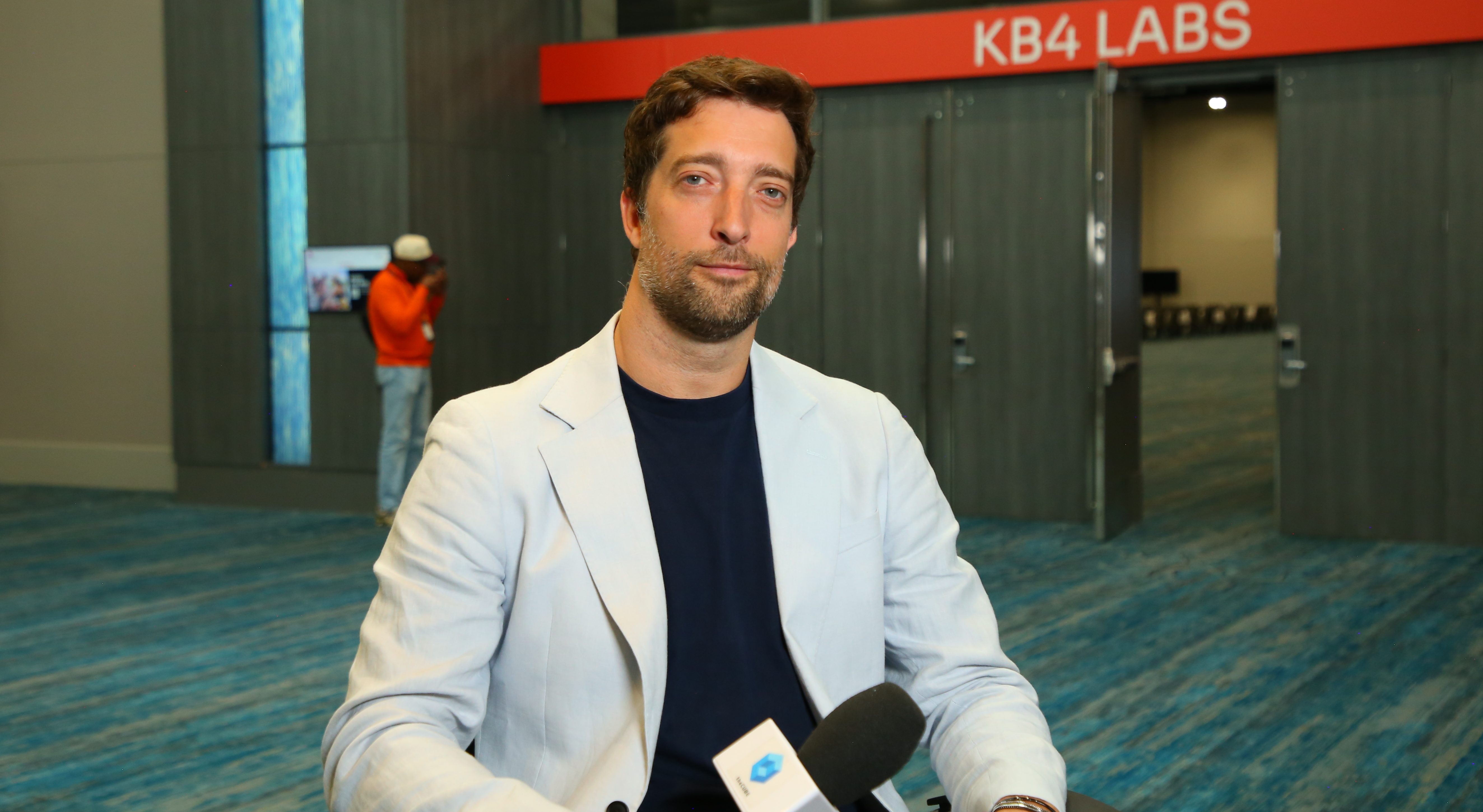
That pressure is exactly why autonomous penetration testing is emerging as a critical discipline. AI-powered attackers are compressing the time from vulnerability discovery to exploitation from months to hours, and mid-market companies — those most likely to lack dedicated security headcount — are caught squarely in the crossfire, according to Chris Wallis (pictured), co-founder and chief executive officer of Intruder Systems Ltd. But the situation is far from hopeless, with AI pen testing now presenting opportunities for defenders that scanners never could.
“The AI can start to understand your whole attack surface and start to reason about it in ways that previously would’ve taken a human to do,” Wallis said. “What AI is really doing now is closing that gap between what a pen test is and what scanners have been able to do in the past.”
Wallis spoke with theCUBE’s Scott Hebner at KB4-CON 2026, during an exclusive broadcast on theCUBE, SiliconANGLE Media’s livestreaming studio. They discussed how AI is reshaping penetration testing, the expanding attack surface created by intelligent digital workers, and Intruder’s newly launched AI Pentesting capability. (* Disclosure below.)
The threat landscape has shifted dramatically as both attackers and defenders adopt AI. More departments now deploy their own agents and AI-coded applications, creating new exposure vectors that traditional scanners cannot fully evaluate, Wallis noted.
“[There are] more agents, more software, more people producing their own attack surfaces,” he said. “It’s really an explosion of the attack surface at the moment — and the attack surface is something that Intruder was set up to solve and secure.”
Specifically, Intruder’s response is its AI Pentesting offering, a newly launched capability that uses AI agents to actively investigate scanner findings and determine whether they represent genuine, exploitable risks. Intruder’s own research found that 42% of mid-market security teams describe themselves as stretched, overwhelmed or consistently behind — precisely the organizations at the most risk, Wallis noted. The agents run on Intruder’s own infrastructure — requiring no customer deployment — and reduce investigation work that previously took a human analyst hours down to minutes.
“It’s kind of like having a pen tester at your fingertips,” Wallis said. “You get your scan results and then you pass it to a pen tester and say, ‘Hey, take another look at this and see if there’s anything I really need to worry about.’ That’s what the AI is doing for us.”
Looking ahead, the boundaries between scanning, penetration testing and red-teaming are dissolving into a single, unified exposure management workflow — one in which intelligent digital workers will be secured alongside traditional infrastructure, according to Wallis. AI won’t replace human pen testers, but will amplify them the same way earlier tooling did for prior generations of security professionals, he added.
“I think that the problem is there’s not enough pen testers in the world at the moment,” Wallis said. “What this technology is helping us to do is to democratize that and make pen testing available to more and more companies who either wouldn’t have had the budget at all, or would have just done it once a year, and now they have access to it on demand.”
Here’s the complete video interview, part of SiliconANGLE’s and theCUBE’s coverage of KB4-CON 2026:
(* Disclosure: TheCUBE is a paid media partner for KB4-CON 2026. Sponsors of theCUBE’s event coverage do not have editorial control over content on theCUBE or SiliconANGLE.)
Support our mission to keep content open and free by engaging with theCUBE community. Join theCUBE’s Alumni Trust Network, where technology leaders connect, share intelligence and create opportunities.
Founded by tech visionaries John Furrier and Dave Vellante, SiliconANGLE Media has built a dynamic ecosystem of industry-leading digital media brands that reach 15+ million elite tech professionals. Our new proprietary theCUBE AI Video Cloud is breaking ground in audience interaction, leveraging theCUBEai.com neural network to help technology companies make data-driven decisions and stay at the forefront of industry conversations.