 AI
AI
AI
AI







AI

The innovation race has entered a new phase with enterprise agentic AI spreading across every part of the business.
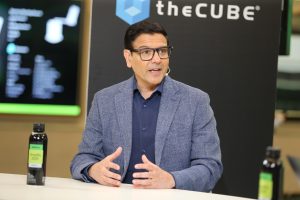
The potential of agents — once limited to technical teams — is quickly becoming accessible to employees across the enterprise, according to Will Grannis (pictured), vice president and chief technology officer of Google Cloud. Over the past year, enterprise conversations around AI have shifted from simply prototyping agents to deploying them at scale across entire organizations.
“This is no longer the domain of only the data scientists and the software engineers. Now, agents are spreading out to human resources, finance, all of these functions that make a business work,” Grannis said. “This year CEOs, boards, CTOs — the conversations I’m having are [about asking], ‘How do we make sure that we’re providing a platform that everyone can use agents to innovate?’”
Grannis spoke with theCUBE’s Dave Vellante at Google Cloud Next, during an exclusive broadcast on theCUBE, SiliconANGLE Media’s livestreaming studio. They discussed the shift from AI experimentation to enterprise-scale deployment and how enterprise agentic AI is reshaping software development and business operations. (* Disclosure below.)
Google Cloud’s approach is centered on enabling organizations to compute and use data wherever it resides while automatically enriching and formatting that data for AI and analytics as soon as it is stored. After decades in technology, the current AI era is the most exciting period of disruption, because it is making innovation accessible to everyone, according to Grannis.
“It doesn’t matter who you are, it doesn’t matter what function you’re in, it doesn’t matter where you sit in an org,” he said. “It doesn’t matter, because now Gemini Enterprise and platforms like that allow anybody to build.”
Google Cloud’s integrated full-stack approach — spanning custom silicon, models and agent platforms — is designed to deliver efficiency gains continuously rather than forcing organizations to accumulate technical debt before optimizing. By baking in observability, identity management and audit trails from the start, the platform aims to remove the friction that has historically slowed enterprise AI adoption, Grannis explained. But this shift represents something more totalizing than a product cycle.
“I have been in technology for a couple decades,” Grannis said. “This is by far the most exciting phase in my career of technology dislocation, because it’s opening up innovation to everyone.”
Here’s the complete video interview, part of SiliconANGLE’s and theCUBE’s coverage of Google Cloud Next:
(* Disclosure: TheCUBE is a paid media partner for Google Cloud Next. Sponsors of theCUBE’s event coverage do not have editorial control over content on theCUBE or SiliconANGLE.)
Support our mission to keep content open and free by engaging with theCUBE community. Join theCUBE’s Alumni Trust Network, where technology leaders connect, share intelligence and create opportunities.
Founded by tech visionaries John Furrier and Dave Vellante, SiliconANGLE Media has built a dynamic ecosystem of industry-leading digital media brands that reach 15+ million elite tech professionals. Our new proprietary theCUBE AI Video Cloud is breaking ground in audience interaction, leveraging theCUBEai.com neural network to help technology companies make data-driven decisions and stay at the forefront of industry conversations.