 AI
AI
AI
AI










AI

As enterprises graduate from AI experimentation to production-scale agentic deployments, the infrastructure assumptions of the chatbot era are rapidly giving way to a more distributed and cost-conscious hybrid AI architecture.
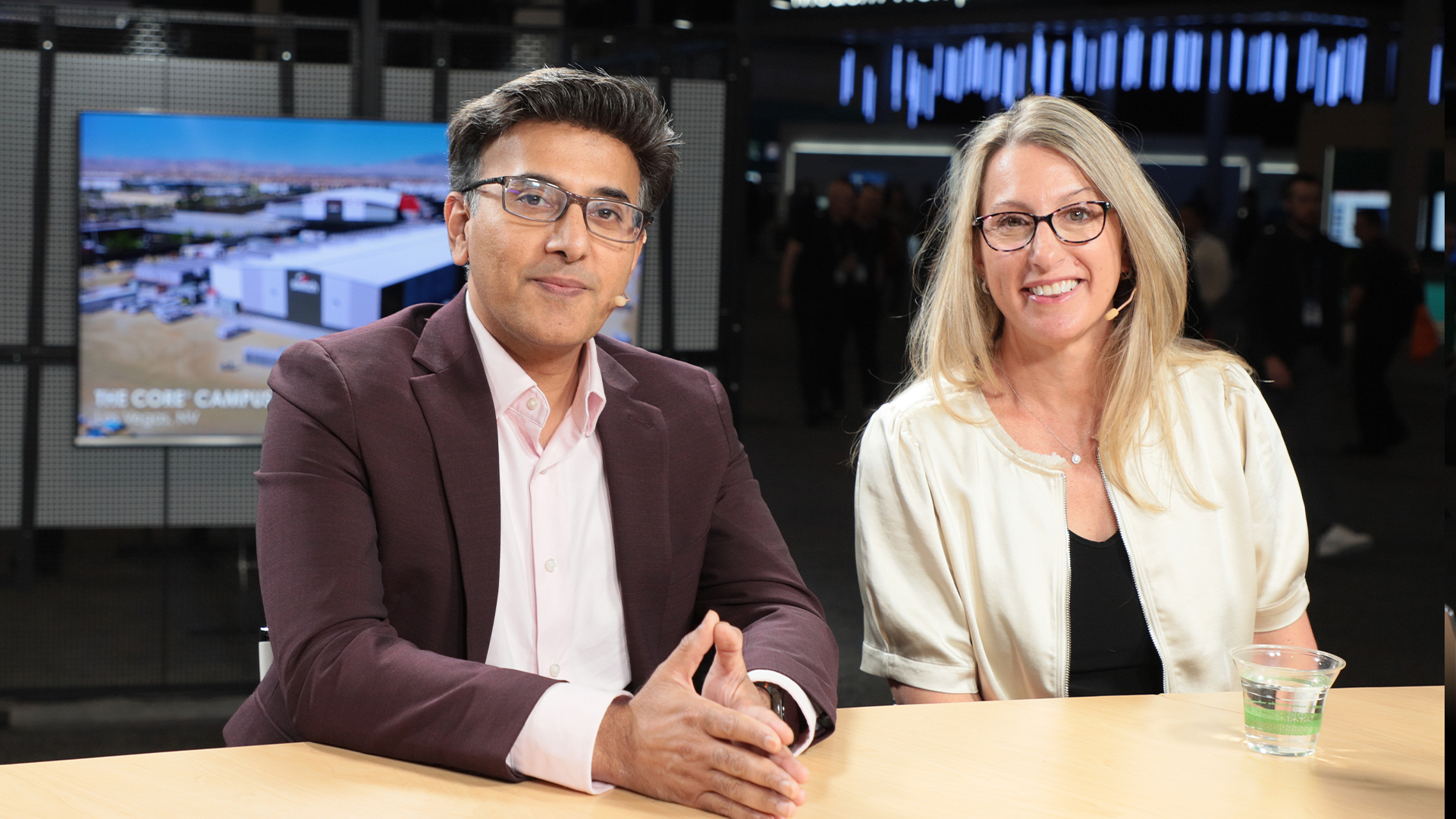
The shift is playing out in real time, with the AI factory emerging as the central organizing principle for rearchitecting enterprise compute. Token economics, data gravity and constrained data center power density are forcing a hard look at which workloads belong on-premises, which belong at the edge and which warrant frontier-model API calls, according to Suresh Andani (pictured, left), corporate vice president for compute and enterprise AI at Advanced Micro Devices Inc. That’s where AMD’s MI350P — a GPU card designed to slot into existing servers — comes in.
“About 70% of enterprise data centers are 30-kilowatt rack power density or lower — and about 50% of them are lower than about 15 kilowatts,” Andani said. “If you are a traditional data center and you have ambitions to be an AI-sophisticated enterprise, what do you do? That’s where [the MI350P] comes in, where you can take your existing servers … and plug in these 350P cards and still get 150, 170 billion parameter inference models running very efficiently.”
Andani and Melissa Crichton (right), vice president of server and AI solutions at Dell Technologies Inc., spoke with theCUBE’s John Furrier and Dave Vellante at Dell Technologies World 2026, during an exclusive broadcast on theCUBE, SiliconANGLE Media’s livestreaming studio. They discussed hybrid AI architecture, the AMD MI350P launch and evolving CPU-to-GPU ratios in agentic deployments. (* Disclosure below.)
The hybrid AI architecture discussion is inseparable from the economics of scale. Dell and AMD recently announced support for the MI350P in Dell PowerEdge servers, with the emphasis on enabling enterprises to run meaningful inference workloads within their existing power envelopes — without costly infrastructure rebuilds. Roughly 80% of data is created at the edge, meaning enterprises cannot run AI in a single location, Crichton noted.
“We believe we have to build out a hybrid platform for our customers — whether it runs at the edge, the core or in a hyperscaler,” Crichton said. “That’s how we think about the AI factory; creating that enterprise scalable model for our customers to start small, scale to the largest models … and creating that orchestration and abstraction layer to move workloads where it’s best suited.”
The compute ratio question is equally fundamental. Agentic AI has driven the GPU-to-CPU ratio from 8:1 toward 1:1 — and AMD believes it could soon invert entirely — because planning, orchestration and tool-calling in multi-step agent workflows are serial tasks that favor CPU architecture over massively parallel GPU compute, Andani explained.
“In the agentic flow, where you’re running multi-system agents, the first step you do when an agent request comes in [is] you need to start planning … that’s a combination of CPU and GPU,” he said. “Then you’ve got to go execute that plan, which involves a lot of orchestration, which is a serial job — it’s not a parallel job that GPUs do well. All of that tool execution is optimized on a serial architecture like a CPU versus a massively parallel architecture like a GPU. If you don’t do that, your very expensive GPUs are sitting idle, and that is a waste of money.”
Here’s the complete video interview, part of SiliconANGLE’s and theCUBE’s coverage of Dell Technologies World 2026:
(* Disclosure: AMD sponsored this segment of theCUBE. Neither AMD nor other sponsors have editorial control over content on theCUBE or SiliconANGLE.)
Support our mission to keep content open and free by engaging with theCUBE community. Join theCUBE’s Alumni Trust Network, where technology leaders connect, share intelligence and create opportunities.
Founded by tech visionaries John Furrier and Dave Vellante, SiliconANGLE Media has built a dynamic ecosystem of industry-leading digital media brands that reach 15+ million elite tech professionals. Our new proprietary theCUBE AI Video Cloud is breaking ground in audience interaction, leveraging theCUBEai.com neural network to help technology companies make data-driven decisions and stay at the forefront of industry conversations.