 AI
AI
AI
AI





AI

As enterprises confront rising memory and storage costs alongside mounting pressure to run AI workloads on-premises, the fundamental architecture of the private cloud data center is changing beneath their feet — and Azure Local is emerging as a key part of that new foundation.
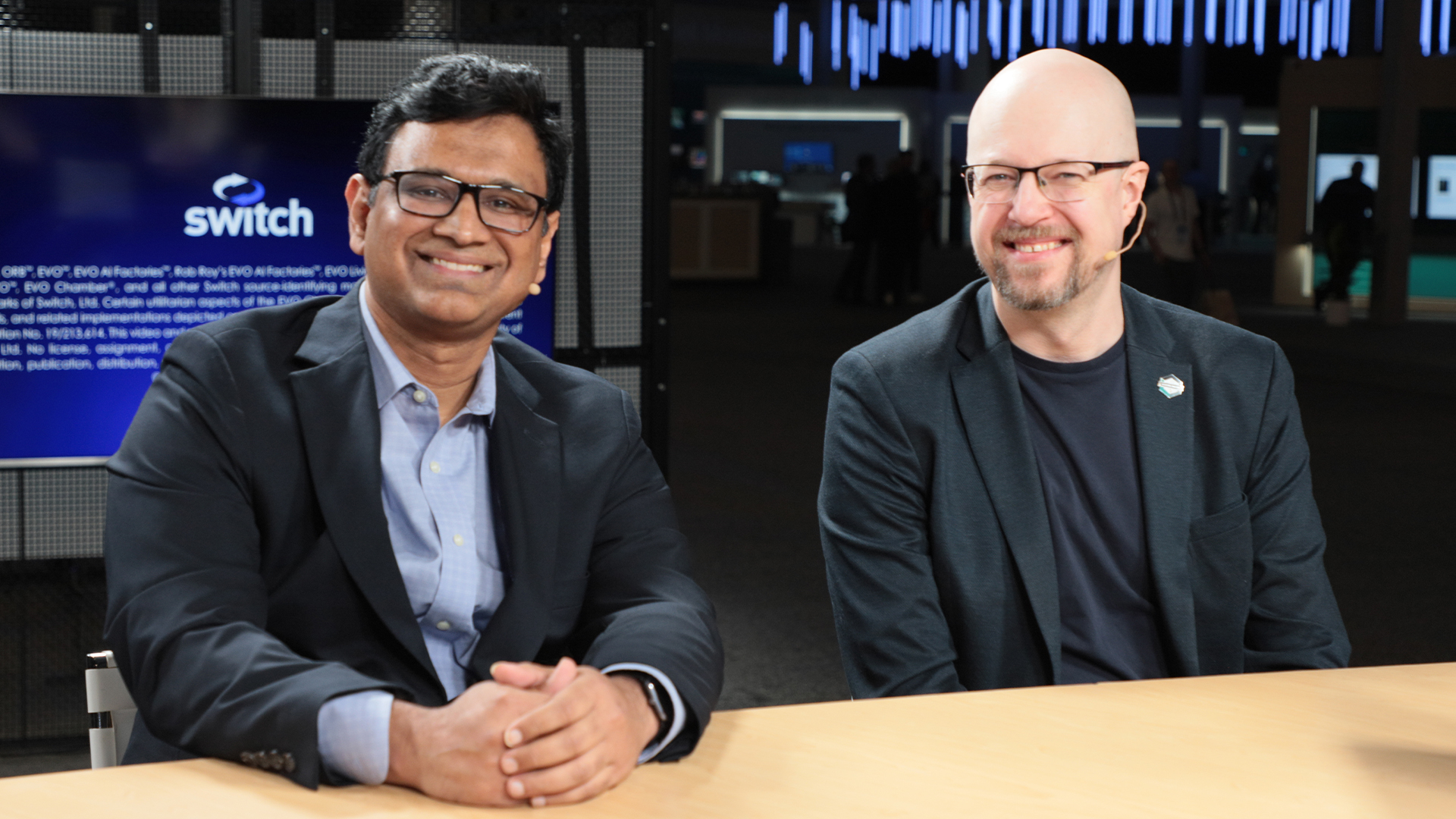
Digital sovereignty is accelerating the transformation. Regulated industries — from government agencies to healthcare networks to transportation operators — are no longer treating data residency and operational control as optional considerations. They are legal mandates, forcing organizations to rethink how sovereign private cloud infrastructure fits into a world that also demands AI at scale, according to Kenny Lowe (pictured, right), technical staff, cloud platforms evangelism and enablement lead at Dell Technologies Inc.
“What has worked in the past won’t necessarily work moving forward. We need to be able to right size workloads in the right way on the right platform so you’re not overpaying for the infrastructure that you’re running on,” Lowe said. “The core foundational model of the data center is shifting — shifting away a bit from hyperconverged to a more disaggregated model.”
Lowe and Raghu Venkataraman (left), principal product manager for cloud and AI at Microsoft Corp., spoke with theCUBE’s Dave Vellante and Gemma Allen at Dell Technologies World 2026, during an exclusive broadcast on theCUBE, SiliconANGLE Media’s livestreaming studio. They discussed Azure Local, digital sovereignty, disaggregated infrastructure and how the Dell-Microsoft partnership is delivering a cost-predictable, AI-ready private cloud. (* Disclosure below.)
The disaggregated model Dell is now pushing— separating compute from storage and scaling each independently — is unlocking cost savings that hyperconverged infrastructure cannot match. Comparisons of the same workloads running on hyperconverged versus disaggregated show about a 64% cost saving in the disaggregated model, Lowe noted. A newly announced six-to-one data reduction guarantee on Dell PowerStore, which is financially backed, adds further proof of the efficiency argument, he added.
“Azure Local is designed to bring just enough Azure on premises,” Lowe said. “If you’re in a connected state, it’s the same Azure portal. You log into a portal at Azure.com and you deploy your workloads, but they’re running in your data center, not a Microsoft data center. If you’re running in a disconnected state, we need to bring that management experience on premises as well — the same Azure resource manager, the same AKS experience.”
Microsoft is extending that vision further with the launch of Foundry Local on Azure Local, which keeps inference fully on-premises — no cloud dependency for any prompt or response, Venkataraman explained. The approach reflects a broader Microsoft philosophy of bringing AI to the data rather than forcing data to move. That shift is being driven by changes rippling across every layer of the stack.
“Every single new thing that is coming in the market is affecting the silicon and the application layer and everything in between,” Venkataraman said. “With that, we need to actually partner very closely with partners like Dell toward developing solutions, which actually has a very simplified the experience for customers. [With our partners], we know exactly the right kind of reference architecture, what we need to test, how we need to package it, how we need to deliver it to customers and that goes a long way in terms of the value prop that we jointly offer to customers.”
Here’s the complete video interview, part of SiliconANGLE’s and theCUBE’s coverage of Dell Technologies World 2026:
(* Disclosure: TheCUBE is a paid media partner for Dell Technologies World. Neither Dell, the sponsor of theCUBE’s event coverage, nor other sponsors have editorial control over content on theCUBE or SiliconANGLE.)
Support our mission to keep content open and free by engaging with theCUBE community. Join theCUBE’s Alumni Trust Network, where technology leaders connect, share intelligence and create opportunities.
Founded by tech visionaries John Furrier and Dave Vellante, SiliconANGLE Media has built a dynamic ecosystem of industry-leading digital media brands that reach 15+ million elite tech professionals. Our new proprietary theCUBE AI Video Cloud is breaking ground in audience interaction, leveraging theCUBEai.com neural network to help technology companies make data-driven decisions and stay at the forefront of industry conversations.