 AI
AI
AI
AI





AI

Workflow automation vendor Pegasystems Inc. today unveiled a broad set of artificial intelligence enhancements aimed at helping enterprises deploy AI agents in mission-critical business processes while maintaining governance, reliability and cost control.
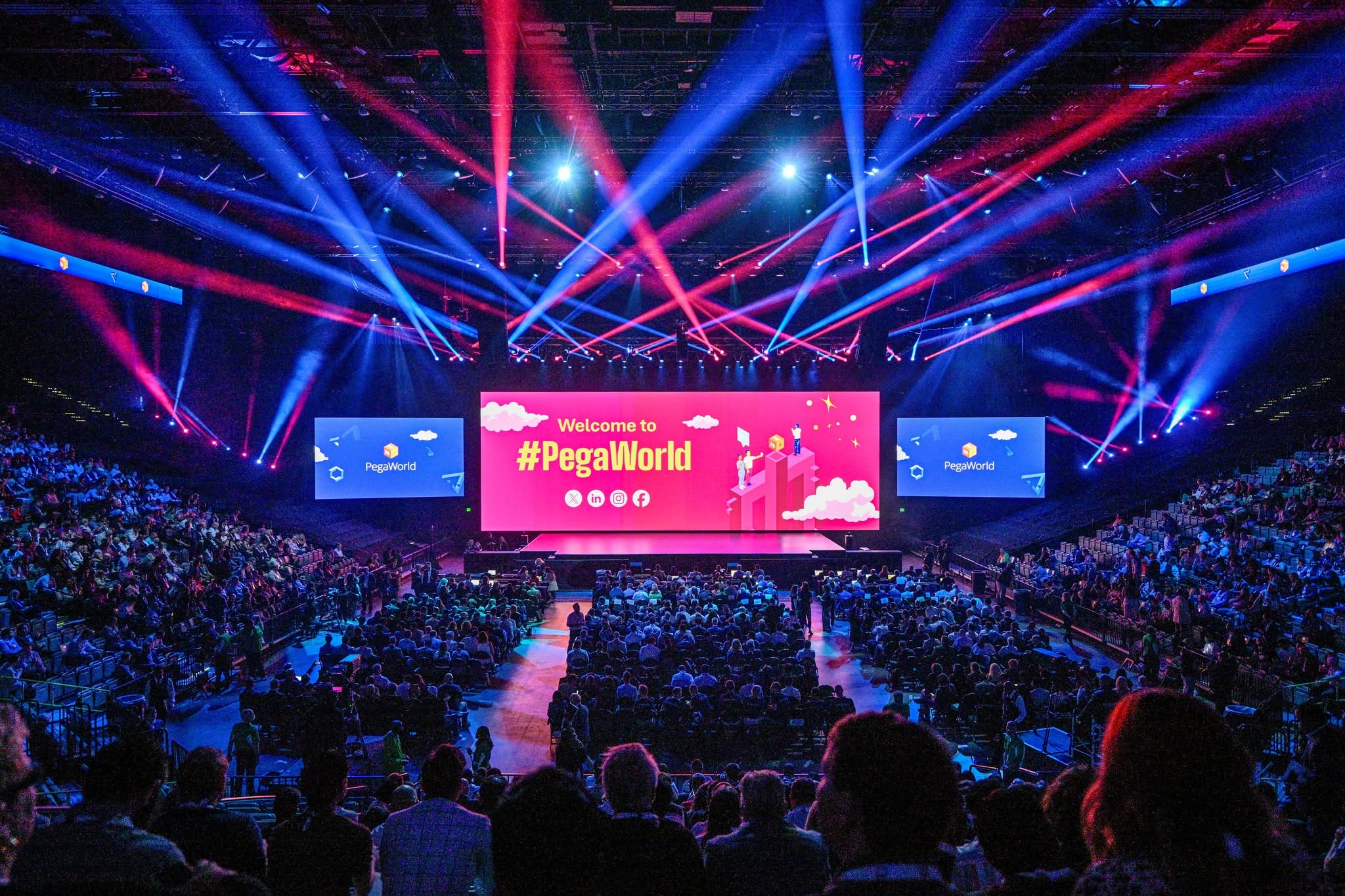
Announced at the company’s PegaWorld conference, the updates span agent orchestration, application development, workforce training and a new pricing model intended to address growing concerns about the cost of large language model-based AI.
The announcements are part of the Pega Infinity ’26 release, which is expected to be available in the third quarter.
“I feel comfortable declaring that Infinity ‘26 is probably our most ambitious product release in over a decade,” said Kerim Akgonul, Pega’s chief product officer.
Pega said it’s addressing a growing debate over how organizations can move beyond pilot projects and deploy AI agents at scale without creating operational, compliance or financial risks.
“There is increasing concern about the amount of money that’s being spent on AI and the actual value it’s returning,” said Don Schuerman, Pega’s chief technology officer and head of marketing. “People are realizing that if you’re not careful, you can send agents off to burn a lot of tokens without them making a meaningful difference in the efficiency of your business.”
Tokens are data building blocks, such as parts of words and punctuation marks, that AI models process and generate. Most AI model providers charge customers based on token usage.
A centerpiece of the announcement is expanded support for the open Model Context Protocol, which allows third-party AI agents to discover and execute Pega workflows. The company said agents built on platforms such as Anthropic PBC’s Claude, Google LLC’s Gemini, OpenAI LLC’s LLM and Amazon Web Services Inc.’s AgentCore will be able to invoke Pega-managed business processes while adhering to enterprise governance controls.
Pega argues that many agentic AI approaches rely too heavily on repeated reasoning by LLMs, creating both inconsistent outcomes and high costs. Instead, the company is promoting what it calls a “predictable AI” architecture that shifts most AI reasoning to application design time rather than runtime.
“Without a reliable way to run, scale, and orchestrate agents, enterprises risk trading innovation for instability,” said Kerim Akgonul, Pega’s chief product officer. “The new MCP capabilities give organizations an easy way to connect their AI agents to their mission-critical processes to orchestrate predictable outcomes with predictable cost.”
The company also introduced new agent services, including an “agentic assignment agent” that can automatically contact employees or customers when approvals or additional information are needed and a document-processing agent capable of analyzing, categorizing and extracting information from documents, images and PDFs.
On the development side, Pega launched Infinity Studio, a redesigned, AI-powered development environment that incorporates capabilities from its Blueprint AI workflow design platform. Infinity Studio integrates with third-party coding assistants such as GitHub Copilot, Claude Code and OpenAI Codex, while embedding what Pega calls its own best architectural practices into the development process.
The company demonstrated how developers can use AI assistants within Infinity Studio to configure integrations, design workflows and modify user interfaces using natural-language instructions. The platform automatically generates implementation plans based on Blueprint designs and exposes workflows via MCP interfaces, enabling participation in broader agent ecosystems.
Pega also announced the Solution Designer Initiative, a training and credentialing program intended to address what it sees as a growing gap between business requirements and technical implementation. The initiative includes free credentials through Pega Academy, Blueprint delivery workshops and a community program to develop AI expertise.
The company said early customers of its Blueprint Delivered methodology reported 50% faster discovery, with 80% of projects going live within 90 days and 30% less rework after initial design.
A distinctive aspect of today’s announcement is Pega’s move away from token-based AI pricing. Under the company’s new model, customers will pay a flat fee per completed business case rather than per token consumed.
Pega said the approach is designed to eliminate what it calls an “AI token tax” by reducing dependence on repeated runtime reasoning. The company estimates some customers could reduce AI costs by more than 20 times, depending on workflow complexity and scale.
“Enterprises are quickly waking up to the fact that tokenmaxxing is ridiculous: it can only lead to unsustainable costs and unpredictable results,” said founder and CEO Alan Trefler. Tokenmaxxing is a controversial practice of measuring employee productivity by the number of AI tokens consumed.
“AI best creates value when it delivers reliable outcomes at scale,” Trefler said. “That’s why we don’t charge clients based on how many tokens they use, but by the meaningful work they accomplish.”
Trefler said Pega differs from competitors that rely heavily on prompt-driven agent frameworks by emphasizing deterministic workflows rather than large numbers of autonomous agents.
“We think the key is that every application can have an agent that is automatically constructed and that you’re able to converse with,” he said, “and that agent knows how to deal with the workflows of that application.”
Support our mission to keep content open and free by engaging with theCUBE community. Join theCUBE’s Alumni Trust Network, where technology leaders connect, share intelligence and create opportunities.
Founded by tech visionaries John Furrier and Dave Vellante, SiliconANGLE Media has built a dynamic ecosystem of industry-leading digital media brands that reach 15+ million elite tech professionals. Our new proprietary theCUBE AI Video Cloud is breaking ground in audience interaction, leveraging theCUBEai.com neural network to help technology companies make data-driven decisions and stay at the forefront of industry conversations.