 CLOUD
CLOUD
CLOUD
CLOUD






CLOUD

Enterprises are rapidly pushing AI projects into production in the race for higher revenues – but it’s not without cost and security risks. Private cloud is emerging as a bedrock for AI infrastructure as businesses seek control, cost predictability, security, and compliance.
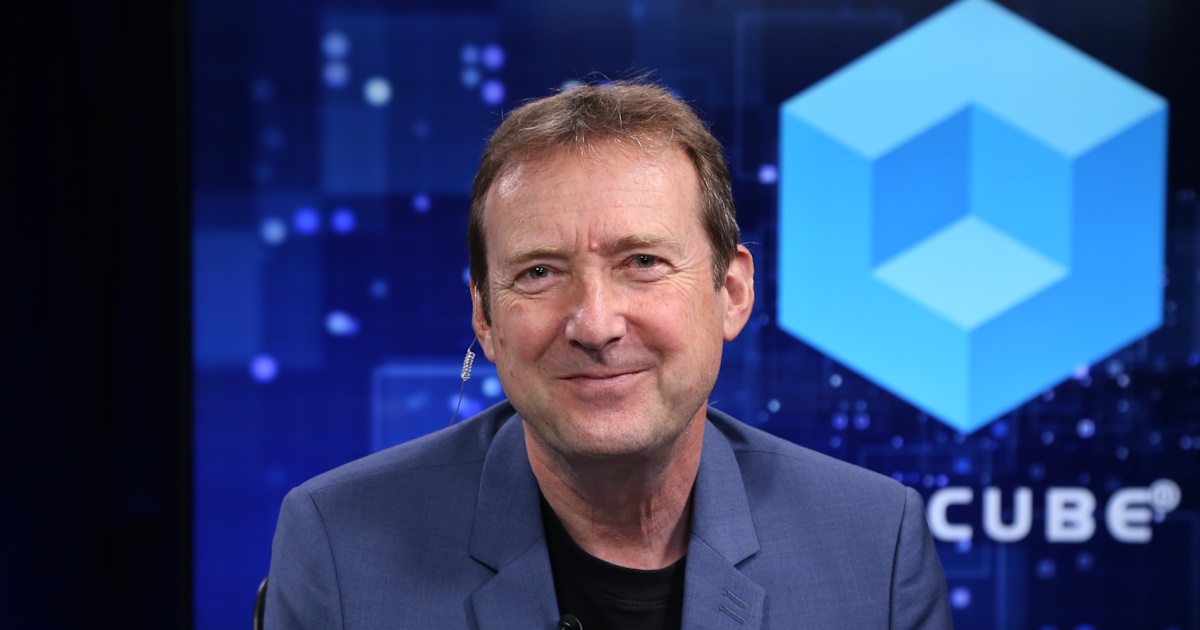
Broadcom Inc. is positioning its VMware Cloud Foundation platform as the secure, cost-effective private cloud foundation enterprises need to effectively seize new AI opportunities, explained Paul Turner (pictured), chief product officer of the VMware Cloud Foundation Division at Broadcom Inc, in a recent interview with theCUBE’s John Furrier and Gemma Allen.
“AI is also a risk and cost multiplier,” he said. “Just think about a few stats: 73% of enterprises see AI-related attacks. That is almost every industry out there … actually seeing these new attacks that are driven by AI-enabled software.”
Turner was among several industry experts from Broadcom, ThinkOn and Charlotte Pipe and Foundry Co. who spoke to Furrier and Allen at the Broadcom “Modern Private Cloud: A Secure Foundation for Production AI” event, during an exclusive broadcast on theCUBE, SiliconANGLE Media’s livestreaming studio. They discussed.. (* Disclosure below.)
Here are three insights you may have missed from theCUBE’s coverage of Broadcom’s “Modern Private Cloud: A Secure Foundation for Production AI” event:
AI offers enticing revenue potential for enterprises, but those benefits are cut across by high infrastructure costs. The search for cost efficiency is driving rapid adoption of the VCF platform, explained Turner, with more than 2,000 customers already on board.
“I mean, it is getting very, very expensive to start running services,” he told theCUBE. “Companies are suddenly seeing the cloud answer to AI is not the right answer to run production AI at scale, and inferencing AI, which is really the runtime of your day-to-day operations. You will not run that on the cloud, because of the cost of operations. You can run it more efficiently, just like you can the rest of your infrastructure, on a private cloud environment.”
Tokenomics is prompting executives to reconsider where workloads should run. Security concerns are also influencing whether they choose the public cloud or private cloud, added Prashanth Shenoy, chief marketing officer and vice president of marketing of the VMware Cloud Foundation Division at Broadcom
“Last year, when we did the private cloud outlook study, there was a definitive cloud reset happening in the market, where private cloud and the operating model of private cloud to run your mission-critical workload on-premises or in a hybrid environment was on par with public cloud,” he said. “Fast-forward to this year, when we did the same survey with 1,800 IT leaders and decision-makers around the globe. A lot of organizations are now moving their AI applications from a pilot phase of trying, to production, doing it at scale.”
Here’s theCUBE’s complete video interview with Paul Turner and Prashanth Shenoy:
Sovereignty is increasingly a priority as organizations seek greater freedom and control over how they run AI. Many also want to reduce their dependence on public cloud providers.
The scope of AI sovereignty in the enterprise has shifted in just the past year, explained Chris Wolf, global head of AI and advanced services for the VMware Cloud Foundation Division at Broadcom. Whereas a year ago organizations may have primarily been focused on filtering the data they shared with frontier models, those same businesses today are making even more nuanced and mindful decisions around data privacy, access control, and auditability.
“For a lot of our customers today, their definition means that it’s not just about the data plane being sovereign, it’s about the control plane being sovereign,” he said in an interview with theCUBE. “It’s that I can disconnect from the internet and I can continue to run. I can continue to operate. That’s a difference and that’s been really driven over the last couple of years, far more so than we’ve seen previously.”
Sovereignty is especially a priority for government customers. ThinkOn, a Canadian cloud services provider, worked with Broadcom to launch Canada’s first sovereign cloud. In this case, private cloud was the only viable infrastructure option able to deliver the accountability, auditability and compliance required in the government sector, explained Craig McLellan, founder and chief executive officer of ThinkOn. Additionally, the need for sovereignty extends beyond the cloud down to the AI models.
“I’d even go a step further and say that it’s also about model sovereignty,” he added. “Many countries want to have their own sovereign models. For instance, in Canada, Cohere is a vibrant participant in the market, and we actually took the opportunity to work closely with Broadcom to add the Cohere model to the environment as a private cloud. We are able to provide the public sector with a combination of model sovereignty, certainly economic and data sovereignty, as well as control plan and data plane sovereignty.”
Here’s theCUBE’s complete video interview with Craig McLellan and Chris Wolf:
Businesses that have already modernized their infrastructure in the private cloud may be in a better position to adopt AI in the future. For example, Charlotte Pipe and Foundry, a 125-year-old PVC and cast iron pipes and fittings manufacturer, invested in Broadcom’s VCF years ago as a way to optimize workloads and security, noted Rodney Barnhardt, server administration at Charlotte Pipe and Foundry.
“Originally when we moved to VCF, it was prior to being able to do brownfield imports,” he told theCUBE. “While we’ve been VMware customers for a long time, prior to moving to VCF, we were on three tiers: Cisco, BladeCenter, Unity all-flash storage array. In looking at VMware by Broadcom and the VCF platform using HCX to be able to do those migrations, as well as vDefend to put microsegmentation around products, made VMware Cloud Foundation an ideal product to look at deploying within our environment.”
As AI adoption expands across the enterprise, greater oversight is needed to manage the increasing number of workflows interacting with sensitive operational data. Security capabilities like vDefend, which enables microsegmentation, help reduce the ability for external threats to move laterally throughout Charlotte Pipe’s IT environment, Barnhardt pointed out.
That’s especially important because connectivity, and the ability for internal systems to talk to one another, could be the ultimate benefit of a modern AI-enabled infrastructure.
“As more organizations look to AI, they’ll be connecting various systems that may now be disconnected,” Barnhardt said. “They’ll be looking at integrating those better and allowing them to rely on each other and say, ‘This system may take an order in and send it to another system that processes the order that may then generate something on the processing side or deployment side.’ So I think you’ll see more integrations like that and discussions between teams on doing those types of integrations.
Here’s theCUBE’s complete video interview with Rodney Barnhardt:
Catch up on our complete video coverage of the Broadcom “Modern Private Cloud: A Secure Foundation for Production AI” event
(* Disclosure: TheCUBE is a paid media partner for the Broadcom “Modern Private Cloud: A Secure Foundation for Production AI” event . Sponsors of theCUBE’s event coverage do not have editorial control over content on theCUBE or SiliconANGLE.)
Support our mission to keep content open and free by engaging with theCUBE community. Join theCUBE’s Alumni Trust Network, where technology leaders connect, share intelligence and create opportunities.
Founded by tech visionaries John Furrier and Dave Vellante, SiliconANGLE Media has built a dynamic ecosystem of industry-leading digital media brands that reach 15+ million elite tech professionals. Our new proprietary theCUBE AI Video Cloud is breaking ground in audience interaction, leveraging theCUBEai.com neural network to help technology companies make data-driven decisions and stay at the forefront of industry conversations.