 AI
AI
AI
AI



AI

Enterprise artificial intelligence infrastructure has become as critical to AI success as the models themselves.
As organizations move AI into production, attention is increasingly shifting toward the infrastructure, software and ecosystems required to support deployment at scale. Those themes are reflected across Advanced Micro Devices Inc.’s recent announcements and executive discussions ahead of its Advancing AI 2026 event.
“AMD’s advancing AI strategy reflects a broader market demand for open, scalable AI infrastructure,” said Paul Nashawaty, principal analyst at SiliconANGLE and theCUBE Research. “According to theCUBE AppDev Research, 64% of organizations identify data and infrastructure bottlenecks, not model availability, as the biggest obstacle to AI deployment. AMD’s focus on integrated silicon, ROCm and an open ecosystem positions the company to capitalize on a market increasingly seeking alternatives to proprietary AI stacks and reducing dependency on single-vendor architectures.”
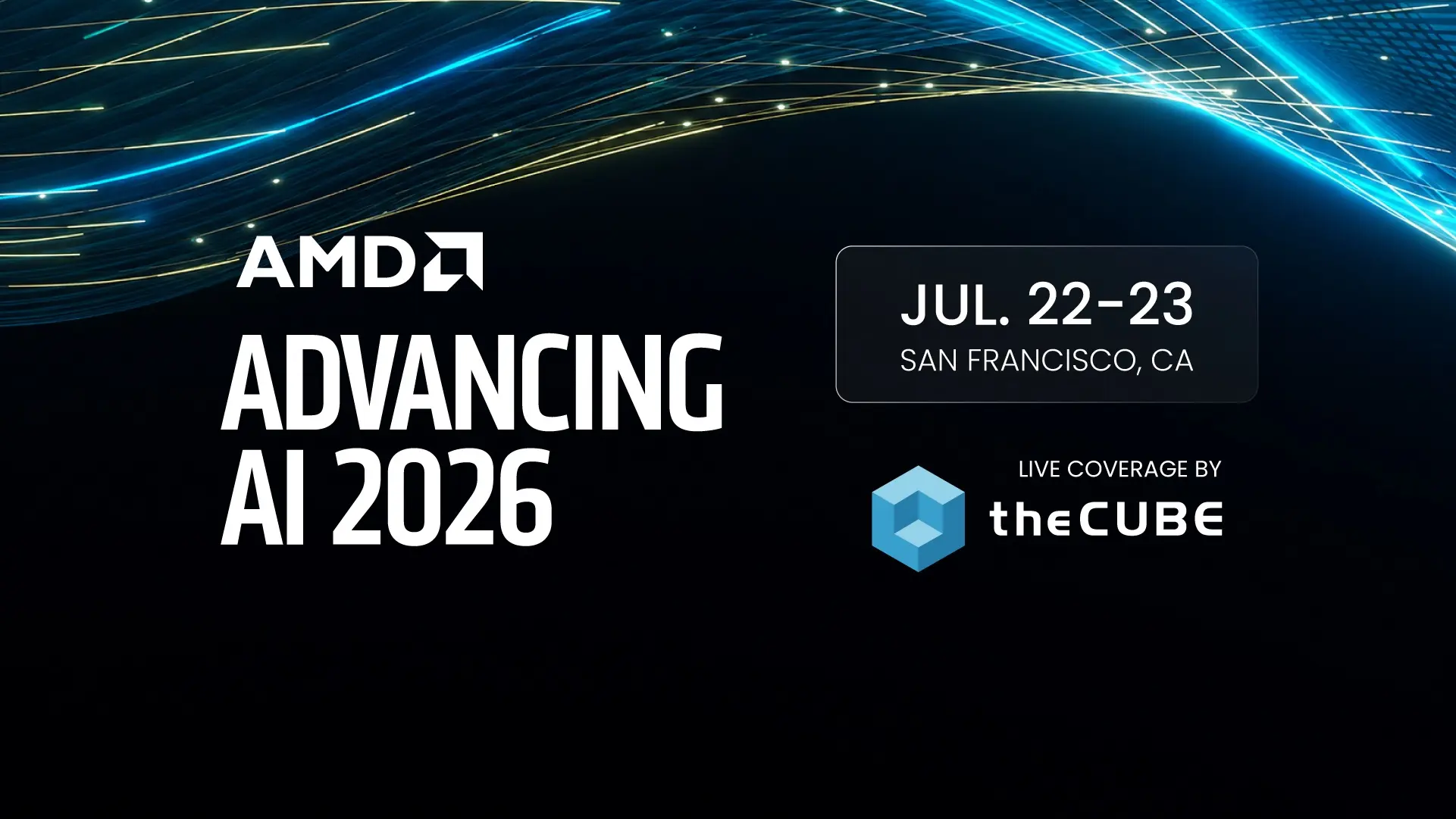
Join theCUBE, SiliconANGLE’s livestreaming studio, on July 22-23 for exclusive coverage of the AMD Advancing AI 2026 event. The event will feature conversations with AMD executives, customers, developers and partners focused on enterprise AI infrastructure, open ecosystems and AI deployment. (* Disclosure below.)
AMD’s recent announcements suggest that enterprise AI infrastructure will be defined by more than advances in graphics processing units and central processing units alone. Through a multiyear partnership with Nutanix Inc., the company is working to develop an open, full-stack AI infrastructure platform for agentic AI while integrating ROCm, AMD Enterprise AI software and the company’s EPYC processors and Instinct GPUs into the Nutanix platform.
“Enterprise customers need the freedom to run the models and workloads that matter most to their business, without compromise,” said Dan McNamara, senior vice president and general manager of Compute and Enterprise AI at AMD. “Through our partnership with Nutanix, we’re building a scalable, full-stack AI platform rooted in openness, designed to give enterprises and service providers the flexibility to innovate, extend and grow AI deployments across enterprises.”
AMD is also expanding that strategy through enterprise partnerships designed to accelerate AI deployment. The company’s recent agreement with Rackspace Technology Inc. establishes AMD as a strategic technology partner at the silicon layer of Rackspace’s governed AI stack, reinforcing its focus on enterprise AI infrastructure built for production environments.
“Enterprises in regulated industries need AI infrastructure that is governed from the ground up, with one operator accountable for business outcomes, not a collection of vendors each owning a piece,” said Gajen Kandiah, CEO of Rackspace. “This collaboration combines the right compute with the right operating model and delivers something the market hasn’t offered before: a governed AI stack with one accountable partner from silicon to outcomes.”
Enterprise AI infrastructure is also reshaping how organizations approach AI deployment within existing environments. Hybrid AI architectures, balanced CPU and GPU resources and infrastructure that fits within existing power envelopes can help enterprises expand AI capabilities without extensive data center overhauls, according to Suresh Andani, corporate vice president for Compute and Enterprise AI at AMD.
“In the agentic flow, where you’re running multi-system agents, the first step you do when an agent request comes in [is] you need to start planning … that’s a combination of CPU and GPU,” he told theCUBE in a recent interview. “Then you’ve got to go execute that plan, which involves a lot of orchestration, which is a serial job — it’s not a parallel job that GPUs do well. All of that tool execution is optimized on a serial architecture like a CPU versus a massively parallel architecture like a GPU. If you don’t do that, your very expensive GPUs are sitting idle, and that is a waste of money.”
As enterprise AI infrastructure continues to evolve, organizations are increasingly looking for flexibility in how they deploy AI workloads across existing environments. Open ecosystems, compute choice and the ability to match workloads to the most appropriate infrastructure have become key considerations for enterprise AI adoption, according to John Hampton, corporate vice president of global enterprise technical sales at AMD.
“I think that the story is all about choice,” he said in a recent discussion with theCUBE. “[AMD] wants to be there as a trusted advisor to work through all these challenging topics, all this complexity. Let’s go and run a proof of concept together. Let’s figure out what it can do for you, the financial impact it brings to your enterprise and the technology impact that it brings as well.”
Don’t miss theCUBE’s coverage of the AMD Advancing AI event from July 22-23. You can also access theCUBE’s exclusive content on demand after the event broadcast.
There are several ways to follow theCUBE’s coverage of the AMD Advancing AI event, including theCUBE’s dedicated website and YouTube channel. You can also find coverage from theCUBE events on SiliconANGLE.
SiliconANGLE’s “theCUBE Pod” is available on Apple Podcasts, Spotify and YouTube, making it easy to follow the program on the go. During each podcast, SiliconANGLE’s John Furrier and Dave Vellante unpack the biggest trends in enterprise tech — from AI and cloud to regulation and workplace culture — with exclusive context and analysis.
SiliconANGLE also produces our weekly “Breaking Analysis” program, where Dave Vellante examines the top stories in enterprise tech, combining insights from theCUBE with spending data from Enterprise Technology Research. The program is available on Apple Podcasts, Spotify and YouTube.
During theCUBE’s coverage of the AMD Advancing AI event, company executives, customers, developers and partners will discuss the latest advancements in enterprise AI infrastructure, open ecosystems and AI deployment. The interviews will examine how organizations are building, deploying and scaling AI through integrated hardware, software and enterprise infrastructure strategies.
(* Disclosure: TheCUBE is a paid media partner for the AMD Advancing AI event. Neither AMD, the sponsor of theCUBE’s event coverage, nor other sponsors have editorial control over content on theCUBE or SiliconANGLE.)
Support our mission to keep content open and free by engaging with theCUBE community. Join theCUBE’s Alumni Trust Network, where technology leaders connect, share intelligence and create opportunities.
Founded by tech visionaries John Furrier and Dave Vellante, SiliconANGLE Media has built a dynamic ecosystem of industry-leading digital media brands that reach 15+ million elite tech professionals. Our new proprietary theCUBE AI Video Cloud is breaking ground in audience interaction, leveraging theCUBEai.com neural network to help technology companies make data-driven decisions and stay at the forefront of industry conversations.