 AI
AI
AI
AI


AI

After eight years as the chief executive of VMware Inc. and nearly four more leading Intel Corp., Pat Gelsinger suddenly found himself retired. Then the phone rang.
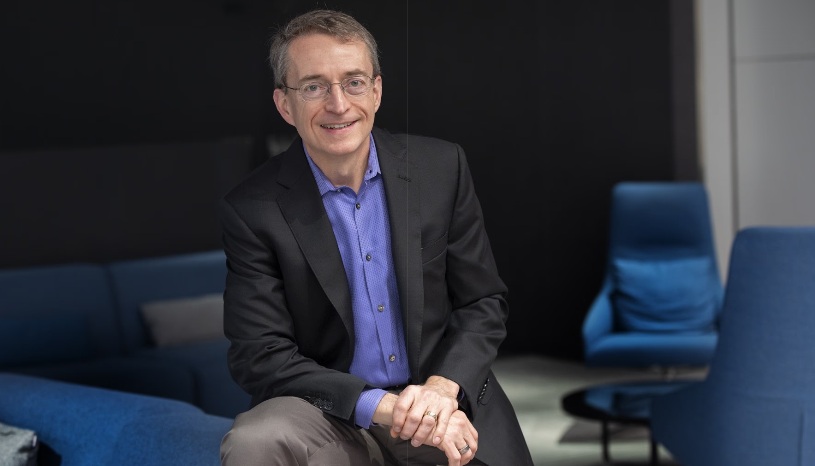
“Less than two seconds after the Intel departure was announced, Scott called,” Gelsinger (pictured) recalled. “Whether it was opportunistic on his part or God ordained on his part we may not fully know.”
The caller was Scott Beck, co-founder and CEO of the faith-based technology company Gloo Inc. Gelsinger had been an investor in Gloo over the years and, as he told SiliconANGLE in an exclusive interview, he wanted time to reflect on his next move following his departure from Intel near the close of 2024. In the end, Gelsinger decided to become a general partner of the venture capital firm Playground Global, and executive chair/head of technology for Gloo.
In his leadership role at Gloo, Gelsinger oversees a portfolio of brands and services that provide text and email messaging services, data-driven metrics to manage volunteers and improve donor engagement, and artificial intelligence applications to automate administrative tasks. There is an AI Studio where developers can create new tools and assistants while integrating top large language models. Churches, faith-based universities and nonprofits are Gloo’s primary customers.
The company, which went public last November, reported 238% growth in revenue year-over-year for the most recent quarter, and raised its revenue guidance to $195 million in 2026. On Monday, the firm announced a proposed public offering of 7 million shares of its Class A common stock be be used for further acquisitions and investments.
When asked what had driven Gloo’s value proposition in appealing to the faith-based world, Gelsinger described the issue facing many religious institutions today.
“Every time you put a dollar in that offering plate, or send your check in, or do a transaction to support, it’s a bad dollar because you don’t have good technology behind it,” Gelsinger said. “The mission of Gloo is enabling those who serve, powering those who serve, shaping technology for good.”
To turn that dollar into a good one, Gloo has built a platform that helps missional organizations amplify impact by powering their technology. The company offers a values-aligned AI portfolio that modernizes systems, workflows and data, with marketing and donor solutions to expand reach and long-term giving.
“The ecosystem we serve is diverse,” Chief Product Officer Benjamin Gauthier said in an interview with SiliconANGLE. “But every organization that we work with is going after impact.”
The company’s use of AI has focused on ensuring that biblical quotations are accessible and accurate. Gloo found that as new versions of AI models were deployed, the accuracy of biblical citations could vary significantly.
“The major models are 60% to 70% accurate,” Gelsinger said. “We’ve developed the technology to take the major models and add accurate Bible quotations on top of it. We guarantee that we do 100% accurate biblical quotation.”
In addition to accuracy, Gloo is also seeking to help organizations leverage AI models in keeping with faith-based values. This can occasionally come into conflict with major providers such as OpenAI Group PBC, which announced and then paused plans to develop an “erotic” mode for ChatGPT.
“The power that’s being released for these mission-oriented organizations is really quite stunning,” Gelsinger noted. “On the other side, OpenAI is announcing erotica. Not OK. In the middle of that, how do you harness that energy and make it good for this community? If you were to come to our AI Studio, pick whatever model you like. But we are going to put guardrails and systems around it that make it good.”
Along with leveraging the power of artificial intelligence, Gloo’s clients are also using the platform for basic functions such as communication and outreach. At St. Mark Missionary Church in Mishawaka, Indiana, Discipleship Pastor Johnny Bennett has found that having a resource for key administrative tasks allows him to focus more on his role as a spiritual leader.
“My role as a pastor is to be with people,” Bennett said in an interview. “There are so many demands of this position that pull you away from that. Gloo can take care of those nitty-gritty logistics. This is a direction that the church is going in.”
St. Mark has expanded by 400 members over the past two years, according to Bennett. That has created a need for improved communication, especially when visitors attend a service for the first time. Bennett’s use of Gloo’s text and email tools has helped facilitate outreach and grow the church’s congregation.
“For as long as I’ve been around churches, they’ve been trying to figure out how to welcome new people well,” Bennett explained. “[Gloo’s] workflows allow us as a ministry staff to be significantly more direct with our communication. Gloo gives us any easy way to follow up with new visitors.”
One way that St. Mark stays in touch with its regular parishioners is through the “517 Club,” a reference to the apostolic command of “pray without ceasing” in Thessalonians 5:17. Through workflows driven by Gloo’s platform, St. Mark sends out a text reminder every Monday at 5:17 p.m. to pray.
The church’s embrace of modern communications tools is an example of the opportunity that Gloo intends to leverage as it grows its business. The company is offering a way to reach churchgoers that reflects today’s technology, something that has not always been the case among faith-based organizations, according to Gelsinger.
“It’s like when I was running VMware,” Gelsinger said. “Careful which tool you pick today because it’s tomorrow’s legacy. This ecosystem has got 30 to 40 years of legacy.”
Gelsinger’s current role at Gloo has enabled him to draw from many years of experience in the technology world. He found that his work at VMware, which transformed from a server-virtualization provider into a hybrid cloud powerhouse during his eight years at the helm, has proven to be especially useful as he seeks to scale up his latest venture.
“I’m a hardware, hard tech guy at heart,” Gelsinger said. “I’ve often asked myself, ‘Why did God have me run a software company for eight years?’ The answer is now extraordinarily obvious, it’s called Gloo. Every day the experience of running an at-scale software company has come to benefit. There are things that I can now be very confident and rapid in putting in place because I ran VMware.”
One of the things that Gelsinger has moved swiftly to do is acquire other companies. Gloo purchased Masterworks (marketing and fundraising), Igniter (creative media) and XRI Global (voice and multilingual AI) in 2025, and has added Midwestern Interactive (application building), EnterpriseMarketdesk (AI-enabled services) and Westfall Group (donor engagement) so far this year.
Asked about Gloo’s acquisition strategy, Gelsinger noted that the faith-based technology market has not been as active as others in the tech industry.
“There’s not a lot of people out there acquiring these assets in this industry, so we can be judicious,” Gelsinger said. “We can be efficient acquirers. We haven’t lost the founders, they’re committed to this journey as part of the Gloo family.”
As Gloo brings smaller companies into the fold, inherited customers often are unaware that there is now a parent firm in the mix. Gelsinger cited his company’s decision to make a strategic investment in Barna Group, a Texas-based research firm focused on how spiritual and cultural trends affect Christian organizations, as an example. He noted that some loyal customers of Barna were not aware of Gloo’s investment, but the platform has been transformed nevertheless.
“Barna was almost 100% analog,” Gelsinger said. “Today, they are about 90% digital and AI-fueled. We upgraded their technology and accelerated their growth rate.”
The challenge ahead for Gelsinger is to make the company profitable. During the company’s earnings call in June, executives said Gloo ended the quarter with $33 million in cash with an expectation to approach breakeven in the third quarter and turn profitable in the fourth quarter.
“We’re building this scalable engine and solidifying the different pieces here, so I feel very good about that,” Gelsinger told SiliconANGLE. “Now the next phase is to get it to profitable, scalable growth. There’s a lot of emphasis on getting to profitability in the second half of the year.”
According to Gelsinger, more than a trillion dollars of the U.S. economy is driven by the faith and flourishing ecosystem, with hundreds of billions of dollars funneled through church donations every year. It is a big, fragmented, underserved market and Gloo’s technology platform is geared towards bringing it into the modern AI age.
He noted that Gloo now claims 12 of the 14 organizations in the U.S. that do Bible translation as clients, and a majority of campus ministry organizations are on the company’s platform.
Yet beyond the numbers and market potential is a larger calling for Intel’s former CEO. Gelsinger says he is driven by what he terms “the community,” his lifetime spent inside the faith ecosystem where technology supports a higher purpose.
“You are talking to people who have invested decades for a mission,” Gelsinger said. “These are like the best human beings on earth. If you make them better, you just sleep so good at night.”
Support our mission to keep content open and free by engaging with theCUBE community. Join theCUBE’s Alumni Trust Network, where technology leaders connect, share intelligence and create opportunities.
Founded by tech visionaries John Furrier and Dave Vellante, SiliconANGLE Media has built a dynamic ecosystem of industry-leading digital media brands that reach 15+ million elite tech professionals. Our new proprietary theCUBE AI Video Cloud is breaking ground in audience interaction, leveraging theCUBEai.com neural network to help technology companies make data-driven decisions and stay at the forefront of industry conversations.