 INFRA
INFRA
INFRA
INFRA


INFRA

Chipmaker Intel Corp. delivered better-than-expected results today after recording its fastest rate of revenue growth for any quarter since 2011.
It also provided guidance that topped analyst’s expectations, sending its stock higher in after-hours trading.
The company absolutely crushed expectations, reporting earnings before certain costs such as stock compensation coming to 42 cents per share, way ahead of Wall Street’s 21-cent-per-share consensus estimate. Revenue for the period grew 25%, to $16.1 billion, surpassing the $14.42 billion analyst forecast by a wide margin too.
Intel’s stock posted a modest gain of just over 3% in the late trading session, but its performance over the entire year has been much more impressive. The shares have now gained more than 170% in the year to date, having jumped 84% last year after the U.S. government revealed its plan to take a 10% stake in the company in order to support the domestic chip industry.
That said, Intel’s stock had been in a bit of a slump this month prior to today’s results, losing 28% of its value in July before today’s results arrested that slide.
Intel’s momentum this year has to do with the artificial intelligence infrastructure boom that originally passed the company by. In recent months, many companies have come to realize the important role Intel’s central processing units can play in running so-called AI agents that autonomously perform work on behalf of humans. CPUs can help to make those workloads run with far greater efficiency than graphics processing units alone.
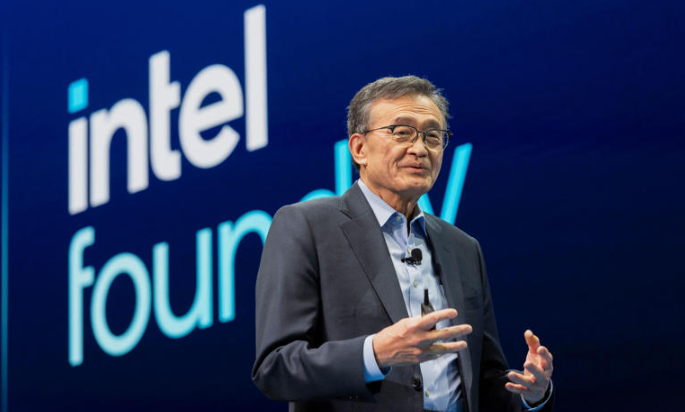
Consequently, Intel’s server processors are selling like hot cakes these days, said Chief Executive Lip-Bu Tan (pictured). “AI is driving unprecedented demand for compute, and as we continue to execute, Intel is well-positioned to capture sustainable growth across our CPU franchise,” he added.
For the current quarter, Intel said it’s targeting earnings of 38 cents per share on sales of between $15.8 billion and $16.8 billion. That’s better than expected, with Wall Street analysts looking for more modest earnings of just 27 cents per share on sales of $15.1 billion.
Part of the reason for Intel’s confidence is its ability to craft long-term deals with customers on its server CPUs, with some contracts locking in pricing and others focused on chip volume. These kinds of deals have become increasingly common in the chip industry as companies struggle to secure enough silicon to meet their needs. It’s especially true in the memory chip business, where demand exceeds that of server chips and memory chip makers are taking full advantage.
Chief Financial Officer David Zinsner told analysts on a conference call that its ability to supply server chips to customers is currently constrained, with demand exceeding what it has the ability to manufacture. “Customers continue to signal a strong and sustainable spending environment,” he insisted.
Despite server chips seeing all of the new demand, Intel’s client computing group, which makes chips for personal computers, raked in the most revenue at $8.9 billion. But its 13% revenue growth was far outpaced by that of the data center and AI units, where sales jumped 59%, to $6.3 billion in the quarter. Intel said the global memory shortages are likely to hurt PC sales going forward, and it believes revenue in the client computing group will be flat next quarter.
To try to meet the growing demand for server chips, Intel is going to target a “meaningful increase” in its capital expenditures, as part of its platform to ramp up manufacturing, not only for its own chips but those ordered by other companies. Zinsner said Intel’s newest 14A manufacturing process is currently ahead of where older processes were at this point in their lifecycle. It has helped to generate a 31% increase in the Intel foundry segment’s revenue, which totaled $5.8 billion during the quarter.
“I did want to give investors a clear line of sight to expect that the number will be up,” Zinsner said on the call with analysts, adding that most of the new capex would go toward tooling up new factories.
However, Intel still has not named a single major customer that has agreed to manufacture chips using its most advanced process, despite speculation that it soon will. Intel Foundry primarily serves Intel itself, although it has signed up smaller players such as Fortinet Inc., which is using an older process to make security-focused chips.
Support our mission to keep content open and free by engaging with theCUBE community. Join theCUBE’s Alumni Trust Network, where technology leaders connect, share intelligence and create opportunities.
Founded by tech visionaries John Furrier and Dave Vellante, SiliconANGLE Media has built a dynamic ecosystem of industry-leading digital media brands that reach 15+ million elite tech professionals. Our new proprietary theCUBE AI Video Cloud is breaking ground in audience interaction, leveraging theCUBEai.com neural network to help technology companies make data-driven decisions and stay at the forefront of industry conversations.