 CLOUD
CLOUD
CLOUD
CLOUD


CLOUD

Microsoft Corp.’s stock was trading 9% higher in the after-hours session today after reporting four-quarter earnings and revenue that surpassed Wall Street’s expectations while reiterating its capital expenditures forecast for the rest of the year.
The company reported earnings before certain costs such as stock compensation of $4.74 per share, beating the Street’s projection of $4.24 per share, but there was a caveat to those results. The figure includes 27 cents of unusual accounting benefits mostly derived from a $3.2 billion unrealized gain on Microsoft’s investment in Anthropic PBC. During the quarter, Anthropic’s valuation jumped from $350 billion to $900 billion.
The company also reported revenue of $90.01 billion, up 18% from a year earlier and above the Street’s target of $87.62 billion. All told, it delivered net income of $35.77 billion in the quarter, up from $27.23 billion in the year-ago period.
Microsoft’s stock is still down 19% in the year to date, trailing the broader S&P 500 index, which has gained around 7% so far this year. Investors have put software stocks under pressure this year amid fears of disruption caused by artificial intelligence agents. At the same time, Microsoft also faces some “concentration risk” stemming from its close relationship with OpenAI Group PBC and the rise of open-source AI models, said analysts from Deutsche Bank in a note earlier this week. Last January, Microsoft revealed that around $45 billion of its $625 billion in commercial remaining performance obligations were tied to OpenAI’s future success.
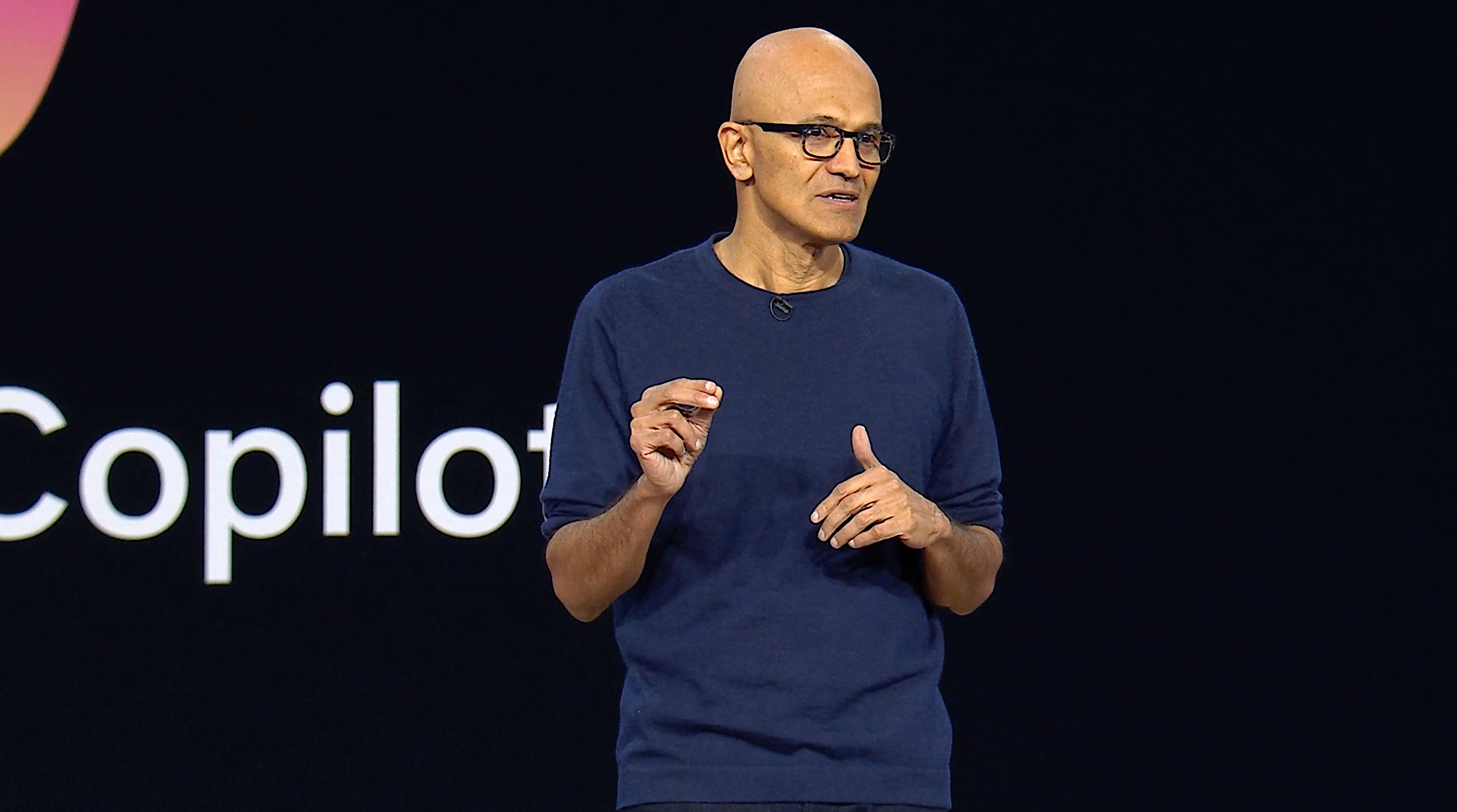
On a conference call with analysts, Microsoft Chief Executive Satya Nadella (pictured) said the company has been trying to balance the needs of Azure cloud customers, AI research and applications such as the Microsoft 365 Copilot assistant. If it devotes more chips to its research teams for model training, that means having less available for cloud customers to use, he explained.
Microsoft’s finance chief Amy Hood said the company’s commercial RPO, which is a measure of booked but unearned revenue, rose 8% to $678 billion at the end of the quarter on a sequential basis, due to commitments from clients other than AI model developers. The company spent $41 billion on capital expenditures and leases during the quarter, up 69% from a year ago.
Hood reiterated the company’s capex spending plans over the rest of the calendar year, and it’s likely that investors were relieved to see no increases, unlike at some of its cloud rivals. She said the company also plans to lengthen the useful life of its new offices and data center buildings to 25 years, instead of 15 years as before. Moreover, the company plans to switch more of its leases from finance leases to operating leases in future, with the adjustments expected to lead to roughly $175 billion in capex.
In the days preceding the report, there was a lot of concern that Microsoft’s capital outlays might be outpacing the momentum behind Azure and Copilot AI, but today’s results appear to have quelled those fears, said Valoir analyst Rebecca Wettemann. But Microsoft still has work to do if it’s to convince all of the naysayers, especially where OpenAI is concerned, she said.
“We still need to see real ROI around both vendors’ AI and data center investments and customers’ token spend,” Wettemann explained. “Those that were burned with unsuccessful expensive experiments early on are hesitant to move AI to production now unless they’re sure it will perform as promised and not ring up a big unexpected token bill overnight, and Microsoft and others need to do others to help calm enterprise AI ‘fear of messing up’ and ensure they’re helping customers deploy AI at scale that delivers ROI and minimizes risk.”
For fiscal 2027, Hood said the company is planning to increase its capex spending in order to pursue “demand signals across our portfolio.” Looking to the first quarter of fiscal 2027, Hood said Microsoft is targeting revenue of between $89.85 billion to $90.95 billion, ahead of the $89.71 billion analyst forecast.
“Capex is still something to watch carefully,” Wettemann said. “Whatever Microsoft communicates over the next few quarters will be really important, in terms of what it’s building from an infrastructure perspective but also what investments it’s making to make Azure cloud and its AI deliver more efficiently and cost-effectively for customers.
Breaking down the numbers from today’s results, Microsoft’s Intelligent Cloud segment, which includes revenue from the Azure cloud, posted $39.31 billion in sales, up 32% from the previous year and above the Street’s $38.16 billion consensus estimate. Azure growth accelerated to 43%, up from 40% in the previous quarter and above the 40% analyst forecast.
Hood said the company expects Azure revenue to grow at 45% in the current quarter, ahead of the Street’s consensus of 41.4%.
Emarketer analyst Gadjo Sevilla told SiliconANGLE that Microsoft’s solid numbers appear to have caused investors to have a bit of a rethink about its stock valuation. “Azure was central to the story, with Nadella saying that Azure revenue surpassed $100 billion for the full year for the first time,” he said. “CFO Amy Hood highlighted Microsoft Cloud revenue of $59.3 billion for the quarter, up 27% YoY, likely on the strength of AI dependencies.”
Elsewhere, Microsoft’s Productivity and Business segment, which includes sales from Office, Dynamics and LinkedIn, recorded revenue of $37.85 billion in the quarter, up 14% and ahead of the $37.19 billion analyst target. Nadella said on the call that the company now has more than 30 million paid seats for Microsoft 365 Copilot, with hundreds of enterprise customers purchasing seats for high-end E7 productivity software bundles. He added that the GitHub Copilot coding assistant now exceeds more than 50 million users.
The More Personal Computing segment, which includes Windows, Bing, Surface and Xbox console sales, generated $12.85 billion in revenue, down 4% from a year earlier but above the Street’s $12.17 billion target. Sales of devices and Windows licenses to device makers dropped 7% compared to the same quarter last year, in line with a report by the research firm Gartner Inc. that personal computer sales declined 4.2% during the quarter. Xbox revenue dropped 10%, and earlier this month, the company said it would be forced to increase the cost of new consoles due to the rising price of memory chips, which are a key component of them.
Support our mission to keep content open and free by engaging with theCUBE community. Join theCUBE’s Alumni Trust Network, where technology leaders connect, share intelligence and create opportunities.
Founded by tech visionaries John Furrier and Dave Vellante, SiliconANGLE Media has built a dynamic ecosystem of industry-leading digital media brands that reach 15+ million elite tech professionals. Our new proprietary theCUBE AI Video Cloud is breaking ground in audience interaction, leveraging theCUBEai.com neural network to help technology companies make data-driven decisions and stay at the forefront of industry conversations.