 INFRA
INFRA
INFRA
INFRA


INFRA

Nvidia Corp. delivered another mind-boggling quarter Wednesday. Total revenue reached $96 billion, up more than 100% year over year, with data center revenue at $89 billion and a third-quarter guide of $108 billion.
More striking than the quarterly numbers was the guidance Chief Financial Officer Colette Kress dropped midway through the call: Fiscal 2028 revenue should grow roughly 70% — and that is a supply-constrained figure. Customer forecasts, she said, “point to our growth doubling next year.”
Kress framed the quarter by explaining: “The surge in AI demand is driving a global infrastructure buildout, supported by an expanding and diverse set of growth opportunities spanning hyperscalers, AI labs, AI natives, enterprises and sovereign customers.”
That gap between roughly 100% demand and roughly 70% supply is the single most important fact for enterprise information technology leaders to internalize this quarter. Everything else, including pricing, lead times, architecture choices, even the reported Hugging Face acquisition, flows from it.
Here are five thoughts on the quarter and what they mean if you buy, budget for, or operate infrastructure.
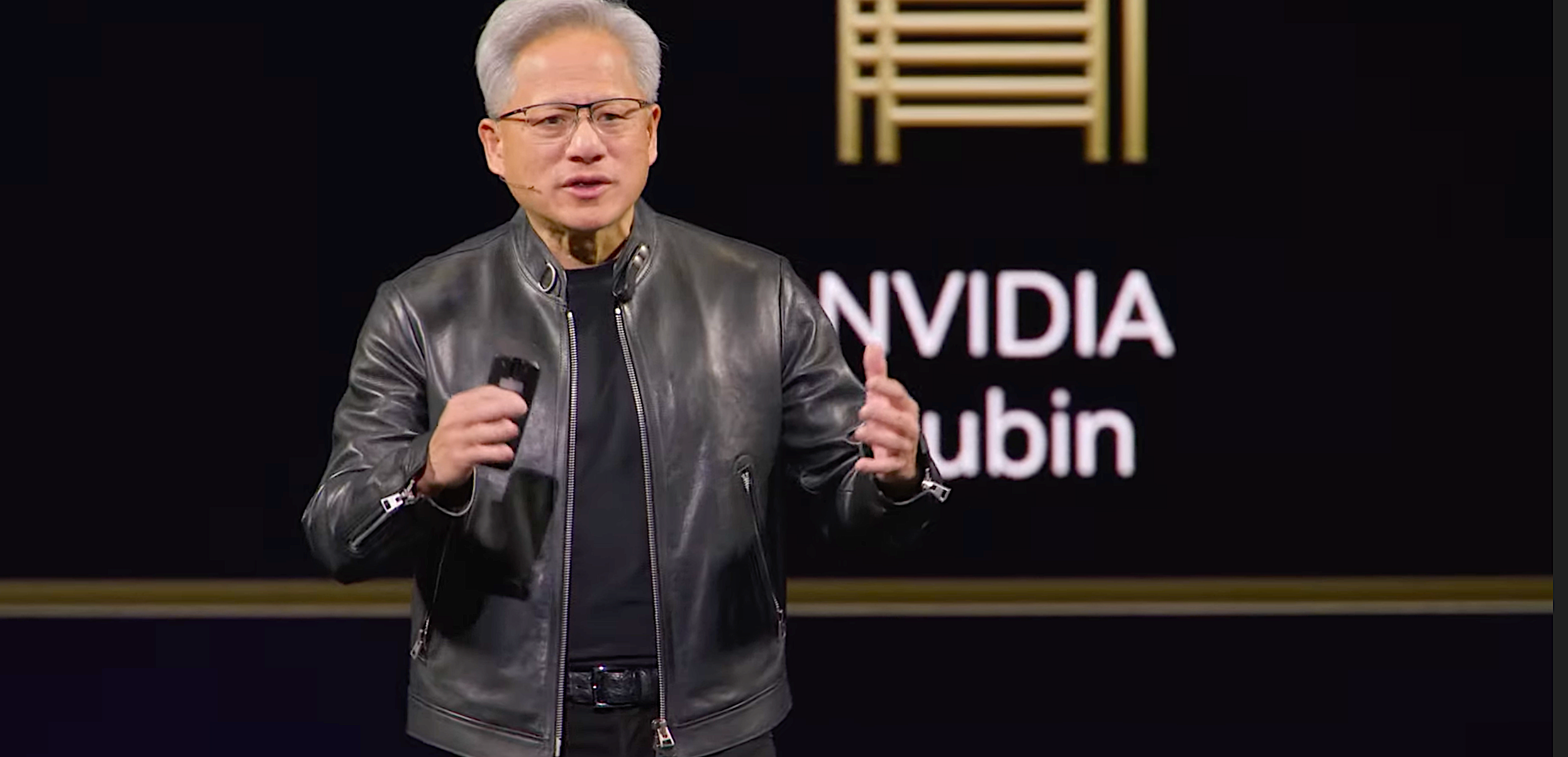
For two years, the industry has treated the artificial intelligence trade as a demand question. On the call, Nvidia reframed it as a logistics question. Chief Executive Jensen Huang (pictured) stated that supply constraints will persist “at least through the end of fiscal year ’28.” When asked to rank the bottlenecks, he declined to single one out: “Our entire supply chain is challenged.” He said capacity won’t arrive “in just an instance in time, but it’s going to come online every day.”
Huang was unusually candid about why Nvidia broke its own rule and guided a full year out: “It is the case that we’ve never forecasted or guided to a year in advance. And even though our demand is much greater than 70%, our supply allows us to confidently deliver 70%. And we’re going to keep working with our supply chain to increase that. But what we wanted to do was be consistent with everybody, from our customers, our shareholders and our supply chain, so everybody sees the same view.”
One could view his statement as supply chain management dressed up as guidance, but it shows how tightly the entire AI ecosystem is now integrated. Nvidia’s response has been to move further upstream and downstream than any other chip company. It’s now involved with memory suppliers, power generation and land and shell developers. It secured 4.25 gigawatts of capacity at SoftBank Energy’s Portsmouth campus for OpenAI alone, a site Kress said could support multiple upgrade cycles over 20 years.
The lesson for enterprise buyers is not to copy Nvidia’s strategy but to adopt its time horizon. Huang noted that land, power and shell are “often two to three years out.” If your AI capacity planning is annual, that’s the wrong time frame. Multiyear allocation commitments, named-quantity contracts with OEMs and colocation partners, and explicit fallback tiers, such as Blackwell instead of Vera Rubin or one region instead of another, should now be standard in every AI infrastructure RFP. In a supply-constrained market, contract certainty is worth far more than a few points of discount.
In my opinion, Nvidia’s most important strategic statement was the escalating revenue opportunity per gigawatt of data center capacity — roughly $18 billion with Hopper, $25 billion with Grace Blackwell, and about $40 billion with Vera Rubin. This now spans the Vera central processing unit, Rubin graphics processing unit, NVLink, InfiniBand and Ethernet, and the new Groq language processing unit. Huang explained that the direction from here is “higher,” with the theoretical ideal being “infinity per gigawatt.” For context, he pegged general-purpose computing in the Moore’s Law era at $3 billion to $5 billion per gigawatt.
Kress further elaborated on the repositioning: “Today, we’re not just selling the best chips; we’re selling a full-stack AI factory platform that delivers superior economics for customers and captures a larger share of the data center TAM.”
From an investor perspective, Nvidia methodically expands into adjacent line items to drive growth. Networking set another record, with revenue up 18% sequentially and Spectrum-X Ethernet up 2.6x year over year. Kress claimed Nvidia is now “the largest and fastest-growing network company in the world.” The Grace CPU has surpassed $5 billion on a trailing-12-month basis. Vera is in full production, with shipments underway to Oracle Cloud Infrastructure and, this quarter, to AWS. Nvidia expects CPU revenue to more than double in fiscal 2028.
For IT buyers, this is the quarter to stop evaluating accelerators in isolation. The bill of materials for an AI cluster increasingly comes from a single vendor’s catalog, and the economics are attractive because the co-design is real and works: Vera Rubin reportedly delivers 30 times higher throughput per megawatt and 35 times lower token cost than Grace Blackwell Ultra. It has already drawn purchase orders from every major hyperscaler, AI cloud and system original equipment manufacturer.
But the procurement discipline that served networking buyers for 20 years still applies. Benchmark the Vera CPU against x86 on your own agentic workloads, not on SPEC. If you are looking for a “best of breed” in an AI factory, understand exactly what you are trading away for the convenience of a turnkey solution.
Perhaps the most underappreciated part of this business is non-hyperscalers, which Nvidia calls ACIE, spanning neoclouds, sovereigns, enterprises, the edge and air-gapped data centers. This segment hit $40 billion in the quarter, up 25% sequentially and 138% year over year, and will represent “roughly half” of the data center business. Huang described that half as “invisible to everybody” because those customers don’t design custom silicon or buy chips one at a time. “They really need an entire factory platform built for them,” he said, and that plays to Nvidia’s strength.
Kress has talked about the benefits Nvidia brings to these customers. “One platform, fungible for every model and workload, durable for the entire life cycle of AI,” she said. “That combination of performance, fungibility and durability is what makes Nvidia the productive and financeable compute infrastructure.”
The named enterprise deployments are helpful because they’re in production, not pilots: Hudson River Trading and Jane Street in quantitative trading; Samsung Electronics using cuLitho for a claimed 20x gain in computational lithography; and Bristol Myers Squibb building a Vera Rubin AI factory, following Roche and Lilly. On-premises automotive revenue alone reached $8 billion on a trailing-12-month basis, with financial services, manufacturing and healthcare adding another $7 billion.
Some enterprise buyers have viewed AI infrastructure as the domain of hyperscalers, but that argument is quickly fading. Nvidia’s neocloud partners are on track to exit the year with 8 gigawatts of installed capacity, up from about 3 gigawatts at the end of 2025. The customer roster spans the globe, including Firebird in Armenia, Cassava across Africa, Yotta and Neysa in India, Firmus in Australia and YTL in Malaysia. Competitive, geographically local, sovereignty-compliant capacity is arriving faster than most enterprise data center plans can be updated. Huang’s point that “a country or region can allocate land and power directly to a regional cloud partner in ways it never would to a foreign hyperscaler” is as much about data residency as it is about economics.
Nvidia lowered its gross margin outlook to 74% in Q3, bottoming at 71% to 72% in Q4, and settling at 72% to 73% in fiscal 2028. It also explained the impact of memory pricing: “extreme pricing conditions in memory,” with increases that “exceeded our prior expectations and are headed even higher into next year.”
Kress added, “Memory scarcity today is being driven in large part by the AI build-out itself, unlike a component that simply raises our cost with no offsetting benefit. Tighter memory supply is a symptom of the same demand surge that’s driving our own growth.”
Enterprise IT leaders need to understand the implications. The world’s most powerful memory buyer cannot fully absorb DRAM inflation and is passing it through. You have far less leverage than Nvidia. Every server, storage array and edge device with memory will cost more in 2027, and AI systems will be hit twice, once on the accelerator and again on the host.
IT leaders should build meaningful component inflation into 2027 capital plans, lock in pricing wherever suppliers allow it and revive the unglamorous discipline of right-sizing memory footprints and improving utilization across existing fleets. The cheapest gigabyte in 2027 is the one you already own.
Huang put a number on the shift that most enterprise architects are trying to get a handle on. An agent consumes “probably 15 to 100 times” the compute of a human using the same model, due to reasoning, planning and multiple turns of tool use. He believes agentic usage crossed over human-prompted usage in the past month and sketched a future where Nvidia’s roughly 40,000 employees are joined by 400,000 or 4 million agents “running continuously.”
He then described the process as reflective: Agents run, update their own skill files and repeat — “a kind of loosely coarse-grained self-improvement.” Human-driven AI workloads are bursty and follow the workday. Agentic workloads are 24/7 background loads with essentially unbounded appetite. Capacity models based on interactive usage patterns will be off by an order of magnitude, and FinOps practices designed for cloud elasticity will need per-agent budgets, kill switches and token-level chargeback.
Huang’s explanation of why everyone is adopting AI was well thought out and easy to understand. “I think the most important thing for the industry is that, one, AI is now doing productive and useful work; two, AI is generating profitable tokens; and three, if we had more compute, we could generate more profitable tokens, which results in more profit for all of the services. This is the exact phase we’re at, which is why everybody is leaning in.”
He added a datapoint that should give every CFO pause, in both directions: “I heard the other day that return on invested capital is now less than a year. And we’re talking about $50 billion data centers.” If that holds, the AI buildout is rational. If it doesn’t, this is the number the whole cycle is resting on.
The Information reported that Nvidia has agreed to acquire Hugging Face for $12.9 billion. At roughly 86 times an estimated $150 million in annualized revenue, this is not a revenue purchase. It’s a distribution purchase, and it would be Nvidia’s largest deal ever, dwarfing the $7 billion Mellanox acquisition.
Hugging Face is the default onramp to AI. It has about 13 million users, more than 2 million public models, and over 500,000 datasets, with verified accounts among more than 30% of the Fortune 500. Nvidia is already the platform’s most prolific big-tech contributor.
The simplification value is compelling for enterprise IT. Today, the path from “I found a promising open model” to “it’s serving tokens profitably in my data center” involves quantization decisions, kernel compatibility, serving frameworks, inference tuning and a lot of tribal knowledge. Owning the hub lets Nvidia collapse that path. Models arrive pre-optimized for your specific rack, with known throughput and cost-per-token profiles, and can be deployed to a DGX Spark on a desk or to a Vera Rubin cluster with identical tooling.
That is the difference between open models being viable for the Fortune 500 and open models being viable for the Fortune 5000. It also aligns with Huang’s stated view of why open models matter to enterprises: “You should rent intelligence, strong intelligence, smart intelligence wherever you can. But every major company and every country and every startup needs to build their domain-specific, proprietary AI. And the open models reaching frontier levels has made it possible, has enabled them to all do that.”
This only strengthens Nvidia’s seemingly growing competitive moat, because it doesn’t depend on a hardware advantage. CUDA is a developer moat Nvidia built itself. Hugging Face is a model-discovery moat someone else built, and it sits one layer above where Advanced Micro Devices Inc., custom XPUs and OpenAI’s reported Jalapeño silicon are trying to compete. Nvidia’s central claim is fungibility — Huang said it is “the only platform that runs every frontier model, whether it’s closed or open.”
Owning the place where 2 million models live feeds exactly the growth engine Kress described: a CUDA ecosystem that extends AI “into markets a single chip alone can never reach.” If Nvidia becomes the default distribution channel for open models the same way it is the default runtime, then the open-model wave that some investors read as a threat becomes another Nvidia growth vector.
My advice to IT buyers: Welcome the simplification, and hedge the dependency. Keep model artifacts, evaluation harnesses and fine-tuning pipelines portable across at least two serving stacks. Nvidia has earned its position as the safest bet in AI infrastructure. That is not the same thing as being the only one.
Zeus Kerravala is a principal analyst at ZK Research, a division of Kerravala Consulting. He wrote this article for SiliconANGLE.
Support our mission to keep content open and free by engaging with theCUBE community. Join theCUBE’s Alumni Trust Network, where technology leaders connect, share intelligence and create opportunities.
Founded by tech visionaries John Furrier and Dave Vellante, SiliconANGLE Media has built a dynamic ecosystem of industry-leading digital media brands that reach 15+ million elite tech professionals. Our new proprietary theCUBE AI Video Cloud is breaking ground in audience interaction, leveraging theCUBEai.com neural network to help technology companies make data-driven decisions and stay at the forefront of industry conversations.