 AI
AI
AI
AI



AI

Professional services firms are rethinking how they deliver client value as artificial intelligence takes on more routine work, shifting attention toward human judgment, trusted outcomes and new operating models.
The transition is changing how firms structure projects, manage knowledge and measure success. Rather than simply accelerating existing processes, organizations are beginning to redesign workflows around AI-driven execution while preserving the expertise and accountability clients expect, according to Matt Cook, partner and consulting software sector lead at PwC U.K., and Prasad Narasimhan Sulur, chief business officer of Certinia Inc.
“Where we’re seeing AI leaders win is they’re not simply deploying better tools. They’re actually redesigning how that value is created,” Cook said. “So, it’s not just a case of how do we get to the outcome faster.”
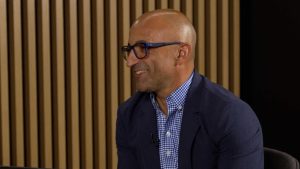
Cook and Sulur spoke with theCUBE Research’s Scott Hebner during an exclusive interview on theCUBE, SiliconANGLE Media’s livestreaming studio. They discussed how AI is changing professional services economics, why governance is essential to scaling adoption and how human expertise becomes more valuable as intelligent systems assume greater responsibility. (* Disclosure below.)
The gap between AI adoption and measurable financial returns remains substantial. “PwC’s 29th Global CEO Survey” found that only 12% of chief executives reported both revenue growth and cost reductions attributable to AI, while 56% reported no significant financial benefits. The findings underscore the limitations of deploying AI as a standalone productivity tool rather than integrating it into core business operations, according to Cook.
“The firms that win will be the ones that can turn AI into repeatable, measurable outcomes, not the ones with the most tools,” he said.
That distinction is particularly important for professional services organizations, where faster task completion does not necessarily translate into faster project delivery. Sulur pointed to software development as an example, explaining that AI-assisted coding may shorten development cycles without eliminating delays in testing, integration or release processes.
Achieving meaningful improvements requires redesigning the entire workflow rather than automating individual steps. The same principle applies to consulting engagements, where AI could help firms complete research and analysis in weeks instead of months.
Sulur also emphasized that successful transformation depends on organizational leadership and employee capabilities working together. Executives must establish a clear direction, while employees develop the proficiency necessary to apply AI effectively and recognize where processes can be improved.
“The combination of the top-down mandate and what I call the bottom-up proficiency that your organization has is what’s going to move the ball forward,” Sulur said.
As organizations move toward more consequential AI applications, reliability and accountability become increasingly important. AI-generated recommendations may appear convincing while containing errors that require extensive human verification, potentially eliminating the productivity gains they were intended to create. For professional services firms, establishing trust requires more than improving model accuracy. Organizations must also develop systems that provide the appropriate business context, enforce permissions and validate outputs against expected results.
Sulur identified workflow orchestration and enterprise data management as two essential components of this emerging architecture. Orchestration systems help AI understand project stages, required tasks and previous work, while data systems make organizational knowledge available in the appropriate context.
Unstructured information, including meeting transcripts, communications and previous project documents, represents a particularly valuable resource. However, firms must determine which information is relevant to each task while preventing unauthorized access to proprietary data.
Cook believes that these technical capabilities must complement, rather than replace, professional accountability: “AI can accelerate evidence gathering and scenario development, but it doesn’t carry professional accountability,” he said. “That remains human.”
The growing importance of judgment is also changing workforce expectations. Cook referenced PwC research showing that AI-exposed junior positions are increasingly requiring skills traditionally associated with senior roles, including leadership and decision-making.
Looking ahead, both executives expect professional services firms to devote more human resources to complex client challenges as AI assumes responsibility for repetitive activities. Companies that invest in trusted systems, institutional knowledge and redesigned delivery models could establish a competitive advantage over firms focused primarily on individual productivity improvements.
“When AI can produce more analysis than a human can read, the differentiator’s not more content, it’s better judgment,” Cook said.
The result could be a fundamentally different professional services model, one in which technological execution expands capacity while human expertise determines the quality and value of business outcomes.
Here’s the complete video interview from SiliconANGLE and theCUBE:
(* Disclosure: Certinia sponsored this segment of theCUBE. Neither Certinia nor other sponsors have editorial control over content on theCUBE or SiliconANGLE.)
Support our mission to keep content open and free by engaging with theCUBE community. Join theCUBE’s Alumni Trust Network, where technology leaders connect, share intelligence and create opportunities.
Founded by tech visionaries John Furrier and Dave Vellante, SiliconANGLE Media has built a dynamic ecosystem of industry-leading digital media brands that reach 15+ million elite tech professionals. Our new proprietary theCUBE AI Video Cloud is breaking ground in audience interaction, leveraging theCUBEai.com neural network to help technology companies make data-driven decisions and stay at the forefront of industry conversations.