 AI
AI



AI

Enterprise AI is crossing from experimentation into production, and financial services firms are among the first to prove it can pay off at scale. As token consumption climbs, finance chiefs are now treating AI less as a science project and more as a budget line that has to earn its keep.
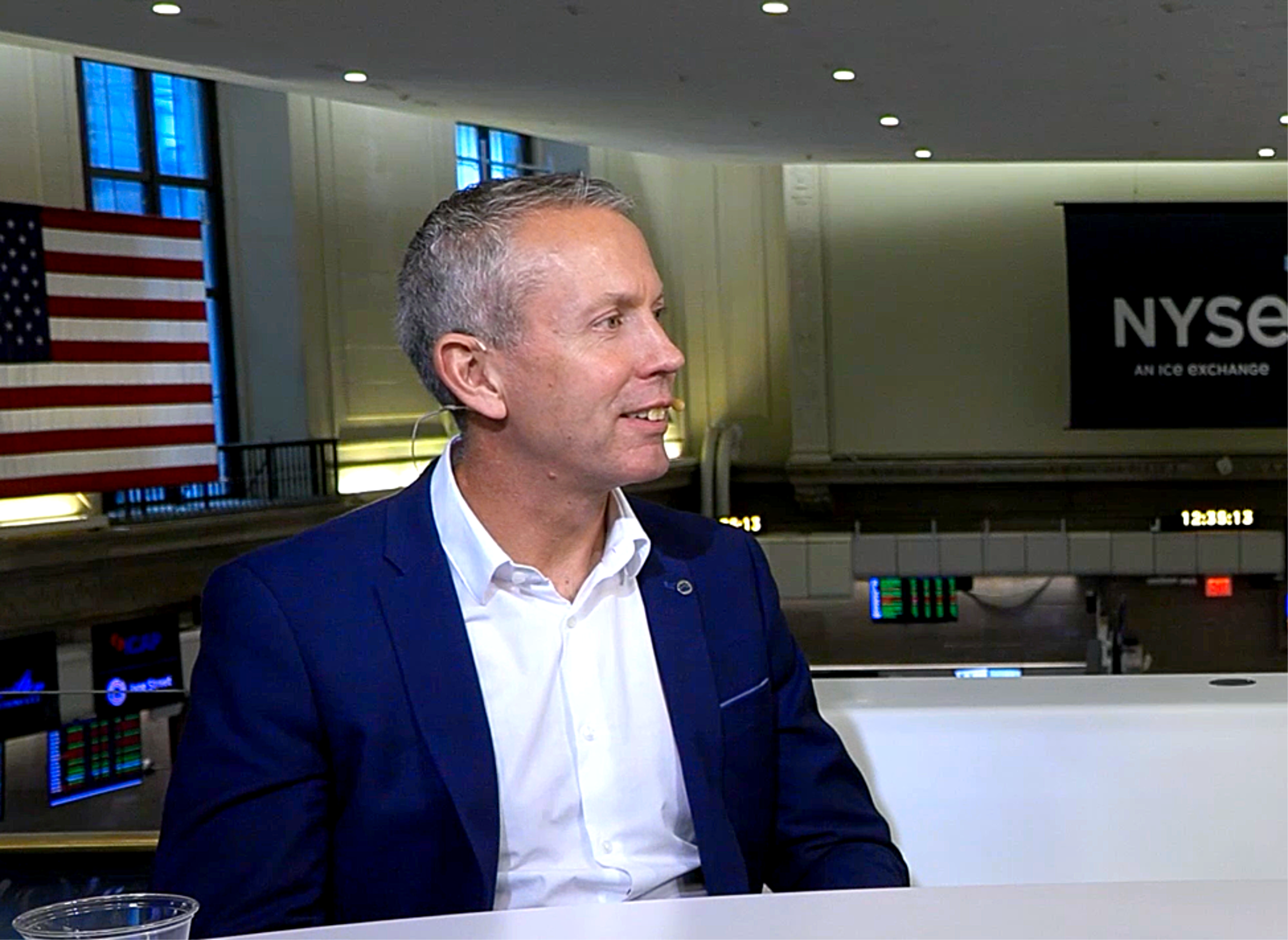
That shift is changing how chief financial officers judge AI spending, moving the conversation from cost control toward competitive speed. Dell Technologies Inc., fresh off another blowout quarter driven by AI servers, sees demand spreading well beyond GPUs into traditional servers and storage, according to David Kennedy (pictured), chief financial officer of Dell.
“The spend piece, honestly, will take care of itself,” Kennedy said. “It needs to be managed. IT and finance can help put guardrails around that. I think it’s important, but the real value driver is the speed and productivity an enterprise can get.”
Kennedy spoke with theCUBE Research’s Dave Vellante at the Dell Technologies New York Symposium, during an exclusive broadcast on theCUBE, SiliconANGLE Media’s livestreaming studio. They discussed budgeting token spend, prioritizing speed and scaling AI in financial services. (* Disclosure below.)
Not every enterprise is moving at the same speed. Financial services firms, especially in high-frequency trading, were early to push AI from pilots into production, with pharmaceutical companies likely next, Kennedy noted. Dell now counts 6,500 AI factories across its customer base, and in May it expanded its AI Factory with Nvidia to help more customers close the gap between experiment and outcome.
“Ultimately, I think we’ve enough proof points now that AI works and it works really well and it gives you speed and efficiency in your company,” Kennedy said. “The question is, can you do that at scale?”
Scaling well starts with basic financial discipline, whether in financial services or any other industry. Most CFOs are now creating a dedicated line item for token spend and tracking it like any other cost, Kennedy explained. From there, efficiency becomes a question of model placement: Repetitive finance workflows can run on open-weight models on-premises, turning variable token costs into fixed ones.
“It’s not necessarily about the amount and the cost of a token,” Kennedy said. “It’s about the tokens you use. Can you be efficient with them? If you are, you’re going to see great outcomes.”
Here’s the complete video interview, part of SiliconANGLE’s and theCUBE’s coverage of the Dell Technologies New York Symposium:
(* Disclosure: TheCUBE is a paid media partner for the Dell Technologies New York Symposium. Neither Dell, the sponsor of theCUBE’s event coverage, nor other sponsors have editorial control over content on theCUBE or SiliconANGLE.)
Support our mission to keep content open and free by engaging with theCUBE community. Join theCUBE’s Alumni Trust Network, where technology leaders connect, share intelligence and create opportunities.
Founded by tech visionaries John Furrier and Dave Vellante, SiliconANGLE Media has built a dynamic ecosystem of industry-leading digital media brands that reach 15+ million elite tech professionals. Our new proprietary theCUBE AI Video Cloud is breaking ground in audience interaction, leveraging theCUBEai.com neural network to help technology companies make data-driven decisions and stay at the forefront of industry conversations.