 CLOUD
CLOUD



CLOUD

Enterprises leaving legacy hypervisors are finding that moving virtual machines is only half the job, and that a portable data management layer often decides whether a Kubernetes migration succeeds. Rising license costs are pushing teams to run containers and VMs on one platform.
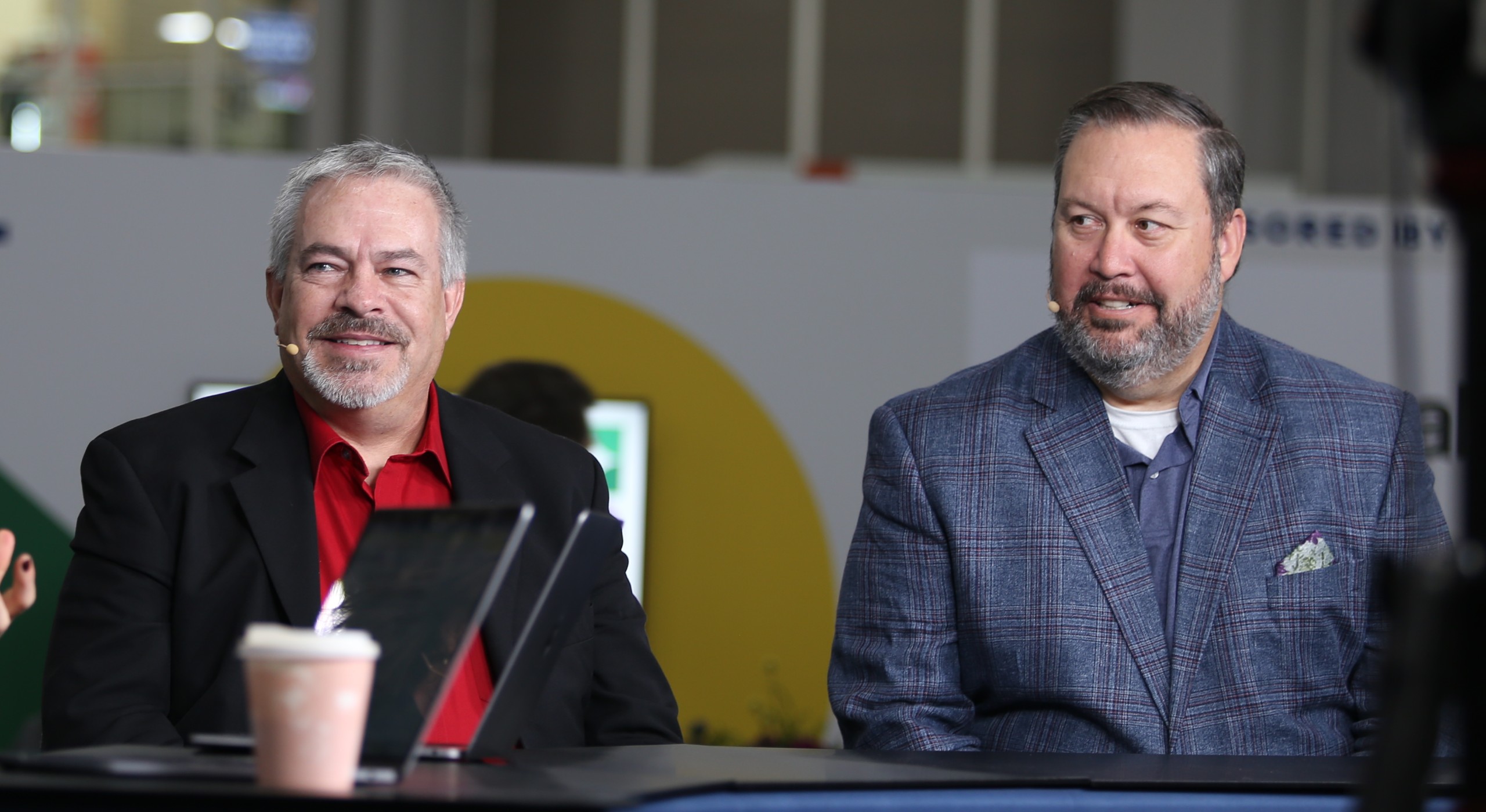
That shift is playing out at Mouser Electronics Inc., one of the world’s largest electronic components distributors. After running Red Hat Inc.’s OpenShift for containers for five to six years, the company is now building a production OpenShift Virtualization cluster to move workloads off Broadcom Inc.’s VMware, according to Ronald Waller (pictured, left), systems engineer at Mouser.
“It doesn’t matter if we’re running containers or VMs, we’re running it on the same foundation, which really works well,” Waller said. “Because we can manage those things with the same tool sets and same skill sets.”
Waller and Jon Owings (right), assistant vice president of global technical presales, cloud and data services, at Portworx by Everpure, spoke with theCUBE’s John Furrier and Rebecca Knight at KubeCon + CloudNativeCon NA, during an exclusive broadcast on theCUBE, SiliconANGLE Media’s livestreaming studio. They discussed how the data management layer helps run VMs and containers on OpenShift. (* Disclosure below.)
Kubernetes already serves as a common control plane for containerized AI workloads, and pulling VMs onto it extends that standard to older applications. Everpure Inc., which rebranded from Pure Storage Inc. this year as part of a data-centric pivot, positions Portworx as the matching abstraction for storage.
“Kubernetes provides that ubiquitous control plane for all of them, and that’s what customers are asking us for,” Owings said. “The one thing that was missing was the same thing but for data.”
The learning curve for VMware administrators moving to Kubernetes is steep, and Waller has climbed it over the last year. Storage turned out to be the easy part when he built Mouser’s proof-of-concept cluster, he explained.
“I asked the storage guy what I needed from him, and he handed me a user ID and an API key. I went to Portworx Central. I configured my spec for the operator and the storage cluster, created my secret, and boom, Portworx Enterprise did everything else on the backend,” Waller said. “I didn’t even have to think about it.”
Portworx keeps building for that use case. It made data management native to OpenShift in May and unveiled new AI and VM capabilities at KubeCon. For teams following Mouser’s path, Owings sees the exit from a legacy hypervisor as a chance to rethink day-two operations on a data management layer that travels across clouds and Kubernetes distributions.
“What can we change that we didn’t like about the last 15 years? … Were we dependent on a vendor? Were we dependent on shell scripts or PowerShell?” Owings said. “We have this great opportunity to do something new, and Kubernetes has that open API that allows you to be creative.”
Here’s the complete video interview, part of SiliconANGLE’s and theCUBE’s coverage of KubeCon + CloudNativeCon NA:
(* Disclosure: Portworx sponsored this segment of theCUBE. Neither Portworx nor other sponsors have editorial control over content on theCUBE or SiliconANGLE.)
Support our mission to keep content open and free by engaging with theCUBE community. Join theCUBE’s Alumni Trust Network, where technology leaders connect, share intelligence and create opportunities.
Founded by tech visionaries John Furrier and Dave Vellante, SiliconANGLE Media has built a dynamic ecosystem of industry-leading digital media brands that reach 15+ million elite tech professionals. Our new proprietary theCUBE AI Video Cloud is breaking ground in audience interaction, leveraging theCUBEai.com neural network to help technology companies make data-driven decisions and stay at the forefront of industry conversations.