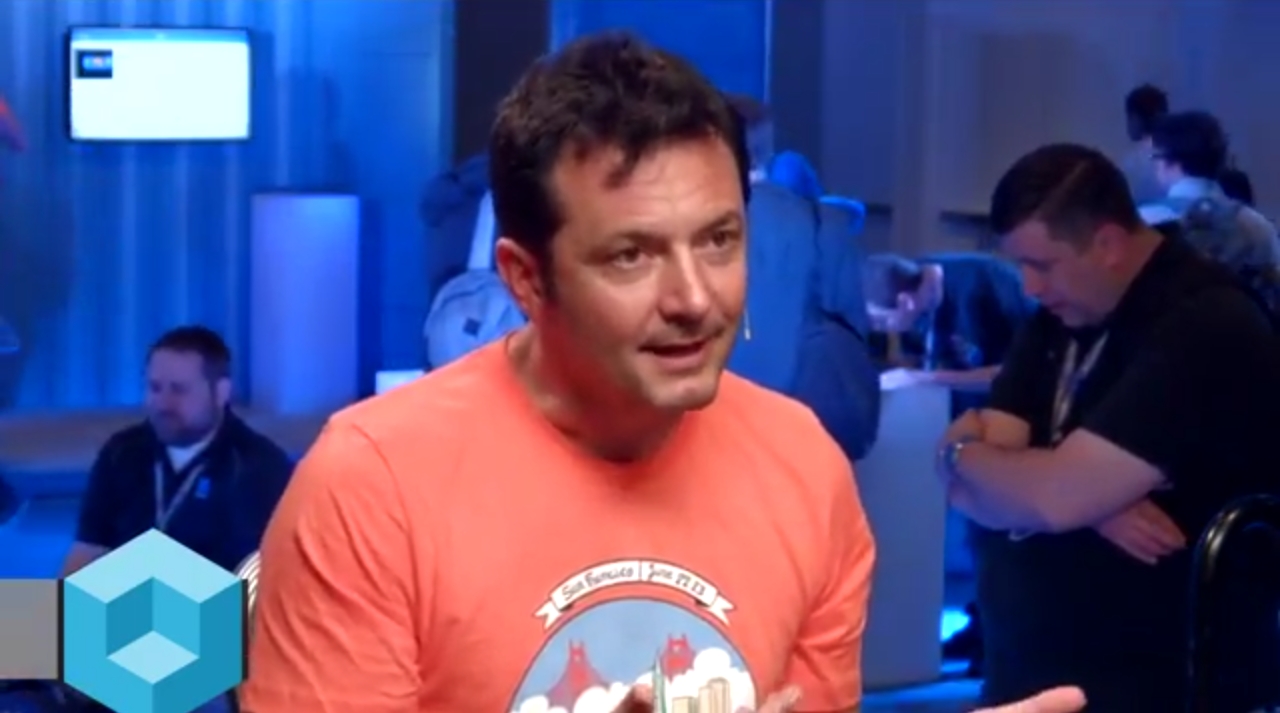


Docker is an open platform for building, shipping and running applications, and it includes common tools for taking advantage of networked and distributed applications. Stu Miniman and Jeff Frick of theCUBE spoke to Patrick Chanezon, a member of the Docker, Inc. technical staff, at DockerCon 2015 to explore the importance of this new platform.
The interview opened up with the question of what brought Chanezon to Docker. He replied that working at Docker was exciting because they were helping to build the future of application development. At his previous jobs, he was using Docker as their development platform, and he realized it would change the way applications were made. When the opportunity came, he jumped on board.
Chanezon went on to explain why platforms are important. A good platform can vastly improve productivity on the developer side. Also, they’re used by millions of people in the form of applications and tools.
He also spent a moment talking about containers and how the technology behind them has changed. Containers these days can live for a much shorter duration than before. Because of this, developers are building applications in much smaller units to take advantage of the quicker containers.
“You cannot do it all by yourself when you’re building a platform, so it’s super important to take good care in defining the extension points for your platform where the ecosystem can take over,” Chanezon said. In Docker’s case, the core of the platform revolves around tools and services that are useful by default but can be swapped for other versions. He mentioned a networking plugin that came with Docker that could be changed out for another tool.
One interesting point about Docker was the question of how the containers are managed. Chanezon said there are lots of tools on the developer side, a fair number on the orchestration side, but not so many for management. People and companies are still building the ecosystem to fill this void.
“There are lots of management tools to be developed still,” he said.
Watch the full interview below, and be sure to check out more of SiliconANGLE and theCUBE’s coverage of DockerCon.
Support our mission to keep content open and free by engaging with theCUBE community. Join theCUBE’s Alumni Trust Network, where technology leaders connect, share intelligence and create opportunities.
Founded by tech visionaries John Furrier and Dave Vellante, SiliconANGLE Media has built a dynamic ecosystem of industry-leading digital media brands that reach 15+ million elite tech professionals. Our new proprietary theCUBE AI Video Cloud is breaking ground in audience interaction, leveraging theCUBEai.com neural network to help technology companies make data-driven decisions and stay at the forefront of industry conversations.